
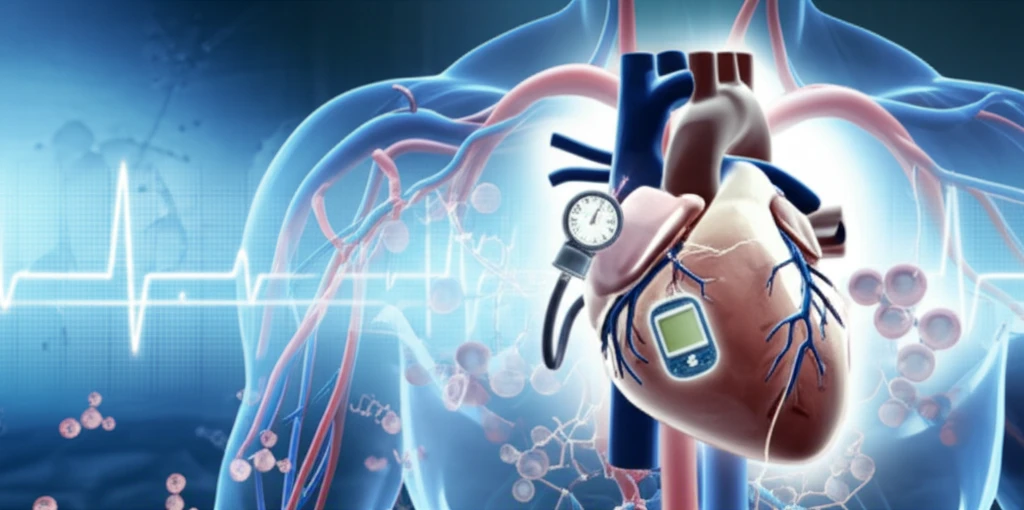
Digital illustration of a heart with high blood pressure and diabetes elements.

Decoding Your Heart's Rhythm: Understanding Arrhythmias in Hypertension and Diabetes

"New research sheds light on the link between heart rhythm irregularities, high blood pressure, and diabetes, offering insights for better heart health management."


In the bustling world of modern healthcare, the heart, a tireless engine, often faces unseen challenges. Hypertension and diabetes, two prevalent conditions, quietly wage war within the body, and their effects often extend beyond the obvious. Recent research has brought to light a critical connection between these conditions and a disruption in the heart's rhythm, a phenomenon known as arrhythmia.

This article delves into the findings of a study conducted at a Nigerian teaching hospital, which investigated the prevalence and patterns of arrhythmias in patients with hypertension and diabetes. The study underscores the need for increased awareness and proactive management strategies to mitigate the risks associated with these health challenges. By understanding the interplay between these conditions, we can empower ourselves with knowledge to protect our cardiovascular health.

This exploration is not just about medical jargon; it's about empowering individuals with the information they need to make informed decisions about their health. By understanding the risks and recognizing the signs, we can all take steps to safeguard our hearts and live healthier lives.

Unraveling the Link: Hypertension, Diabetes, and Arrhythmias

Digital illustration of a heart with high blood pressure and diabetes elements.

The study's core focus was on evaluating the use of 24-hour Holter electrocardiograms (ECGs) in patients with hypertension and type 2 diabetes mellitus (T2DM). Holter ECGs are continuous recordings of the heart's electrical activity, providing a detailed view of any irregularities that may occur over time. This method of monitoring can detect a variety of arrhythmias, from occasional skipped beats to more serious conditions.

The research revealed that patients with both hypertension and diabetes were at an increased risk of developing arrhythmias. Several factors contribute to this elevated risk, including the damage caused by high blood pressure and elevated blood sugar levels over time. These factors can alter the heart's structure and function, making it more susceptible to rhythm disturbances. The study also highlighted the role of heart rate variability (HRV), a measure of the variation in time between heartbeats. Reduced HRV is often associated with an increased risk of cardiac events. The research found that individuals with T2DM displayed significantly reduced HRV compared to those without diabetes, emphasizing the impact of diabetes on the autonomic nervous system.

  • Palpitation: Often the most common indication for a Holter ECG.
  • Premature Ventricular Contractions (PVCs): The most frequently observed arrhythmic pattern.
  • Reduced Heart Rate Variability (HRV): Significantly noted in T2DM patients.
  • Negative Correlation: Between the duration of T2DM and HRV.
The implications of these findings are significant. They underscore the importance of early detection and management of hypertension and diabetes to protect against the development of arrhythmias. Regular monitoring, lifestyle modifications, and medication adherence can all play a crucial role in maintaining a healthy heart rhythm. The study's emphasis on the use of Holter ECGs in the assessment of these conditions provides a valuable tool for healthcare professionals in diagnosing and managing these risks.

Taking Control of Your Heart Health

This study serves as a valuable reminder of the interconnectedness of our health and the importance of preventative measures. By understanding the risks associated with hypertension and diabetes, and by seeking regular medical check-ups, we can all take proactive steps towards maintaining a healthy heart. This research emphasizes the need for ongoing vigilance and proactive management of these interconnected conditions to safeguard our cardiovascular health and promote long-term well-being.

About this Article -

This article was crafted using a human-AI hybrid and collaborative approach. AI assisted our team with initial drafting, research insights, identifying key questions, and image generation. Our human editors guided topic selection, defined the angle, structured the content, ensured factual accuracy and relevance, refined the tone, and conducted thorough editing to deliver helpful, high-quality information.See our About page for more information.

This article is based on research published under:

DOI-LINK: 10.2147/dmso.s68408, Alternate LINK

Title: Evaluation Of The Indications And Arrhythmic Patterns Of 24 Hour Holter Electrocardiography Among Hypertensive And Diabetic Patients Seen At Oauthc, Ile-Ife Nigeria

Subject: Pharmacology

Journal: Diabetes, Metabolic Syndrome and Obesity: Targets and Therapy

Publisher: Informa UK Limited

Authors: Rasaaq Adebayo, Amanze Ikwu, Michael Balogun, Anthony Akintomide, Tuoyo Mene-Afejuku, Victor Adeyeye, Olaniyi Bamikole, Luqman Bisiriyu, Olufemi Ajayi, Suraj Ogunyemi, Omolola Oketona

Published: 2014-11-01

Everything You Need To Know

1

How does hypertension contribute to the development of arrhythmias?

Hypertension, or high blood pressure, can damage the heart's structure and function over time. This damage makes the heart more susceptible to rhythm disturbances, increasing the likelihood of developing arrhythmias. The continuous strain on the heart can lead to changes in its electrical pathways and overall function, contributing to irregular heartbeats. Additionally hypertension may indirectly promote arrhythmias by causing left ventricular hypertrophy and diastolic dysfunction.

2

What role does diabetes play in affecting heart rhythm, and what is Heart Rate Variability (HRV)?

Diabetes, particularly type 2 diabetes mellitus (T2DM), significantly impacts heart rhythm by affecting the autonomic nervous system. The research found that individuals with T2DM displayed reduced Heart Rate Variability (HRV) compared to those without diabetes. HRV is a measure of the variation in time between heartbeats. Reduced HRV indicates a decreased ability of the heart to respond to various stimuli, making it more vulnerable to arrhythmias. The duration of T2DM also has a negative correlation with HRV, indicating that longer duration of diabetes is associated with even lower HRV.

3

What is a Holter ECG, and why is it useful in detecting arrhythmias in patients with hypertension and diabetes?

A Holter ECG is a device that continuously records the heart's electrical activity over a 24-hour period. It is useful because it can detect arrhythmias that may not be apparent during a standard ECG, which only captures a brief snapshot of heart activity. In patients with hypertension and diabetes, Holter ECGs can identify intermittent or infrequent arrhythmias, such as premature ventricular contractions (PVCs), providing a more comprehensive assessment of their heart rhythm and helping healthcare professionals in diagnosing and managing these risks.

4

Beyond medication, what lifestyle modifications can help in managing arrhythmias in individuals with hypertension and diabetes?

Besides medication adherence, several lifestyle modifications are crucial. Regular physical activity, a balanced diet low in sodium and saturated fats, maintaining a healthy weight, and stress management are key components. For individuals with diabetes, maintaining stable blood sugar levels through diet, exercise, and medication is essential. Avoiding excessive alcohol consumption and quitting smoking are also important steps. These modifications can improve overall cardiovascular health, reducing the risk and severity of arrhythmias. Other factors include getting adequate sleep, limiting caffeine intake and avoiding over-the-counter medications that can stimulate the heart.

5

If hypertension and diabetes both contribute to arrhythmias, what are the long-term implications for individuals who have both conditions, and what proactive steps can they take?

The long-term implications for individuals with both hypertension and diabetes include a significantly increased risk of cardiovascular events such as stroke, heart failure, and sudden cardiac death. The combined effect of these conditions accelerates damage to the heart's structure and electrical pathways, making them more vulnerable to severe arrhythmias. Proactive steps include regular monitoring with Holter ECGs as recommended by healthcare professionals, strict adherence to prescribed medications, aggressive management of blood pressure and blood sugar levels, and adopting heart-healthy lifestyle modifications. Early detection, consistent management, and a focus on overall cardiovascular health are vital in mitigating these risks.

Newsletter Subscribe

Subscribe to get the latest articles and insights directly in your inbox.