
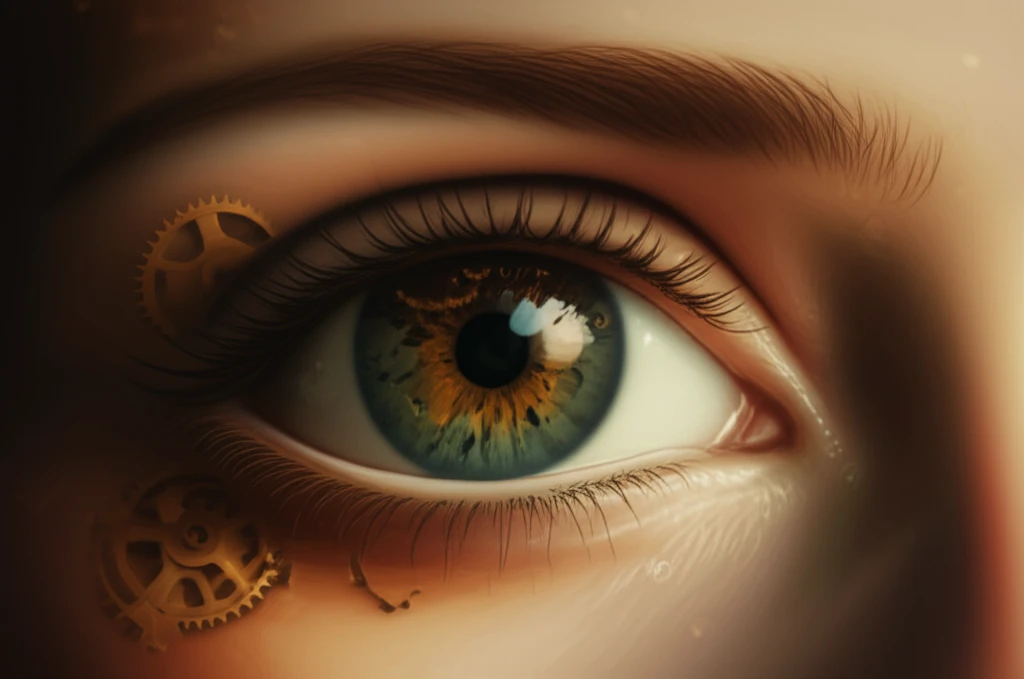
Illustration of misaligned eyes with gears representing vision mechanics

Decoding Your Eyes: How Hidden Imbalances Affect Your Vision

"Discover the surprising factors beyond eyesight that influence how your eyes work together, impacting focus and comfort."


Maintaining clear and comfortable vision involves more than just having 20/20 eyesight. The way our eyes work together, a process known as binocular vision, plays a crucial role. When this system isn't perfectly aligned, it can lead to subtle but noticeable issues like eye strain, headaches, and difficulty focusing, even if you have excellent visual acuity.

Fixation disparity, a slight misalignment between the two eyes when focusing on a single point, is a common phenomenon. While small amounts of fixation disparity are normal, larger disparities can cause discomfort and visual fatigue. Understanding the factors that contribute to fixation disparity is essential for addressing these issues and optimizing visual comfort.

Recent research has shed light on several key factors that influence subjective fixation disparity – how we perceive the alignment of our eyes. These include dynamic asymmetry (differences in how quickly our eyes converge and diverge), resting vergence (the natural resting position of our eyes), and nonius bias (a perceptual bias in how we align visual targets). This article explores these factors and their impact on your vision.

What's Causing Your Eye Strain? Unpacking the Key Factors

Illustration of misaligned eyes with gears representing vision mechanics

Researchers have identified three primary contributors to subjective fixation disparity: dynamic asymmetry, resting vergence, and nonius bias. Each of these factors plays a distinct role in how our eyes work together to maintain clear, comfortable vision.

Dynamic asymmetry refers to the difference in speed and efficiency between convergence (eyes turning inward to focus on a near object) and divergence (eyes turning outward to focus on a distant object). Ideally, these movements should be balanced, but if one is significantly faster or more efficient than the other, it can lead to fixation disparity.

  • Convergence Insufficiency: This occurs when the eyes have difficulty turning inward to focus on near objects, leading to eye strain and difficulty reading.
  • Divergence Insufficiency: This occurs when the eyes have difficulty turning outward to focus on distant objects, causing blurred vision and discomfort.
Resting vergence, also known as tonic vergence or dark vergence, is the natural resting position of the eyes when there is no visual stimulus. This resting position influences the amount of effort required to align the eyes on a target. If the resting vergence is significantly different from the alignment needed for comfortable vision, it can contribute to fixation disparity. Nonius bias is a perceptual phenomenon where individuals have a tendency to misalign visual targets, even when they are physically aligned. This bias can be influenced by factors such as the vertical position of the targets and individual differences in visual perception.

Taking Control of Your Vision: Practical Steps for Relief

Understanding the factors that influence fixation disparity is the first step toward addressing related vision problems. If you experience symptoms such as eye strain, headaches, or difficulty focusing, consider consulting with an eye care professional specializing in binocular vision. They can assess your eye alignment, vergence abilities, and perceptual biases to develop a personalized treatment plan.

About this Article -

This article was crafted using a human-AI hybrid and collaborative approach. AI assisted our team with initial drafting, research insights, identifying key questions, and image generation. Our human editors guided topic selection, defined the angle, structured the content, ensured factual accuracy and relevance, refined the tone, and conducted thorough editing to deliver helpful, high-quality information.See our About page for more information.

Everything You Need To Know

1

What is binocular vision, and why is it important?

Binocular vision is the way our eyes work together. It's important because when this system isn't perfectly aligned, it can lead to subtle but noticeable issues like eye strain, headaches, and difficulty focusing, even if you have excellent visual acuity. The implications of misaligned binocular vision can affect daily tasks that require focus and sustained visual attention, impacting productivity and overall comfort.

2

What is fixation disparity, and why should I be concerned about it?

Fixation disparity is a slight misalignment between the two eyes when focusing on a single point. While small amounts of fixation disparity are normal, larger disparities can cause discomfort and visual fatigue. Understanding fixation disparity is important as it helps address issues related to eye strain and optimizing visual comfort. The implications of unaddressed fixation disparity can lead to chronic discomfort and potentially affect overall vision health.

3

What does dynamic asymmetry mean, and how does it affect my vision?

Dynamic asymmetry refers to the difference in speed and efficiency between convergence (eyes turning inward) and divergence (eyes turning outward). It's important because if one is significantly faster or more efficient than the other, it can lead to fixation disparity. The implications of dynamic asymmetry can manifest as convergence or divergence insufficiency, impacting near and distance vision clarity.

4

What is resting vergence, and why does it matter for comfortable vision?

Resting vergence, also known as tonic vergence or dark vergence, is the natural resting position of the eyes when there is no visual stimulus. This resting position influences the amount of effort required to align the eyes on a target. If the resting vergence is significantly different from the alignment needed for comfortable vision, it can contribute to fixation disparity. The implications of an improperly aligned resting vergence can increase the effort needed for visual tasks, leading to fatigue and discomfort.

5

What is nonius bias, and how does it influence how I see things?

Nonius bias is a perceptual phenomenon where individuals have a tendency to misalign visual targets, even when they are physically aligned. This bias can be influenced by factors such as the vertical position of the targets and individual differences in visual perception. Understanding nonius bias is important because it contributes to how we perceive visual alignment and can affect overall visual comfort. Addressing nonius bias can improve visual perception accuracy and reduce strain.

Newsletter Subscribe

Subscribe to get the latest articles and insights directly in your inbox.