
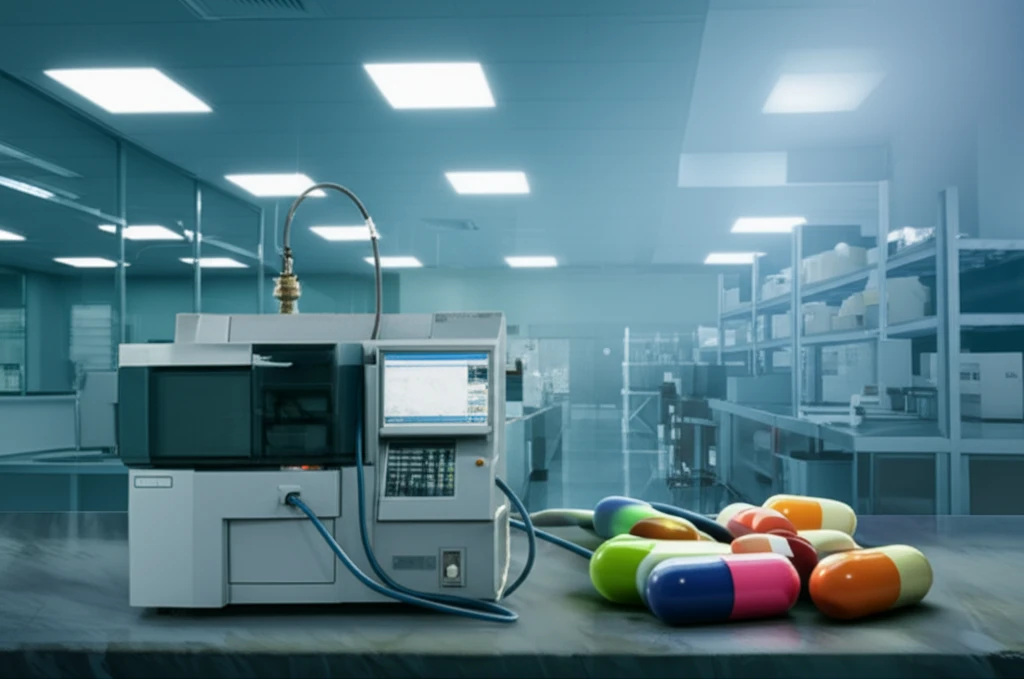
HPLC machine analyzing diabetes medication for safety

Decoding Your Diabetes Meds: A Simple Guide to Pioglitazone Impurities

"Worried about what's really in your medication? Discover how a new, sensitive testing method ensures the safety and effectiveness of your pioglitazone."


Managing type 2 diabetes often involves medication, and pioglitazone is a common prescription. It helps lower blood sugar levels, either on its own or in combination with other drugs. If you're taking pioglitazone, you likely want to be sure it's both effective and safe.

Like any medication, pioglitazone can contain trace amounts of other substances, known as 'related substances' or impurities. While these are present in small quantities, it's crucial to have methods that can accurately detect and measure them to ensure the drug's overall quality. This is where advanced analytical techniques come in.

This article will explain a highly sensitive method, called High-Performance Liquid Chromatography (HPLC), used to determine the presence and amount of these related substances in pioglitazone hydrochloride. Understanding this testing process can give you greater confidence in the medication you're taking.

HPLC: Your Medication's Quality Control Check

HPLC machine analyzing diabetes medication for safety

HPLC is like a super-powered detective for drugs. It's a technique used to separate, identify, and quantify each component within a mixture. In the case of pioglitazone, HPLC is used to find and measure three specific related substances: PGR-II, PIO-II, and N-oxide.

Here's a simplified breakdown of the HPLC process used for pioglitazone:

  • Preparation: The pioglitazone sample is dissolved in a solvent.
  • Separation: The dissolved sample is pushed through a special column that separates the different components based on their chemical properties. Think of it like a filter that sorts items by size and shape.
  • Detection: As each component exits the column, it's detected by a special instrument that measures its quantity.
  • Quantification: The amounts of PGR-II, PIO-II, and N-oxide are precisely measured.
The researchers in the original study meticulously developed and validated this HPLC method. This means they tested it rigorously to ensure it was accurate, precise, and reliable. They carefully controlled factors like the mobile phase (the liquid used to carry the sample), the column type, the temperature, and the detection wavelength. All these factors were optimized to give the best possible separation and measurement of the related substances.

The Takeaway: Reliable Testing for Safer Medication

This research provides a reliable and sensitive method for quantifying related substances in pioglitazone hydrochloride. This is important because it allows manufacturers and regulatory agencies to ensure the quality and safety of the medication.

For you, as someone taking pioglitazone, this means greater confidence in your medication. Knowing that there are robust methods in place to detect even trace amounts of impurities can provide peace of mind.

While this article explains the testing process, it's always a good idea to discuss any concerns you have about your medication with your doctor or pharmacist. They are the best resources for personalized medical advice.

About this Article -

This article was crafted using a human-AI hybrid and collaborative approach. AI assisted our team with initial drafting, research insights, identifying key questions, and image generation. Our human editors guided topic selection, defined the angle, structured the content, ensured factual accuracy and relevance, refined the tone, and conducted thorough editing to deliver helpful, high-quality information.See our About page for more information.

This article is based on research published under:

DOI-LINK: 10.22159/ijap.2017v9i2.16828, Alternate LINK

Title: Sensitive Determination Of Related Substances In Pioglitazone Hydrochloride By Hplc

Subject: Pharmaceutical Science

Journal: International Journal of Applied Pharmaceutics

Publisher: Innovare Academic Sciences Pvt Ltd

Authors: N. Balaji, Sayeeda Sultana

Published: 2017-03-10

Everything You Need To Know

1

Why is it important to test for related substances in Pioglitazone?

Pioglitazone, like many medications, can contain trace amounts of other substances referred to as 'related substances' or impurities. The presence of these substances, even in small quantities, necessitates accurate detection and measurement methods to guarantee the medication's overall quality and patient safety. High-Performance Liquid Chromatography (HPLC) serves this purpose by identifying and quantifying these related substances, thereby ensuring the drug's safety and effectiveness.

2

How does High-Performance Liquid Chromatography (HPLC) work to detect impurities in Pioglitazone?

High-Performance Liquid Chromatography (HPLC) works by first dissolving a Pioglitazone sample in a solvent. Then, the dissolved sample is passed through a specialized column that separates the different components based on their chemical properties. As each component exits the column, it's detected by an instrument that measures its quantity. Finally, the amounts of specific related substances such as PGR-II, PIO-II, and N-oxide are precisely measured, providing a detailed analysis of the drug's composition.

3

What are PGR-II, PIO-II, and N-oxide, and why are they monitored in Pioglitazone?

PGR-II, PIO-II, and N-oxide are specific related substances or impurities that can be found in Pioglitazone. The presence and quantity of these substances are monitored using High-Performance Liquid Chromatography (HPLC) to ensure they fall within acceptable safety limits. Accurate measurement of these impurities is crucial for maintaining the quality and safety of Pioglitazone, as deviations from established standards could impact the drug's effectiveness and patient safety.

4

How was the High-Performance Liquid Chromatography (HPLC) method for Pioglitazone validated to ensure reliability?

The High-Performance Liquid Chromatography (HPLC) method for Pioglitazone was rigorously developed and validated by researchers to ensure its accuracy, precision, and reliability. This involved carefully controlling factors such as the mobile phase, column type, temperature, and detection wavelength. By optimizing these parameters, the researchers created a method that provides the best possible separation and measurement of related substances like PGR-II, PIO-II, and N-oxide, ensuring consistent and dependable results.

5

What are the implications of using a reliable High-Performance Liquid Chromatography (HPLC) method for Pioglitazone testing?

The implementation of a reliable High-Performance Liquid Chromatography (HPLC) method for quantifying related substances in Pioglitazone hydrochloride has significant implications for both manufacturers and patients. For manufacturers, it provides a tool to ensure the quality and safety of their product, meeting regulatory standards and preventing potentially harmful impurities from reaching the market. For patients, this translates to greater confidence in the medication they are taking, knowing that it has been rigorously tested and meets stringent safety requirements, ultimately supporting better diabetes management.

Newsletter Subscribe

Subscribe to get the latest articles and insights directly in your inbox.