
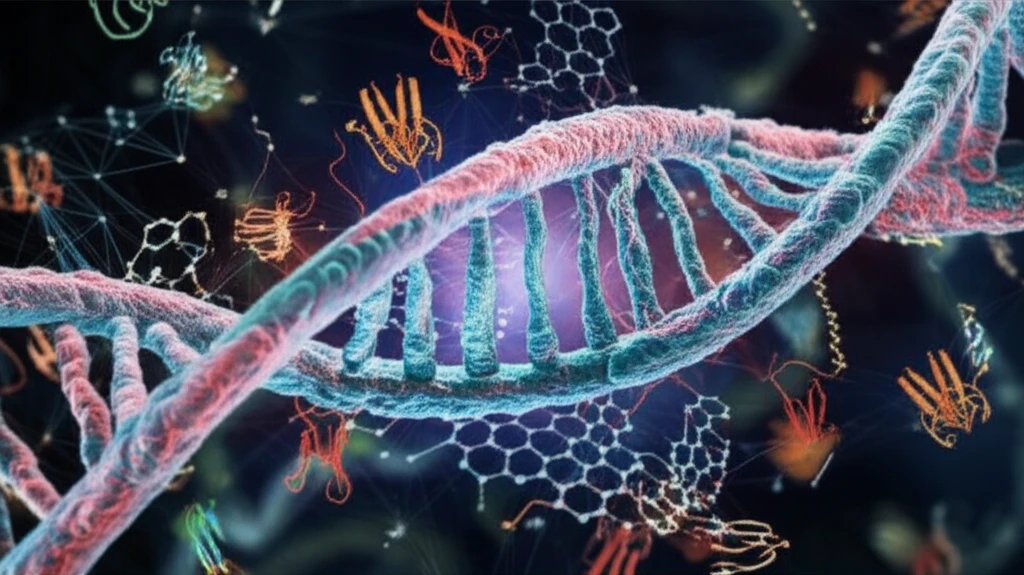
Interconnected DNA strands, proteins, and metabolic pathways forming a personalized health blueprint.

Decoding Your Body's Blueprint: How 'Omics Technologies are Revolutionizing Health

"Unlock the secrets hidden in your genes, proteins, and metabolites with the power of 'omics for personalized health and wellness."


Imagine a world where healthcare is tailored specifically to your individual needs, based on a deep understanding of your unique biological makeup. This is the promise of 'omics technologies, a suite of powerful tools that are revolutionizing the way we approach health and wellness. From decoding your genes to analyzing your metabolism, 'omics offers a comprehensive view of your body's intricate workings.

The term 'omics' encompasses a range of disciplines, including genomics (the study of genes), proteomics (the study of proteins), metabolomics (the study of metabolites), and more. These fields share a common goal: to analyze biological molecules on a large scale, providing insights into the complex interactions that govern our health. By studying these interactions, researchers can identify biomarkers for disease, predict individual responses to treatments, and develop personalized strategies for prevention.

While 'omics technologies have been around for some time, recent advances in instrumentation, data analysis, and standardization have made them more accessible and powerful than ever before. As a result, 'omics is poised to transform healthcare, offering the potential for more effective and personalized approaches to preventing and treating disease. Let’s dive into the world of 'omics and explore how these technologies are shaping the future of health.

What are 'Omics Technologies?

Interconnected DNA strands, proteins, and metabolic pathways forming a personalized health blueprint.

At its core, 'omics is about studying the complete set of something in biology. Instead of looking at one gene or one protein at a time, 'omics technologies allow scientists to analyze entire systems. This system-wide approach is crucial because our bodies are incredibly complex, with countless interactions occurring between different molecules.

Here’s a breakdown of some key 'omics fields:

  • Genomics: The study of all genes in an organism, including variations and interactions.
  • Epigenomics: The study of modifications to DNA that affect gene expression without altering the DNA sequence itself.
  • Transcriptomics: The study of all RNA molecules in a cell or organism, reflecting which genes are actively being expressed.
  • Proteomics: The study of all proteins in a cell or organism, including their structure, function, and interactions.
  • Metabolomics: The study of all small molecules (metabolites) in a cell or organism, providing insights into metabolic pathways and overall health.
  • Lipidomics: The study of all lipids (fats) in a cell or organism.
  • Immunomics: The study of the immune system and its response to pathogens and other threats.
Each of these 'omics fields provides a unique perspective on the body's inner workings. By integrating data from multiple 'omics sources, researchers can gain a more complete understanding of health and disease.

The Future is Personalized

'Omics technologies are not just for researchers; they have the potential to impact everyone's health. As these technologies become more accessible and affordable, they will likely play an increasingly important role in personalized prevention, diagnostics, and treatment. By understanding your unique biological blueprint, you can take control of your health and make informed decisions about your well-being. The future of healthcare is personalized, and 'omics is leading the way.

About this Article -

This article was crafted using a human-AI hybrid and collaborative approach. AI assisted our team with initial drafting, research insights, identifying key questions, and image generation. Our human editors guided topic selection, defined the angle, structured the content, ensured factual accuracy and relevance, refined the tone, and conducted thorough editing to deliver helpful, high-quality information.See our About page for more information.

This article is based on research published under:

DOI-LINK: 10.7205/milmed-d-15-00050, Alternate LINK

Title: Overview Of ‘Omics Technologies For Military Occupational Health Surveillance And Medicine

Subject: Public Health, Environmental and Occupational Health

Journal: Military Medicine

Publisher: Oxford University Press (OUP)

Authors: Christopher Bradburne, David Graham, H. M. Kingston, Ruth Brenner, Matt Pamuku, Lucy Carruth

Published: 2015-10-01

Everything You Need To Know

1

What exactly are 'omics technologies?

'Omics technologies involve studying the entirety of biological molecules within a system, rather than focusing on individual components. Key areas include genomics, which examines all genes; proteomics, which studies all proteins; metabolomics, which analyzes all metabolites; transcriptomics which studies all RNA molecules, epigenomics which studies the modifications to DNA and lipidomics, which studies all lipids. This comprehensive approach allows scientists to understand the complex interactions that influence health and disease.

2

Why is genomics so important in understanding health?

Genomics is significant because it involves the study of an organism’s complete set of genes, including variations and interactions. Understanding your genome can reveal predispositions to certain diseases, inform personalized treatment strategies, and provide insights into ancestry and inherited traits. It has implications for predicting disease risk and tailoring medical interventions.

3

What does proteomics tell us about our health and why is that important?

Proteomics is the large-scale study of proteins. It is important because proteins are the workhorses of cells, involved in nearly every biological process. By studying the proteome, scientists can identify biomarkers for disease, understand drug mechanisms, and develop targeted therapies. For example, proteomics can reveal which proteins are overexpressed in cancer cells, leading to the development of drugs that specifically target those proteins.

4

What is metabolomics and why is it useful in understanding health?

Metabolomics focuses on studying small molecules called metabolites, which are the end products of cellular processes. It is important because metabolites provide a snapshot of an organism's physiological state and can reflect the impact of genes, environment, and lifestyle. Alterations in the metabolome can indicate disease states, treatment responses, and nutritional status. This has implications for diagnosing metabolic disorders and personalizing dietary recommendations.

5

How do 'omics technologies contribute to personalized medicine?

Personalized medicine leverages the insights gained from 'omics technologies to tailor healthcare to an individual's unique biological makeup. By analyzing an individual's genome, proteome, and metabolome, healthcare providers can develop targeted prevention strategies, diagnostics, and treatments that are more effective and have fewer side effects. The implications include earlier disease detection, more precise drug selection, and improved patient outcomes. Immunomics also plays a role in understanding the immune system, although it's not directly mentioned, contributing to personalized immunotherapy approaches.

Newsletter Subscribe

Subscribe to get the latest articles and insights directly in your inbox.