
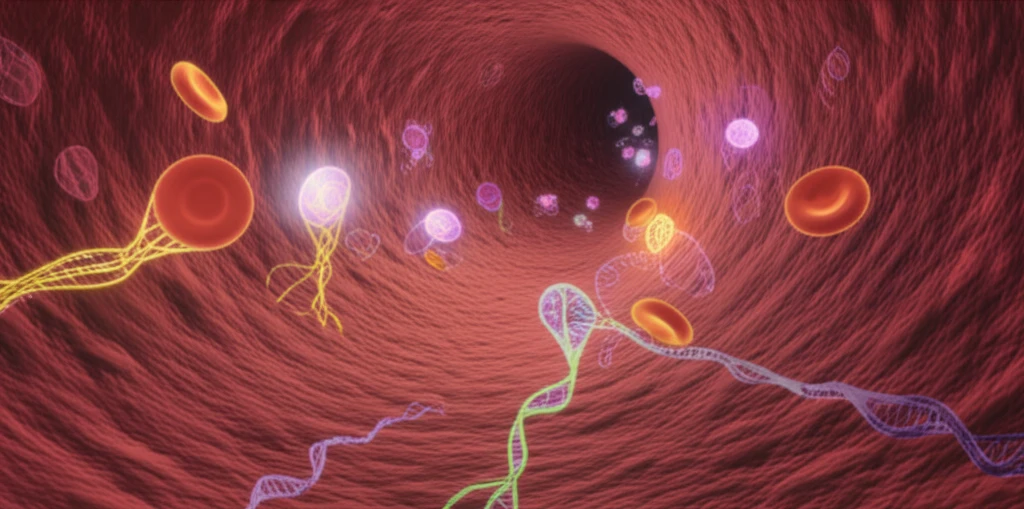
Decoding Your Blood: How Scientists Are Unraveling the Secrets of Somatic Mutations and What It Means for You

"Groundbreaking research sheds light on the hidden world of somatic mutations in blood cells, offering insights into aging, disease, and personalized health."
We often think of our bodies as static entities, but at the cellular level, a constant drama of change is unfolding. One of the most fascinating aspects of this hidden world is the realm of somatic mutations – genetic alterations that occur in our body's cells throughout our lives, not inherited from our parents. Think of them as tiny typos in the cellular instruction manual, accumulating over time and potentially influencing our health.
Recently, a remarkable study published in Cell Reports has delved deep into the world of somatic mutations within human blood cells. This research, spearheaded by Fernando G. Osorio and his team, provides unprecedented insights into how these mutations accumulate, the processes that drive them, and their potential impact on our health. This groundbreaking work not only enhances our understanding of aging and disease but also paves the way for innovative approaches to personalized medicine.
This article delves into the key findings of this study, exploring the intricate relationship between somatic mutations and the development of our blood cells. We'll unravel the mysteries of mutational signatures, explore how these mutations relate to the risk of blood cancers, and discuss the exciting implications of these findings for the future of healthcare. Prepare to embark on a journey into the microscopic world, where the secrets of your blood cells are revealed.
Unveiling the Blood's Secrets: How Somatic Mutations Accumulate and What They Reveal
The researchers' meticulous work involved analyzing the genomes of blood stem cells and their progeny. They discovered that somatic mutations accumulate gradually over a lifetime, with approximately 14 base substitutions occurring per year per cell. Think of it as a steady rate of genetic 'typos' building up within our blood cells. This accumulation isn't random; it's driven by various endogenous processes, like the natural wear and tear of cellular processes and exposure to environmental factors.
- Signature 1: Linked to spontaneous deamination of methylated cytosines, a process that appears to act in a "clock-like" manner, with mutations accumulating consistently over time.
- Signature 5: The most prevalent signature in adult blood stem cells. Its underlying process is still unknown.
- Signature 32: Newly identified, this signature is linked to a specific type of DNA damage and may be related to environmental factors or certain treatments.
The Future of Blood Research: A Path Towards Personalized Health
The findings of Osorio et al. offer valuable insights into the inner workings of our blood and its potential vulnerabilities. By understanding the processes that drive somatic mutations, scientists are paving the way for new diagnostic tools and therapeutic strategies. As we continue to unravel the mysteries of our blood cells, the future holds the promise of earlier cancer detection, more targeted treatments, and innovative approaches to promote healthy aging. The journey into the microscopic world of blood is just beginning, and its discoveries could revolutionize the way we approach health and wellness.