
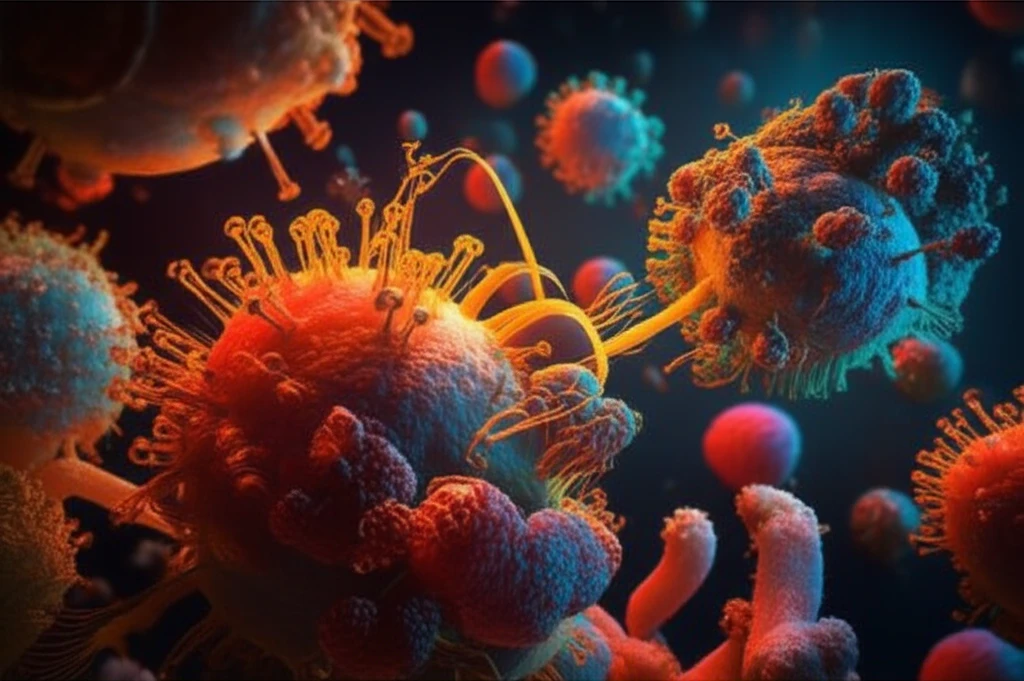
Microscopic view of virus infecting cell

Decoding Viruses: A Comprehensive Guide to Understanding and Combating Viral Infections

"A deep dive into the world of virology, exploring the latest research and what it means for your health."


Viruses, often invisible to the naked eye, play a significant role in our health and environment. From the common cold to more severe illnesses, understanding these tiny entities is crucial. This article aims to provide a clear, accessible overview of virology, drawing on the latest research to explain what viruses are, how they function, and what we can do to combat them.

Virology is the study of viruses – infectious agents of small size and simple composition that can multiply only in living cells of animals, plants, or bacteria. Viruses have the ability to cause a wide array of diseases. Recent advances in virology have not only deepened our understanding of viral mechanisms but also paved the way for innovative treatments and preventive measures.

In this article, we'll explore the core concepts of virology. By translating complex research into understandable language, we aim to empower you with the knowledge to better protect your health and understand the world of viruses.

What Exactly is a Virus? Understanding Viral Structure and Function

Microscopic view of virus infecting cell

Viruses are fundamentally different from bacteria or fungi. They're not technically alive, because they cannot reproduce without a host cell. A virus particle, also known as a virion, consists of genetic material (either DNA or RNA) surrounded by a protective protein coat called a capsid. Some viruses also have an outer envelope made of lipids.

The basic structure of a virus includes:

  • Genetic Material: Either DNA or RNA, carrying the instructions for replication.
  • Capsid: A protein shell that protects the genetic material.
  • Envelope (in some viruses): A lipid layer derived from the host cell membrane, often studded with viral proteins.
Viruses bind to specific receptors on host cells. This binding is a crucial determinant of which cells the virus can infect. Once inside, the virus hijacks the host cell's machinery to replicate its genetic material and produce more viral proteins. These components assemble into new virus particles, which are then released to infect more cells. This process can cause damage to the host cell.

Staying Ahead of Viruses: What Does It Mean?

Understanding viruses is not just for scientists; it's vital knowledge for anyone wanting to protect their health. By understanding how viruses work, we can make informed decisions about prevention, treatment, and public health policies.

As research continues, we can expect even more effective antiviral therapies and vaccines to emerge. Staying informed about the latest discoveries in virology is crucial for adapting to the ever-changing landscape of viral diseases.

Whether you're curious about the science behind viral infections or seeking practical advice for staying healthy, we hope this comprehensive guide has provided valuable insights. Viruses will always be a part of our world, but with knowledge and awareness, we can navigate this microscopic realm with confidence.

About this Article -

This article was crafted using a human-AI hybrid and collaborative approach. AI assisted our team with initial drafting, research insights, identifying key questions, and image generation. Our human editors guided topic selection, defined the angle, structured the content, ensured factual accuracy and relevance, refined the tone, and conducted thorough editing to deliver helpful, high-quality information.See our About page for more information.

Everything You Need To Know

1

What exactly is a virus, and how does it differ from bacteria or fungi?

A virus is a tiny infectious agent composed of genetic material, either DNA or RNA, enclosed in a protective protein coat called a capsid. Some viruses also have an outer envelope made of lipids. Unlike bacteria or fungi, viruses are not technically alive because they require a host cell to reproduce. They infect host cells by binding to specific receptors, hijacking the cell's machinery to replicate, and then releasing new virus particles to infect more cells. This process often damages or destroys the host cell. This description focuses on the structure and function; future research could explore specific types of viruses and their unique mechanisms.

2

What is virology, and what kind of advances have been made in this field recently?

Virology is the scientific study of viruses. This field includes understanding viral structure, how viruses infect cells, how they replicate, and how they cause disease. Recent advances in virology have significantly deepened our understanding of viruses, leading to the development of innovative treatments and preventive measures, such as vaccines and antiviral drugs. However, many aspects of virology, such as the origins of viruses and the full scope of their interactions with different organisms, are still being actively researched.

3

Can you describe the basic structure of a virus, including its key components?

The basic structure of a virus includes genetic material (either DNA or RNA), a capsid which is a protein shell protecting the genetic material, and in some viruses, an envelope. The genetic material carries the instructions for replication, the capsid protects this material, and the envelope (if present) is a lipid layer derived from the host cell membrane, often studded with viral proteins. These components work together to enable the virus to infect cells and replicate. Further exploration could cover the diversity of viral structures and how they relate to infectivity.

4

How do viruses cause disease, and what are the mechanisms involved in viral infection?

Viruses can cause a wide range of diseases. They infect host cells by binding to specific receptors on the cell surface. Once inside, the virus hijacks the host cell's machinery to replicate its genetic material and produce more viral proteins. These components are then assembled into new virus particles, which are released to infect more cells. This replication process can damage or destroy the host cell, leading to disease. Future studies could explore the specific mechanisms of different viral infections and how they cause different types of diseases.

5

Why is it important for individuals to understand viruses, and how can this knowledge help protect health?

Understanding viruses is important for protecting your health because it allows for making informed decisions about prevention, treatment, and public health policies. Knowing how viruses work helps to implement effective strategies to prevent infection, develop antiviral treatments, and create vaccines. In addition, understanding the implications of viral infections for public health can inform policies and interventions to control outbreaks and protect communities. Future research and public health initiatives could focus on promoting better understanding of viruses and how to protect ourselves and our communities.

Newsletter Subscribe

Subscribe to get the latest articles and insights directly in your inbox.