
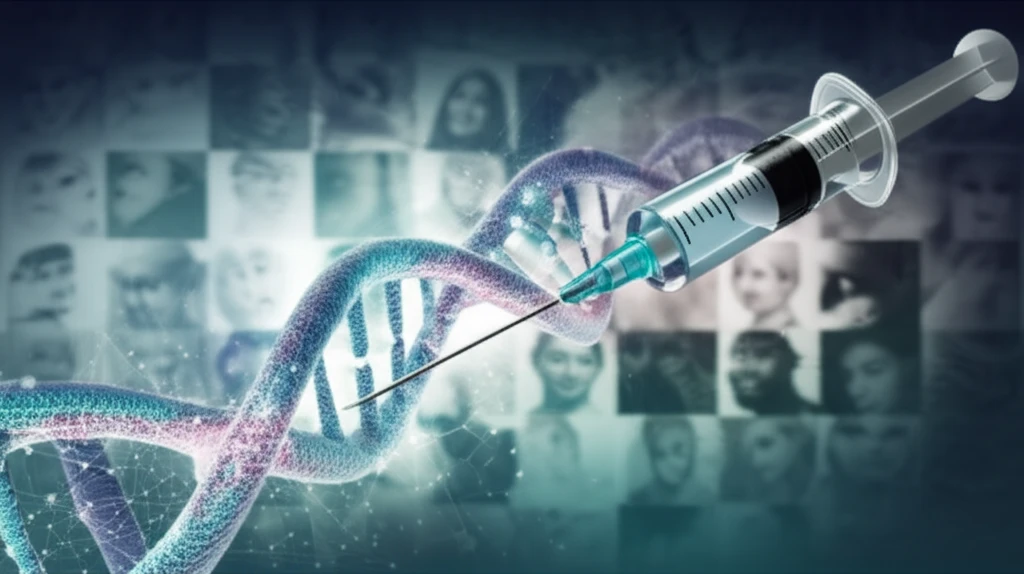
Decoding Vaccines: How Your Genes Shape Immunity in the Era of Personalized Medicine

"Unlock the secrets of personalized vaccines. Learn how your unique genetic blueprint influences vaccine effectiveness and paves the way for tailored immunizations."
Vaccines stand as one of medicine's greatest triumphs, providing a sustainable defense against infectious diseases. By introducing antigens – components resembling disease-causing microorganisms – vaccines stimulate the body's immune system, creating a protective shield against specific illnesses. Over the past century, widespread vaccination has dramatically reduced the incidence and mortality of diseases like polio, smallpox, diphtheria, measles, and hepatitis B.
Despite the remarkable success of vaccines, gaps remain, with ongoing efforts to develop effective immunizations against both new and old threats. The field has evolved through generations: from the early use of live attenuated or inactivated pathogens to modern vaccines composed of isolated cellular or structural components, like polysaccharides and protein antigens. This evolution is fueled by advances in DNA technology and carbohydrate chemistry.
Traditional vaccine development faces hurdles such as non-cultivable pathogens, rapidly mutating antigens, and opportunistic infections. The ultimate goal of vaccination is to elicit a protective immune response in everyone; however, the reality is that responses vary widely, reflecting the complex interplay between the host's immune system, genetics, and environmental factors. As genomics blossoms, personalized and predictive vaccinology is beginning to emerge as a way to surpass the 'one size fits all' approach.
The Genetic Blueprint of Vaccine Response: Why Personalized Vaccines Matter
The effectiveness of a vaccine is not solely determined by the vaccine itself, but also by individual characteristics such as gender, age, co-existing health conditions, immune system status, and, most importantly, genetic background. The influence of genetics on immune responses, both innate and adaptive, has been demonstrated across various viral vaccines, including those for smallpox, influenza, measles, rubella, and mumps. Understanding how genetic variations affect vaccine response is crucial for developing tailored vaccines that maximize protection for each individual.
- Vaccinomics: Integrates systems biology, immunogenetics, immunogenomics, metagenomics, immune profiling, and functional studies to understand and predict immune responses induced by vaccines.
- Omics Technologies: Incorporates transcriptomics, metagenomics, metabolomics, and adversomics to decipher the functionality and organization of immune responses.
- Personalized Medicine: Aims to provide patients with specific treatments tailored to their genetic profile and molecular phenotype.
The Road Ahead: Personalized Vaccinology and a Healthier Future
The immune response network theory posits that vaccine response is a cumulative result of gene interactions and environmental influences, theoretically making it predictable. Scientists are working to refine this definition by including epigenetics, metagenomics, and other influential factors. Overcoming obstacles like genetic variability and pathogen evolution requires a systemic approach that integrates various 'omic' layers of information, such as proteomics, transcriptomics, metabolomics, and genomics.