
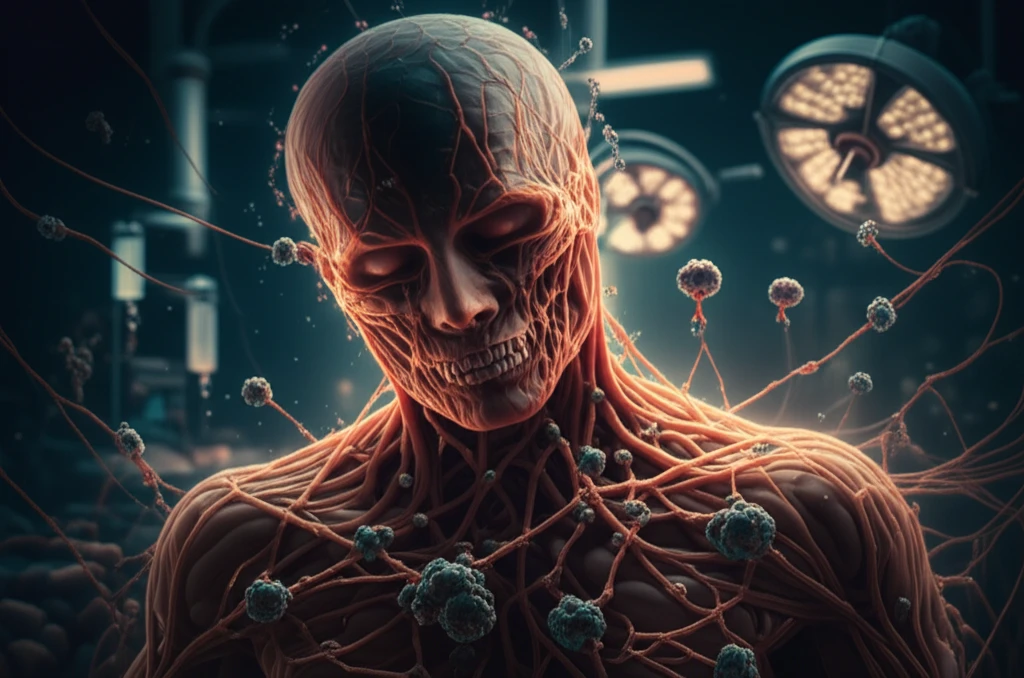
Complex network of blood clots with central thrombin figure.

Decoding Trauma's Deadly Cascade: How Thrombin Drives Acute Coagulopathy

"New insights into acute traumatic coagulopathy (ATC) reveal thrombin as the key driver, challenging previous assumptions about activated protein C (aPC)."


Acute traumatic coagulopathy (ATC) is a dangerous condition that can occur after a severe injury. It disrupts the normal blood clotting process, leading to uncontrolled bleeding and increased risk of death. For years, medical professionals have been working to understand the causes and mechanisms behind ATC in order to develop better treatments.

A recent study by Davenport et al. suggested that activated protein C (aPC) plays a central role in ATC, specifically in the depletion of fibrinogen, a crucial clotting protein. However, a new correspondence raises important questions about this theory, arguing that the evidence points to a different culprit: thrombin.

This article delves into the debate surrounding the primary driver of ATC, exploring the arguments for and against the roles of aPC and thrombin. By understanding the true mechanisms behind this deadly condition, we can pave the way for more effective interventions and improved patient outcomes.

Is Thrombin the Real Culprit in Acute Trauma Coagulopathy?

Complex network of blood clots with central thrombin figure.

The original study proposed that aPC-induced anticoagulation and fibrinolysis (the breakdown of clots) were the main drivers of ATC. However, the authors of the correspondence argue that the data doesn't fully support this conclusion, citing several key points:

The correspondence emphasizes that the study measured D-dimer as an indicator of fibrinolysis. D-dimer is a byproduct of plasmin, which breaks down fibrin after it has been cross-linked by activated factor XIII. The absence of other markers directly linked to fibrinogen degradation raises concerns. Elevated D-dimer levels may simply indicate the body's response to massive thrombin generation, leading to both clot formation and subsequent breakdown.

  • D-dimer as a marker: The reliance on D-dimer as the sole indicator of fibrinolysis is questioned, as it primarily reflects the breakdown of cross-linked fibrin by plasmin.
  • Factor V vulnerability: The argument that factor V is particularly susceptible to aPC-mediated breakdown is challenged. The authors note that Factor V reduction wasn't significantly different from other factors, undermining the idea that aPC is selectively targeting it.
  • Timing matters: The timing of ATC evaluation is critical. Fibrin formation (loss of fibrinogen) occurs rapidly after injury, while fibrinolysis and aPC generation occur later. The study's single time point might not capture the full picture.
According to the correspondence, the fact that thrombin-activatable fibrinolysis inhibitor (TAFI) was not effectively inhibiting fibrinolysis in the study cohort suggests a different mechanism. TAFI and aPC have short half-lives and are generated by circulating thrombin, indicating that thrombin-mediated processes are at play.

The Role of Thrombin in ATC: A New Perspective

In conclusion, the correspondence suggests that uncontrolled thrombin generation, rather than aPC, is the primary driver of high aPC levels and the resulting complications in ATC. This interpretation aligns with observations in postcardiac surgery patients, where elevated thrombin generation is associated with poorer outcomes. Further research is needed to fully elucidate the complex interplay of factors involved in ATC, but this new perspective highlights the critical role of thrombin and may lead to more targeted therapies in the future.

About this Article -

This article was crafted using a human-AI hybrid and collaborative approach. AI assisted our team with initial drafting, research insights, identifying key questions, and image generation. Our human editors guided topic selection, defined the angle, structured the content, ensured factual accuracy and relevance, refined the tone, and conducted thorough editing to deliver helpful, high-quality information.See our About page for more information.

This article is based on research published under:

DOI-LINK: 10.1097/aln.0000000000001760, Alternate LINK

Title: Acute Traumatic Coagulopathy: Thrombin Is The Driver!

Subject: Anesthesiology and Pain Medicine

Journal: Anesthesiology

Publisher: Ovid Technologies (Wolters Kluwer Health)

Authors: Kenichi A. Tanaka, Michael A. Mazzeffi, Brittney Williams

Published: 2017-09-01

Everything You Need To Know

1

What is acute traumatic coagulopathy (ATC), and why is it important to understand?

Acute traumatic coagulopathy (ATC) is a dangerous condition that can arise following a severe injury. It severely impairs the body's normal blood clotting processes. This can lead to uncontrolled bleeding, which significantly increases the risk of death. Understanding ATC is crucial for developing effective treatments and improving patient outcomes after traumatic injuries.

2

What is thrombin, and what role does it play in acute traumatic coagulopathy (ATC)?

Thrombin is a central enzyme in the coagulation cascade. Its role in acute traumatic coagulopathy (ATC) is now considered more significant than previously thought. Uncontrolled thrombin generation can lead to both excessive clot formation and subsequent breakdown, contributing to the complications observed in ATC.

3

What is D-dimer, and what does it indicate in the context of acute traumatic coagulopathy (ATC)?

D-dimer is a byproduct formed during the breakdown of cross-linked fibrin by plasmin and is often measured as an indicator of fibrinolysis (the breakdown of clots). In the context of acute traumatic coagulopathy (ATC), elevated D-dimer levels might reflect the body's response to significant thrombin generation, where both clot formation and breakdown occur simultaneously. However, it may not provide a complete picture of fibrinogen degradation, as it is only one marker of the process.

4

What is activated protein C (aPC), and how does it relate to acute traumatic coagulopathy (ATC)?

Activated protein C (aPC) is an anticoagulant protein that was initially thought to be a primary driver in acute traumatic coagulopathy (ATC), specifically in the depletion of fibrinogen. However, newer research suggests that uncontrolled thrombin generation is the main factor, challenging the primary role previously attributed to aPC. The specific role of aPC in ATC is still debated and requires further research.

5

What is thrombin-activatable fibrinolysis inhibitor (TAFI), and what does its activity suggest about acute traumatic coagulopathy (ATC)?

Thrombin-activatable fibrinolysis inhibitor (TAFI) is an enzyme that inhibits fibrinolysis, the breakdown of blood clots. In the context of acute traumatic coagulopathy (ATC), if TAFI is not effectively inhibiting fibrinolysis, it suggests that thrombin-mediated processes are actively involved. Both TAFI and aPC are generated by circulating thrombin, underscoring thrombin's significant role in ATC.

Newsletter Subscribe

Subscribe to get the latest articles and insights directly in your inbox.