
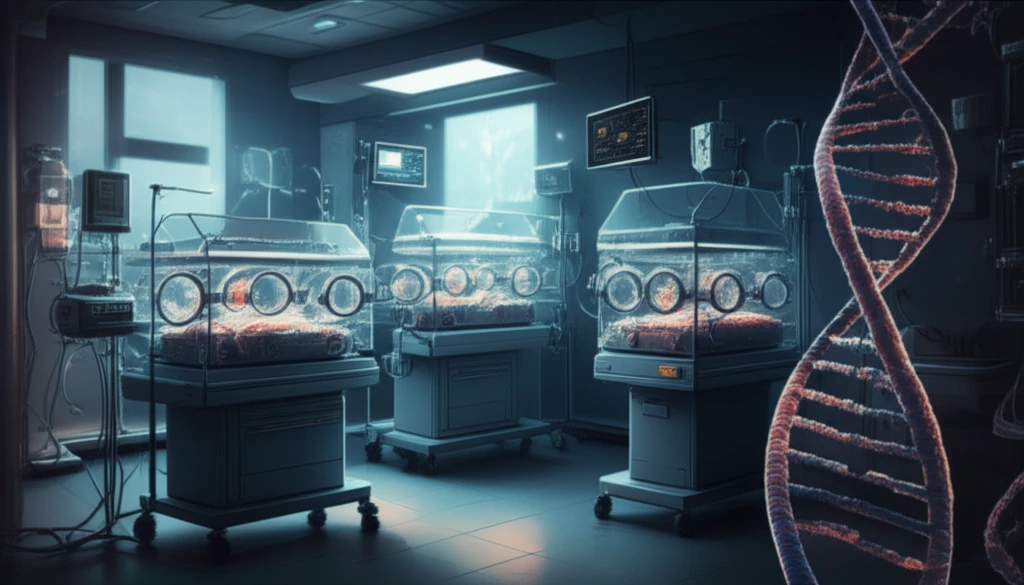
Genomic analysis in neonatal care.

Decoding the Threat: How Genomic Analysis Can Help Us Fight Multi-Resistant Staphylococcus capitis in Neonatal Sepsis

"A deep dive into how a new study is using genomic analysis to understand the rise of multi-resistant Staphylococcus capitis in neonatal intensive care units and what it means for the future of infection control."


In neonatal intensive care units (NICUs), bloodstream infections are a major concern. Coagulase-negative staphylococci (CoNS), especially Staphylococcus capitis, are significant culprits in these infections. A concerning trend is the emergence of multi-resistant strains of S. capitis, making treatment more challenging.

A specific clone of S. capitis, known as NRCS-A, has become a notable pathogen in NICUs worldwide. Researchers are working hard to understand how these bacteria are spreading and evolving, with the goal of developing better strategies to protect vulnerable newborns.

A recent study analyzed 122 S. capitis isolates from New Zealand using whole genome sequencing (WGS). By comparing these genomes and assessing traits like antimicrobial resistance and biofilm formation, researchers uncovered important insights into the bacterium's behavior and potential vulnerabilities.

What Did Genomic Analysis Reveal About Staphylococcus capitis?

Genomic analysis in neonatal care.

The study identified a distinct lineage of S. capitis in New Zealand that is specifically associated with neonates and the NICU environment. Key findings include:

Increased Biofilm Production: Isolates from this lineage produced more biofilm, which is a sticky substance that helps bacteria attach to surfaces and resist antibiotics.

  • Higher Tolerance to Chlorhexidine: These isolates were more tolerant to chlorhexidine, a common antiseptic used in healthcare settings.
  • Multidrug Resistance: The isolates exhibited resistance to multiple drugs, making infections harder to treat.
  • Novel Plasmid: The New Zealand NICU isolates carried a unique multidrug-resistant plasmid not found in non-NICU isolates. A plasmid is a small DNA molecule within a cell that is physically separated from chromosomal DNA and can replicate independently.
Importantly, neonatal blood culture isolates were nearly identical to S. capitis found on surfaces in the NICU, such as stethoscopes and incubators. This suggests that the NICU environment itself may be a reservoir for these infections.

What Does This Mean for Preventing Infections?

This research highlights the critical role of the NICU environment in the spread of S. capitis. By using genomics to track and understand these bacteria, hospitals can develop more effective infection control practices. This may include enhanced cleaning protocols, more judicious use of antimicrobials, and strategies to prevent the formation and spread of biofilms. Ultimately, the goal is to create a safer environment for newborns and reduce the incidence of neonatal sepsis.

About this Article -

This article was crafted using a human-AI hybrid and collaborative approach. AI assisted our team with initial drafting, research insights, identifying key questions, and image generation. Our human editors guided topic selection, defined the angle, structured the content, ensured factual accuracy and relevance, refined the tone, and conducted thorough editing to deliver helpful, high-quality information.See our About page for more information.

This article is based on research published under:

DOI-LINK: 10.1128/aac.00898-18, Alternate LINK

Title: Genomic Analysis Of Multiresistant Staphylococcus Capitis Associated With Neonatal Sepsis

Subject: Infectious Diseases

Journal: Antimicrobial Agents and Chemotherapy

Publisher: American Society for Microbiology

Authors: Glen P. Carter, James E. Ussher, Anders Gonçalves Da Silva, Sarah L. Baines, Helen Heffernan, Thomas V. Riley, Roland Broadbent, Antje Van Der Linden, Jean Lee, Ian R. Monk, Timothy P. Stinear, Benjamin P. Howden, Deborah A. Williamson

Published: 2018-11-01

Everything You Need To Know

1

What is genomic analysis and why is it important in understanding *Staphylococcus capitis* infections?

Genomic analysis, such as whole genome sequencing (WGS), is a method used to examine the complete DNA sequence of an organism, like *Staphylococcus capitis*. It is significant because it allows researchers to identify specific strains, track their spread, and understand their resistance mechanisms. The implications of using genomic analysis include the ability to develop targeted infection control strategies and a better understanding of how bacteria evolve and adapt within environments like neonatal intensive care units (NICUs). It can also reveal how similar isolates are across different locations. Without it, tracking and understanding the source of outbreaks would be very difficult.

2

What is *Staphylococcus capitis* and why is it a concern in neonatal intensive care units?

*Staphylococcus capitis* is a type of bacteria, specifically a coagulase-negative staphylococcus (CoNS), that is increasingly causing bloodstream infections, particularly in neonatal intensive care units (NICUs). It's significant because certain strains, like NRCS-A, have developed multi-resistance to antibiotics, making infections harder to treat. The implications of this include increased morbidity and mortality in vulnerable newborns, as well as the need for more aggressive and potentially toxic treatment options. Understanding the characteristics of *S. capitis* infections is essential for targeted interventions.

3

What does it mean when *Staphylococcus capitis* has increased biofilm production, and why is this important?

Biofilm production refers to the creation of a sticky substance by bacteria that allows them to adhere to surfaces and resist antibiotics. In the context of *Staphylococcus capitis*, increased biofilm production is significant because it contributes to the bacteria's persistence in the NICU environment and its ability to evade antimicrobial treatments. The implications include difficulty in eradicating the bacteria from surfaces and medical equipment, leading to recurrent infections. Strategies to disrupt biofilm formation could be a key component of effective infection control.

4

What is a plasmid, and why is the presence of a novel multidrug-resistant plasmid in *Staphylococcus capitis* significant?

A plasmid is a small DNA molecule within a cell that is physically separated from chromosomal DNA and can replicate independently. The presence of a novel multidrug-resistant plasmid in New Zealand NICU isolates of *Staphylococcus capitis* is significant because it indicates a mechanism by which the bacteria can rapidly acquire and share resistance genes. The implication is a faster spread of antimicrobial resistance within the bacterial population, making infections increasingly difficult to treat. Plasmids facilitate horizontal gene transfer, accelerating the evolution of resistance.

5

What does multi-drug resistance mean for *Staphylococcus capitis*, and why is it such a problem?

Multi-drug resistance means that certain isolates of *Staphylococcus capitis* are resistant to multiple antibiotics, making infections caused by these isolates very difficult to treat. The significance of this is that common antibiotic treatments may not be effective, leading to prolonged illness, increased use of more toxic drugs, and higher mortality rates, particularly in vulnerable neonates. This highlights the urgent need for alternative treatment strategies and enhanced infection control measures to prevent the spread of these resistant strains. In the absence of effective antibiotics, infection control protocols become even more critical.

Newsletter Subscribe

Subscribe to get the latest articles and insights directly in your inbox.