
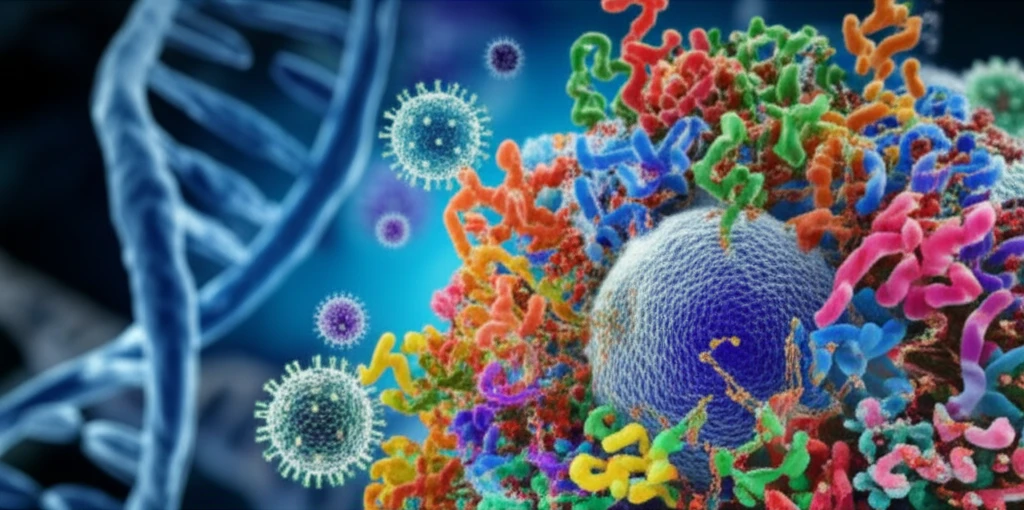
Illustration depicting a human cell covered in glycans (sugars), interacting with viruses and immune cells, symbolizing the role of glycans in health and disease.

Decoding the Sweet Secrets: How Scientists Are Unraveling the Complex World of Sugars in Your Body

"From Viral Infections to Cancer: The Revolutionary Techniques Scientists Are Using to Understand How Sugars Shape Our Health"


Ever wondered how your body knows the difference between a healthy cell and a sick one? Or why some viruses seem to latch onto your cells with ease? The answer, in many cases, lies in the fascinating world of sugars, also known as glycans. These complex molecules, adorning the surfaces of our cells like tiny flags, play a crucial role in everything from immune responses to cellular communication.

For a long time, the study of these sugars, called glycomics, lagged behind the study of proteins and genes. Now, thanks to innovative techniques, scientists are starting to unlock the secrets held within these complex structures. From understanding how viruses invade our cells to developing new cancer therapies, the study of glycans is transforming our understanding of health and disease.

This article dives into the exciting world of glycomics, exploring the new methods researchers are using to map and analyze these essential molecules. We'll explore how these advancements are helping us understand the roles of sugars in various diseases and the potential for groundbreaking new treatments. Prepare to be amazed by the sweet secrets your body holds!

Why Sugars Matter: Unveiling the Hidden Roles of Glycans

Illustration depicting a human cell covered in glycans (sugars), interacting with viruses and immune cells, symbolizing the role of glycans in health and disease.

Glycans are more than just the simple sugars we think of when we crave a sweet treat. They're complex carbohydrates, chains of sugar molecules that decorate the surface of our cells. Think of them as a cellular 'barcode', providing vital information that cells use to interact with each other and the outside world. These interactions are critical for normal bodily functions and can go wrong in many diseases.

These sugar molecules are involved in numerous biological processes and pathological processes, including cell-cell communication, immune responses, and even how viruses recognize and latch onto our cells. Understanding glycans is therefore critical for understanding human health and disease. The diversity of these sugar structures is staggering, with different arrangements providing unique signals.

  • Cellular Communication: Glycans act as messengers, helping cells 'talk' to each other.
  • Immune Response: Glycans help the immune system recognize and respond to threats.
  • Viral Infections: Many viruses use glycans to attach to and infect cells.
  • Cancer Progression: Changes in glycan structures can fuel cancer growth and spread.
  • Disease Biomarkers: Glycans can serve as early warning signs for diseases like cancer.
The complexity of glycans, with their branching structures and various modifications, has made them challenging to study. However, new technologies are rapidly changing this, opening up new avenues for understanding their roles in health and disease. Let's delve into some of these revolutionary techniques.

The Future of Glycomics: Promising Avenues for Health and Beyond

The study of glycans is still in its early stages, but the potential for discoveries is immense. As scientists continue to refine and expand their analytical tools, we can expect to see even more breakthroughs in our understanding of these fascinating molecules and their impact on our health. The insights gleaned from glycomics are poised to revolutionize how we diagnose, treat, and prevent a wide range of diseases, paving the way for a healthier future.

About this Article -

This article was crafted using a human-AI hybrid and collaborative approach. AI assisted our team with initial drafting, research insights, identifying key questions, and image generation. Our human editors guided topic selection, defined the angle, structured the content, ensured factual accuracy and relevance, refined the tone, and conducted thorough editing to deliver helpful, high-quality information.See our About page for more information.

Everything You Need To Know

1

What are glycans and why are they important for understanding health?

Glycans, also known as sugars, are complex carbohydrates that decorate the surface of our cells. They play a crucial role in cellular communication, immune responses, viral infections, cancer progression, and can serve as disease biomarkers. Glycans act as a cellular 'barcode', providing vital information that cells use to interact with each other and the outside world. Understanding glycans is therefore critical for understanding human health and disease. The diversity of these sugar structures is staggering, with different arrangements providing unique signals.

2

How does glycomics contribute to our understanding of viral infections, and can it help develop new treatments?

Glycomics is crucial in understanding how viruses attach to and infect cells. Many viruses use glycans on the cell surface to gain entry. By studying these interactions, scientists can identify potential targets for antiviral therapies. For example, understanding the specific glycan structures that a virus binds to may allow researchers to develop drugs that block this interaction, preventing infection. Glycomics can also help in understanding how the immune system recognizes and responds to viral infections, leading to the development of vaccines and immunotherapies.

3

What are the main challenges in studying glycans, and how are scientists overcoming them?

The complexity of glycans, with their branching structures and various modifications, has historically made them challenging to study. Unlike proteins and genes, glycans do not have a simple, template-driven synthesis process, leading to immense structural diversity. However, innovative techniques are rapidly changing this. New methods allow scientists to map and analyze these essential molecules, opening up new avenues for understanding their roles in health and disease. The field of glycomics is rapidly advancing due to these technological developments.

4

In what ways can glycomics revolutionize the diagnosis and treatment of diseases like cancer?

Glycomics offers the potential to revolutionize the diagnosis and treatment of diseases like cancer by identifying changes in glycan structures that can fuel cancer growth and spread. Glycans can serve as early warning signs for diseases like cancer, allowing for earlier and more accurate diagnosis. Additionally, understanding the specific glycans involved in cancer progression can lead to the development of targeted therapies that disrupt these processes. For example, researchers could develop drugs that block the interaction between cancer cells and glycans, preventing metastasis. Glycomics could also lead to the development of personalized cancer treatments based on an individual's unique glycan profile.

5

How does the study of glycans relate to cellular communication and the immune system, and what are the implications for future therapies?

Glycans play a critical role in cellular communication, acting as messengers that help cells 'talk' to each other. They also help the immune system recognize and respond to threats. These interactions are critical for normal bodily functions. Glycomics can provide insights into how these processes are disrupted in disease, leading to the development of therapies that restore normal cellular communication and immune function. For example, understanding the glycan structures that mediate immune cell interactions could lead to the development of immunotherapies that enhance the body's ability to fight off infections and cancer. The future of glycomics holds immense promise for improving human health by targeting these fundamental processes.

Newsletter Subscribe

Subscribe to get the latest articles and insights directly in your inbox.