
Decoding the Stock Market: Is 'Risk' Really What We Think It Is?

"New Research Challenges Conventional Wisdom on Risk, Offering Fresh Insights for Investors"
The stock market can often feel like navigating a complex maze. For decades, experts have tried to understand why stocks offer higher returns than bonds—a concept known as the 'equity premium'. Traditional wisdom suggests that this premium exists because stocks are riskier. But what if our understanding of 'risk' itself is flawed?
A groundbreaking new paper, 'Equity Premium in Efficient Markets,' challenges this conventional view. Authored by B.N. Kausik, the study suggests that in efficient markets, the way we perceive and react to risk isn't constant. Instead, it changes based on the available information. This has profound implications for how investors should approach the market.
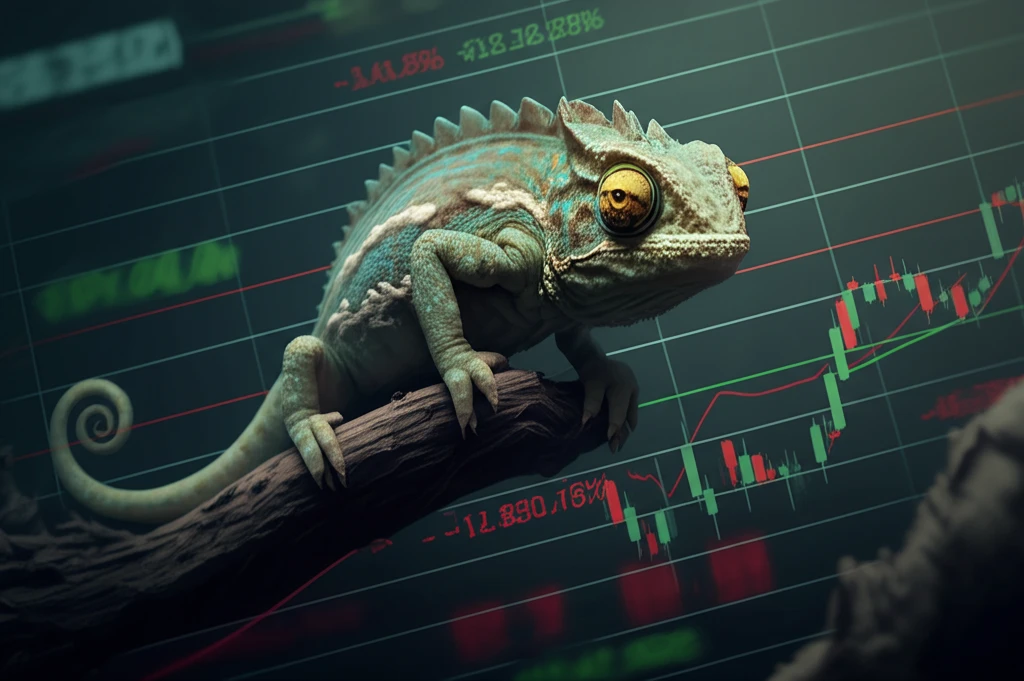
Imagine risk as a chameleon, adapting its colors to blend with different environments. Kausik's research indicates that our tolerance for risk fluctuates depending on the specific context of our investments. This challenges the long-held belief that investors maintain a consistent attitude towards risk, regardless of the situation.
The Polymorphic Nature of Risk: Why One Size Doesn't Fit All
For years, financial models have operated under the assumption that investors have a fixed 'risk aversion' – a constant level of discomfort with the possibility of loss. Kausik’s study throws a wrench in this idea. The research proposes that in an efficient market, 'risk aversion' is polymorphic. This means it changes shape depending on the information at hand.
- Risk-Neutral Bonds: Investors treat bonds as virtually risk-free, focusing on maximizing returns without worrying too much about potential losses.
- Risk-Averse Equities: With stocks, investors become more cautious, carefully weighing potential gains against the possibility of losses.
- Efficient Markets: This polymorphism works in markets where information flows freely and is quickly incorporated into prices.
Implications for Everyday Investors
So, what does this mean for you? The research suggests that understanding the changing nature of risk can make you a more informed investor. Don't treat all investments the same. Recognize that your risk tolerance should adapt to the specific characteristics of each investment.