
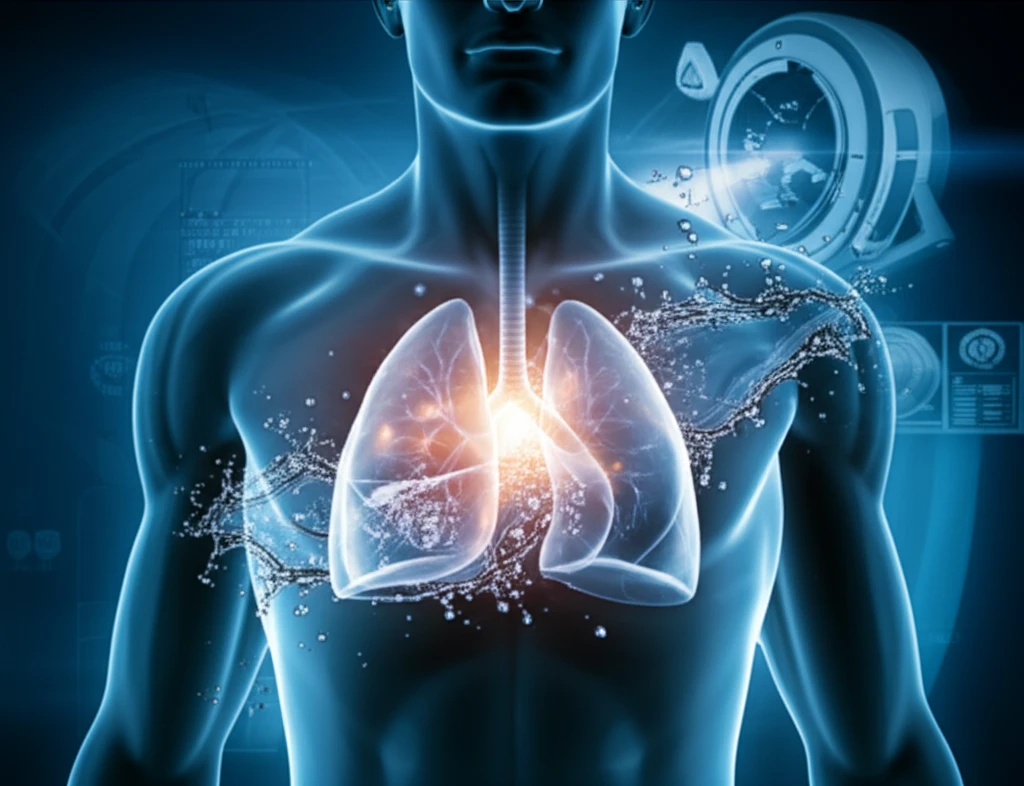
Decoding the Shadows: How MRI Helps Spot Cancer in Your Chest

"Unraveling the Power of Advanced Imaging in Differentiating Benign and Malignant Mediastinal Masses"
Imagine a world where doctors can peer deep inside your body, not just to see what's there, but to understand the very nature of it. This is the promise of modern medical imaging, and in the realm of chest health, it's a game-changer. MR diffusion imaging and ADC (Apparent Diffusion Coefficient) measurement are at the forefront of this technological revolution, offering a non-invasive way to distinguish between benign and malignant masses in the mediastinum – the space in your chest between your lungs.
The mediastinum houses vital organs like the heart, major blood vessels, and the trachea, making any abnormalities in this area a cause for concern. Mediastinal masses, which can be either solid or cystic (fluid-filled), can arise from various causes, ranging from harmless cysts to life-threatening cancers. The challenge has always been to accurately diagnose these masses without resorting to invasive procedures like biopsies.
This article explores the role of MR diffusion imaging and ADC measurement in this critical diagnostic process. We'll delve into how these advanced techniques work, what they reveal, and how they're changing the landscape of chest health, offering hope for earlier, more accurate diagnoses and better patient outcomes.
Unlocking the Secrets Within: How MR Diffusion Imaging Works
MR diffusion imaging is a specialized MRI technique that focuses on the movement of water molecules within tissues. The principle is simple: water molecules move more freely in fluid-filled spaces (like cysts) than in dense, solid tissues (like tumors). By measuring the rate at which water molecules diffuse, doctors can gain valuable insights into the characteristics of a mass.
- Cell Density: Tumors have a higher cell density than normal tissue, restricting water movement.
- Tissue Structure: The arrangement of cells and the presence of extracellular spaces impact water diffusion.
- Vascularity: Increased blood vessel formation in tumors can affect water movement.
The Future of Chest Health: Advancements and Implications
MR diffusion imaging and ADC measurement represent a significant leap forward in the diagnosis of chest masses. By providing a non-invasive means to differentiate between benign and malignant lesions, these techniques are improving patient outcomes and reducing the need for unnecessary invasive procedures. As technology continues to evolve, we can expect even greater accuracy and precision in the diagnosis and treatment of chest conditions, offering hope for a healthier future.