
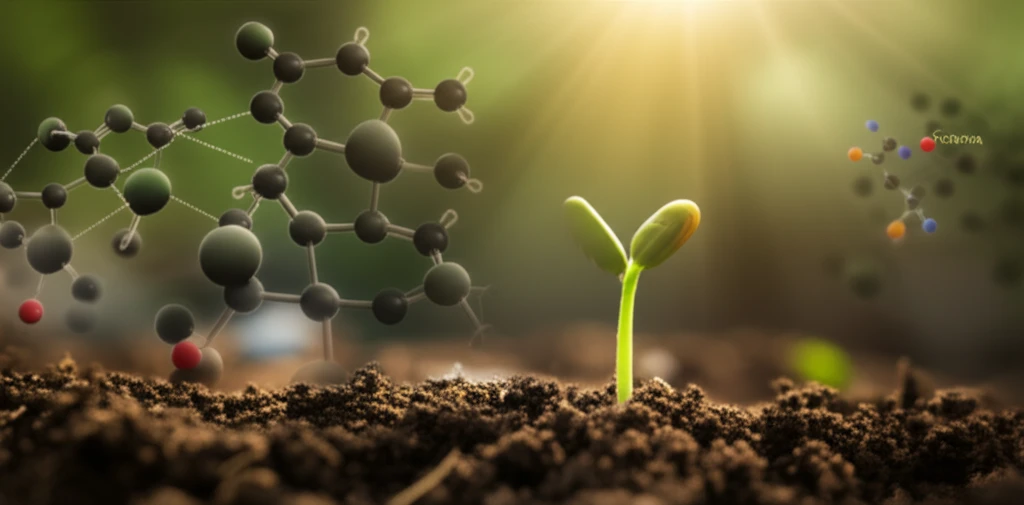
Seedling emerging from darkness into light, illustrating the transition from skoto- to photomorphogenesis.

Decoding the Secrets of Seedling Survival: How Plants Adapt to Light

"Unveiling the molecular mechanisms behind skoto-to-photomorphogenesis for robust seedling development."


For plants, successfully transitioning from the darkness of the soil to sunlight is a critical phase known as skoto-to-photomorphogenesis. This process dictates whether a seedling thrives or perishes. The ability to sense and respond to light triggers a developmental switch, enabling the plant to capture light and initiate autotrophic growth. Researchers Vinh Ngoc Pham and Enamul Huq have recently published a study in Development that provides a detailed molecular analysis of this transition in Arabidopsis, shedding light on the regulatory proteins involved.

The study delves into the roles of phytochrome interacting factors (PIFs) and the COP1/SPA complex, unraveling how these components orchestrate the seedling's response to light. Their work highlights the importance of understanding this transition, as it directly impacts plant survival and productivity.

This article explores the key findings of Pham and Huq's research, simplifying the complex mechanisms involved in skoto-to-photomorphogenesis and explaining their significance for plant development and agricultural applications.

The Crucial Skoto-to-Photomorphogenesis Transition: A Matter of Life and Death

Seedling emerging from darkness into light, illustrating the transition from skoto- to photomorphogenesis.

Imagine a seedling pushing its way through the soil, relying on stored energy reserves. In this dark environment, it develops elongated hypocotyls (the stem of the seedling), small, tightly closed cotyledons (seed leaves), and an apical hook to protect the growing tip. This is skotomorphogenesis, a survival strategy for navigating the subterranean world.

However, once the seedling emerges into the light, this developmental program must change rapidly. Photomorphogenesis, the light-adapted program, promotes short hypocotyls, expanded, green cotyledons for efficient light capture, and the initiation of photosynthesis. This transition is essential for the seedling to become self-sufficient and thrive.

  • Skotomorphogenesis: Dark-adapted development with elongated hypocotyls and closed cotyledons.
  • Photomorphogenesis: Light-adapted development with short hypocotyls and expanded cotyledons.
  • COP Mutants: Plants that exhibit photomorphogenesis even in darkness, helping researchers understand light-signaling pathways.
Pham and Huq emphasize that this transition is a vulnerable stage for plants. Just as human babies require careful nurturing, young seedlings are susceptible to environmental stresses. A successful shift from skoto- to photomorphogenesis is crucial for their survival and continued growth.

Unraveling the COP1/SPA-PIF Network: A Complex Regulatory Dance

The researchers focused on understanding why cop1, spaQ, and pifQ mutants exhibit constitutive photomorphogenic phenotypes – meaning they develop as if they are in the light, even in darkness. Prior research suggested that this was due to higher levels of positively acting transcription factors.

Pham and Huq's study reveals a more nuanced picture. They discovered that the cop phenotypes are not solely due to an overabundance of these transcription factors, but also a reduction in the levels of PIF proteins. Furthermore, a high abundance of HFR1, another factor, in cop1 and spa mutants further reduces PIF transcriptional activity. The team found that the gene expression patterns in cop1 and spaQ mutants overlap with those in pifQ mutants in the dark, indicating a preferential targeting of PIF-regulated genes.

The COP1/SPA complex plays a central role in regulating PIF abundance and activity. In darkness, HFR1 interacts with PIFs, leading to their degradation via the COP1/SPA complex. Light triggers PIF phosphorylation, making them targets for the COP1/SPA complex and subsequent degradation through the 26S proteasome pathway. Further research is needed to fully elucidate the mechanism by which the COP1/SPA complex regulates PIF abundance in both light and dark conditions.

About this Article -

This article was crafted using a human-AI hybrid and collaborative approach. AI assisted our team with initial drafting, research insights, identifying key questions, and image generation. Our human editors guided topic selection, defined the angle, structured the content, ensured factual accuracy and relevance, refined the tone, and conducted thorough editing to deliver helpful, high-quality information.See our About page for more information.

Everything You Need To Know

1

What is skoto-to-photomorphogenesis and why is it important for seedlings?

Skoto-to-photomorphogenesis is the crucial developmental transition in plants that occurs when a seedling emerges from darkness into light. During skotomorphogenesis, seedlings exhibit elongated hypocotyls and closed cotyledons, strategies suited for survival in the dark. Upon exposure to light, this shifts to photomorphogenesis, marked by short hypocotyls and expanded cotyledons, preparing the plant for photosynthesis and self-sufficiency. This transition is essential for survival and sustained growth.

2

What roles do PIFs and the COP1/SPA complex play in skoto-to-photomorphogenesis?

The PIFs (phytochrome interacting factors) and the COP1/SPA complex are key molecular players that regulate the skoto-to-photomorphogenesis transition. PIFs are transcription factors that promote skotomorphogenesis in the dark. When light is perceived, the COP1/SPA complex becomes active, targeting PIFs for degradation. This reduction of PIFs allows for the activation of photomorphogenesis, enabling the seedling to develop the characteristics required for light capture and photosynthesis. The interplay between PIFs and the COP1/SPA complex is therefore essential for regulating the seedling's response to light and ensuring its survival.

3

What are COP mutants and why are they significant to understanding light signaling?

COP mutants are plants that display photomorphogenesis even in the absence of light, meaning they develop with short hypocotyls and expanded cotyledons regardless of whether they are exposed to light or not. This characteristic is a key discovery that has helped scientists understand light-signaling pathways. By studying COP mutants, researchers can identify the components involved in regulating the transition from dark to light, thus understanding the process of skoto-to-photomorphogenesis.

4

Why is understanding skoto-to-photomorphogenesis important for plant development?

Understanding skoto-to-photomorphogenesis is highly important because it directly impacts the survival and productivity of plants. A successful transition to photomorphogenesis enables the seedling to harness light energy through photosynthesis, which is the cornerstone of its growth. Any disruption in this transition can lead to seedling death or stunted development, significantly impacting crop yields and the overall health of plant populations. The research into the molecular mechanisms, such as the roles of PIFs and the COP1/SPA complex, provides essential knowledge for potential agricultural applications and improving plant resilience.

5

What are the implications if a seedling fails to transition from skotomorphogenesis to photomorphogenesis?

If skoto-to-photomorphogenesis fails, the seedling may not be able to adapt to light, which can have lethal consequences. In dark conditions, seedlings develop skotomorphogenesis, the dark-adapted form with elongated hypocotyls. However, if a seedling fails to switch to photomorphogenesis upon light exposure, it remains in this dark-adapted state, and its resources will be exhausted. The plant will not develop the features it needs for photosynthesis and self-sufficiency, ultimately leading to its demise. This makes the successful transition a matter of life and death for young plants.

Newsletter Subscribe

Subscribe to get the latest articles and insights directly in your inbox.