
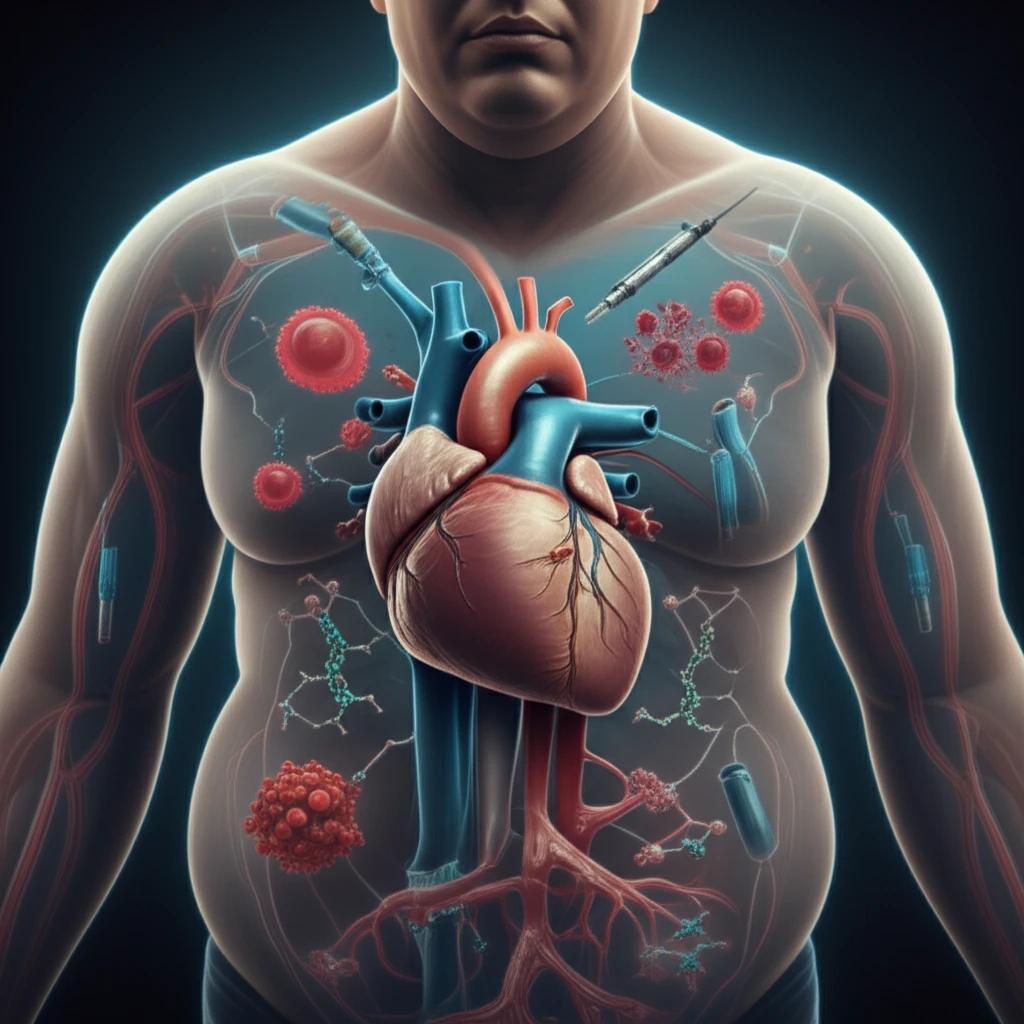
Illustration of the connection between obesity and disease at a molecular level, symbolizing the interconnectedness of health and weight.

Decoding the Obesity-Disease Connection: New Insights and What They Mean for You

"Unraveling the intricate links between weight and health, and empowering you with knowledge to take control."


In a world grappling with rising rates of obesity, understanding its profound impact on our health has never been more critical. Obesity, often viewed as a cosmetic issue, is increasingly recognized as a significant risk factor for numerous diseases, affecting millions of people worldwide. From heart disease and diabetes to certain types of cancer, the connections are undeniable.

This article dives into recent research that provides a deeper understanding of the intricate connections between obesity and various health conditions. By exploring the latest scientific advancements, we aim to demystify these relationships, empowering you with knowledge and insights to make informed choices for your well-being.

We will dissect the science, explore practical implications, and present actionable strategies you can integrate into your life to improve your health, manage your weight, and potentially mitigate the risks associated with obesity. This is about more than just numbers on a scale; it's about understanding and taking charge of your overall health and vitality.

Unveiling the Molecular Networks: How Obesity Impacts Your Body

Illustration of the connection between obesity and disease at a molecular level, symbolizing the interconnectedness of health and weight.

Recent research has employed sophisticated molecular techniques to map the intricate networks within our bodies, specifically focusing on how obesity interacts with our biological processes. By examining these complex pathways, scientists can pinpoint the exact mechanisms through which obesity influences our health. This research often involves identifying key genes, proteins, and pathways that are either disrupted or activated by excess weight.

These studies often start with gene expression analysis. By comparing gene activity in individuals with and without obesity, researchers can find genes that are affected by excess weight. Those genes may affect numerous bodily functions: how our bodies respond to insulin, how they regulate inflammation, and how they fight infections.

  • Inflammation: Obesity is linked to chronic, low-level inflammation, which fuels many diseases.
  • Hormonal Imbalance: Obesity can disrupt hormones like insulin, impacting metabolism and increasing disease risk.
  • Metabolic Dysfunction: Obesity leads to problems processing sugar and fats, increasing risk of type 2 diabetes and heart disease.
  • Gene Dysregulation: Obesity causes changes in gene activity, affecting various bodily functions.
By understanding these interactions, researchers are uncovering new targets for intervention, providing a foundation for developing innovative treatments and preventive strategies. This is more than just weight loss; it's about understanding how obesity affects your health at a cellular and molecular level.

Empowering Your Health: Actionable Steps for a Healthier Future

The latest research clearly demonstrates the complex and often detrimental effects of obesity on health. However, this knowledge empowers us to take proactive steps towards improving our well-being. Implementing healthy lifestyle choices, seeking guidance from healthcare professionals, and staying informed about new developments are all vital components of a proactive strategy. By understanding these connections, you're not just gaining information—you're gaining the power to make choices that will contribute to a longer, healthier, and more vibrant life.

About this Article -

This article was crafted using a human-AI hybrid and collaborative approach. AI assisted our team with initial drafting, research insights, identifying key questions, and image generation. Our human editors guided topic selection, defined the angle, structured the content, ensured factual accuracy and relevance, refined the tone, and conducted thorough editing to deliver helpful, high-quality information.See our About page for more information.

This article is based on research published under:

DOI-LINK: 10.18632/oncotarget.19490, Alternate LINK

Title: Using Molecular Functional Networks To Manifest Connections Between Obesity And Obesity-Related Diseases

Subject: Oncology

Journal: Oncotarget

Publisher: Impact Journals, LLC

Authors: Jialiang Yang, Jing Qiu, Kejing Wang, Lijuan Zhu, Jingjing Fan, Deyin Zheng, Xiaodi Meng, Jiasheng Yang, Lihong Peng, Yu Fu, Dahan Zhang, Shouneng Peng, Haiyun Huang, Yi Zhang

Published: 2017-07-22

Everything You Need To Know

1

How does obesity influence gene activity and what are the implications for overall health?

Obesity can cause changes in gene activity, known as gene dysregulation, which affects various bodily functions. Gene expression analysis, comparing individuals with and without obesity, reveals that excess weight can disrupt genes involved in insulin response, inflammation regulation, and infection resistance. This dysregulation can contribute to metabolic dysfunction, hormonal imbalances, and an increased risk of chronic diseases like type 2 diabetes and heart disease, highlighting the importance of understanding obesity's impact at a molecular level.

2

What role does inflammation play in the connection between obesity and disease?

Obesity is linked to chronic, low-level inflammation throughout the body. This inflammation fuels the development and progression of many diseases. In the context of obesity, the excess adipose tissue (fat) releases inflammatory molecules that disrupt normal cellular processes, leading to insulin resistance, damage to blood vessels, and an increased risk of cardiovascular diseases, type 2 diabetes, and even certain types of cancer. Addressing inflammation through lifestyle modifications and medical interventions can be crucial in mitigating the health risks associated with obesity.

3

In what ways can obesity cause hormonal imbalances, and what are the potential health consequences?

Obesity can disrupt the balance of hormones in the body, most notably insulin, which affects metabolism and increases disease risk. For example, excess weight can lead to insulin resistance, where cells become less responsive to insulin, resulting in elevated blood sugar levels and eventually type 2 diabetes. Additionally, obesity can affect the production and regulation of sex hormones, potentially leading to reproductive issues and increased risk of certain cancers. Correcting these hormonal imbalances through weight management and medical interventions is vital for preventing or managing obesity-related health complications.

4

Besides weight loss, what other benefits come from understanding how obesity affects health at a cellular level?

Understanding how obesity impacts health at a cellular and molecular level, beyond just weight loss, opens doors to innovative treatments and preventive strategies. Research into molecular networks and gene dysregulation can uncover new targets for intervention, allowing scientists to develop therapies that address the root causes of obesity-related diseases. This knowledge empowers individuals and healthcare professionals to make more informed decisions about managing weight and preventing chronic conditions, ultimately leading to a healthier and more vibrant life.

5

What actionable steps can individuals take to mitigate the health risks associated with obesity, based on current research?

Individuals can take proactive steps to mitigate the health risks associated with obesity by implementing healthy lifestyle choices, seeking guidance from healthcare professionals, and staying informed about new developments in obesity research. This includes adopting a balanced diet, engaging in regular physical activity, managing stress, and getting adequate sleep. Regular check-ups and screenings can help detect and manage obesity-related complications early on. Staying informed about the latest research empowers individuals to make informed decisions and take control of their health and well-being.

Newsletter Subscribe

Subscribe to get the latest articles and insights directly in your inbox.