
Decoding the Nerve Network: What Elderly Cadavers Reveal About Pelvic Health

"An innovative immunohistochemical study sheds light on the complex nerve composition of the hypogastric and pelvic splanchnic nerves, offering potential insights into pelvic health and aging."
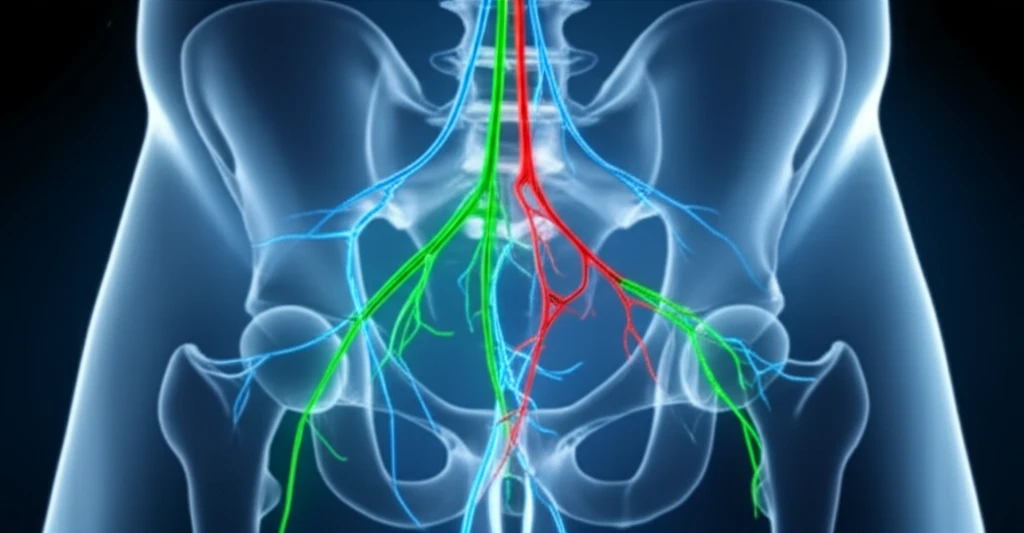
The pelvic region's nerve network is vital for bladder control, sexual function, and bowel management. Key players in this network are the hypogastric nerve (HGN) and the pelvic splanchnic nerve (PSN). The HGN primarily carries sympathetic nerves, which control the body's "fight or flight" responses, while the PSN mainly contains parasympathetic nerves, responsible for "rest and digest" functions. Understanding how these nerves are organized and what types of nerve fibers they contain is essential for addressing various pelvic health issues.
Previous studies have examined these nerves in surgically removed specimens and fetuses, but a comprehensive analysis of both HGN and PSN in elderly individuals was lacking. This is a significant gap because the structure and function of nerves can change with age. New research has now investigated the composition of these nerves in elderly cadavers, using a technique called immunohistochemistry to identify different types of nerve fibers.
This article breaks down the findings of this study, explaining what types of nerve fibers were found in the HGN and PSN, and what these discoveries might mean for our understanding of pelvic health, aging, and potential treatments for nerve-related conditions.
Unveiling the Nerve Fiber Landscape: NOS, VIP, and TH
The research team examined tissue samples from the HGN and PSN of 12 elderly cadavers. They used immunohistochemistry to identify nerve fibers containing three key substances: neuronal nitric oxide synthase (NOS), vasoactive intestinal peptide (VIP), and tyrosine hydroxylase (TH). These substances act as markers, allowing scientists to differentiate between various types of nerve fibers. NOS and VIP are often associated with parasympathetic nerve function, while TH is typically linked to sympathetic nerve function.
- HGN (Hypogastric Nerve): Dominated by sympathetic (TH+) fibers.
- PSN (Pelvic Splanchnic Nerve): A mix of fiber types, with VIP+ often more prevalent than NOS+.
- Fiber Distribution: No major differences in NOS+ and VIP+ fiber proportions within nerve bundles, suggesting limited target-dependent sorting in the studied regions.
Implications and Future Directions
This study provides valuable insights into the nerve fiber composition of the HGN and PSN in elderly individuals. The findings suggest that the HGN primarily carries sympathetic fibers, while the PSN has a more mixed composition, with a greater proportion of VIP-positive fibers. Furthermore, the lack of distinct differences in NOS+ and VIP+ fiber distribution within nerve bundles suggests that target-dependent sorting of nerve fibers may not be prominent in these regions.
The researchers propose that the NOS+ and/or VIP+ fibers in the HGN are likely ascending postganglionic fibers to the colon, while those in the PSN root may be preganglionic fibers from Onuf's nucleus (a group of motor neurons in the spinal cord that controls the muscles of the pelvic floor).
This research opens doors for further investigation into the role of these nerve fibers in pelvic health and aging. Understanding how these nerves change with age could lead to the development of targeted therapies for pelvic floor disorders, bladder dysfunction, sexual dysfunction, and other related conditions.