
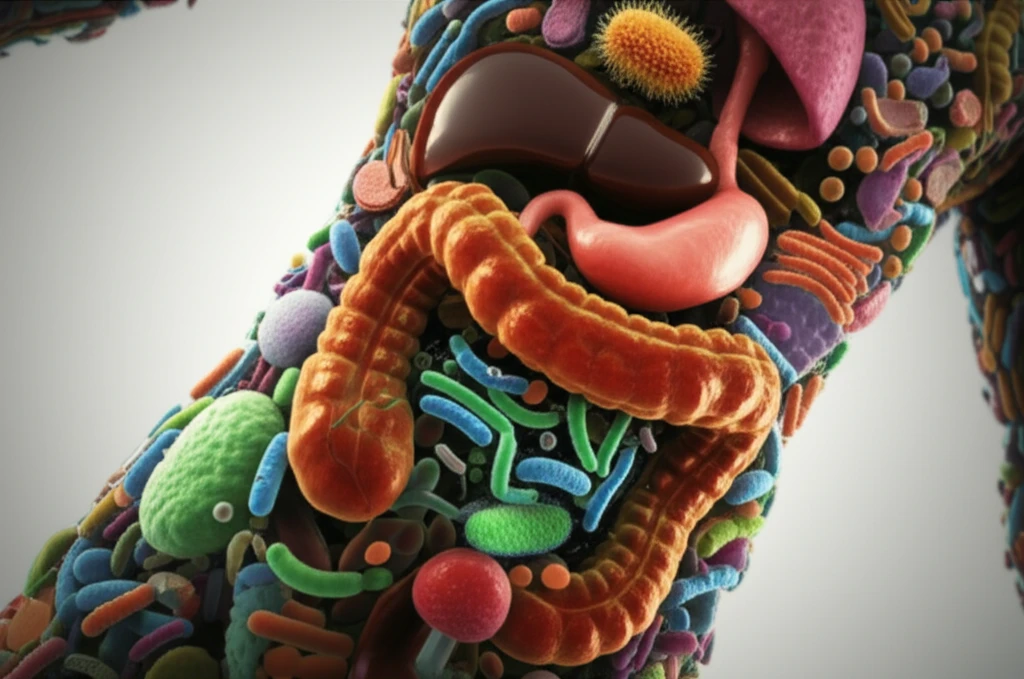
Microbiome forming a human silhouette

Decoding the Male Microbiome: What It Means for Your Health

"A deep dive into the evolving science of men's health, gut bacteria, and practical ways to optimize your well-being."


The human microbiome, a vast ecosystem of bacteria, fungi, viruses, and other microorganisms living in and on our bodies, is now recognized as a critical player in overall health. While much research has focused on the gut microbiome, scientists are increasingly exploring how these microbial communities influence various aspects of men's health, from immunity and metabolism to disease risk.

This article delves into the emerging science of the male microbiome, drawing insights from experts in microbiology, microbial ecology, and epidemiology. We'll explore key research questions, recent findings, and practical strategies for leveraging the power of your microbiome to enhance your health and well-being.

Whether you're a seasoned health enthusiast or simply curious about the latest scientific advancements, this guide provides actionable information to help you understand and optimize your microbial landscape.

Measuring the Male Microbiome: Precision and Validity

Microbiome forming a human silhouette

One of the primary hurdles in microbiome research is establishing a clear cause-and-effect relationship between microbial composition and health outcomes. Many studies are cross-sectional, meaning they capture a snapshot in time, making it difficult to determine whether changes in the microbiome precede or follow the onset of disease. Despite these challenges, significant progress is being made in refining measurement techniques and understanding the complexities of microbial interactions.

Characterizing the microbiome typically involves a series of laboratory steps:

  • Cell lysis and nucleic acid purification: Breaking open microbial cells and extracting their genetic material.
  • Bacterial DNA sequencing: Analyzing DNA to identify the types and quantities of bacteria present.
  • Post-sequencing data processing: Interpreting the sequencing data to understand the composition and function of the microbiome.
Each of these steps introduces potential variability, so researchers are working to standardize methods and implement rigorous quality control measures, such as using known mixes of bacteria as controls. Although challenges persist, the focus is on developing methods to ensure precision and reliability in microbiome measurements.

The Future of the Male Microbiome: Opportunities and Directions

While much remains to be discovered, the microbiome holds immense promise for revolutionizing our approach to men's health. To translate observations into concrete strategies for improving well-being, we need:

<ul><li>Longitudinal studies: Tracking individuals over time to understand how the microbiome changes and relates to health outcomes.</li><li>Mechanistic research: Uncovering the specific interactions between microbes and the human body.</li><li>Intervention trials: Testing whether modifying the microbiome can improve health.</li><li>Collaborative efforts: Bringing together experts from diverse fields to tackle the complexities of the microbiome.</li></ul>

Ultimately, by embracing rigorous research, standardized methods, and interdisciplinary collaboration, we can unlock the full potential of the microbiome to enhance men's health and transform healthcare.

About this Article -

This article was crafted using a human-AI hybrid and collaborative approach. AI assisted our team with initial drafting, research insights, identifying key questions, and image generation. Our human editors guided topic selection, defined the angle, structured the content, ensured factual accuracy and relevance, refined the tone, and conducted thorough editing to deliver helpful, high-quality information.See our About page for more information.

This article is based on research published under:

DOI-LINK: 10.1373/clinchem.2018.287284, Alternate LINK

Title: The Microbiome And Men'S Health

Subject: Biochemistry (medical)

Journal: Clinical Chemistry

Publisher: Oxford University Press (OUP)

Authors: Elizabeth A Platz, Cindy M Liu, Dominique S Michaud, Noel T Mueller, Jacques Ravel

Published: 2019-01-01

Everything You Need To Know

1

What exactly is the male microbiome, and why is it important for men's health?

The male microbiome is a complex ecosystem of bacteria, fungi, viruses, and other microorganisms living in and on the male body. It plays a crucial role in various aspects of health, including immunity, metabolism, and disease risk. Scientists are actively researching how these microbial communities specifically influence men's health outcomes.

2

What are the main challenges in studying the male microbiome and how are researchers addressing them?

Researchers face challenges in establishing definitive cause-and-effect relationships between microbial composition and health outcomes due to the use of cross-sectional studies, which only capture a snapshot in time. However, they are working on refining measurement techniques and understanding the complexities of microbial interactions to address this.

3

What are the key steps involved in measuring and characterizing the male microbiome?

Characterizing the male microbiome involves cell lysis and nucleic acid purification to break open microbial cells and extract their genetic material. This is followed by bacterial DNA sequencing to identify the types and quantities of bacteria present. Finally, post-sequencing data processing is used to interpret the sequencing data and understand the composition and function of the microbiome. Each step has potential variability so there are quality controls.

4

What does the future hold for male microbiome research and its potential impact on men's well-being?

The future of male microbiome research holds immense promise for revolutionizing men's health. Translating observations into concrete strategies for improving well-being is the focus, requiring standardization, precision and reliability in microbiome measurements.

5

What are some specific strategies being used to enhance and optimize the male microbiome?

Strategies to enhance the male microbiome include standardization of all the steps and implementing rigorous quality control measures, such as using known mixes of bacteria as controls. These strategies are crucial to ensuring precision and reliability in microbiome measurements.

Newsletter Subscribe

Subscribe to get the latest articles and insights directly in your inbox.