
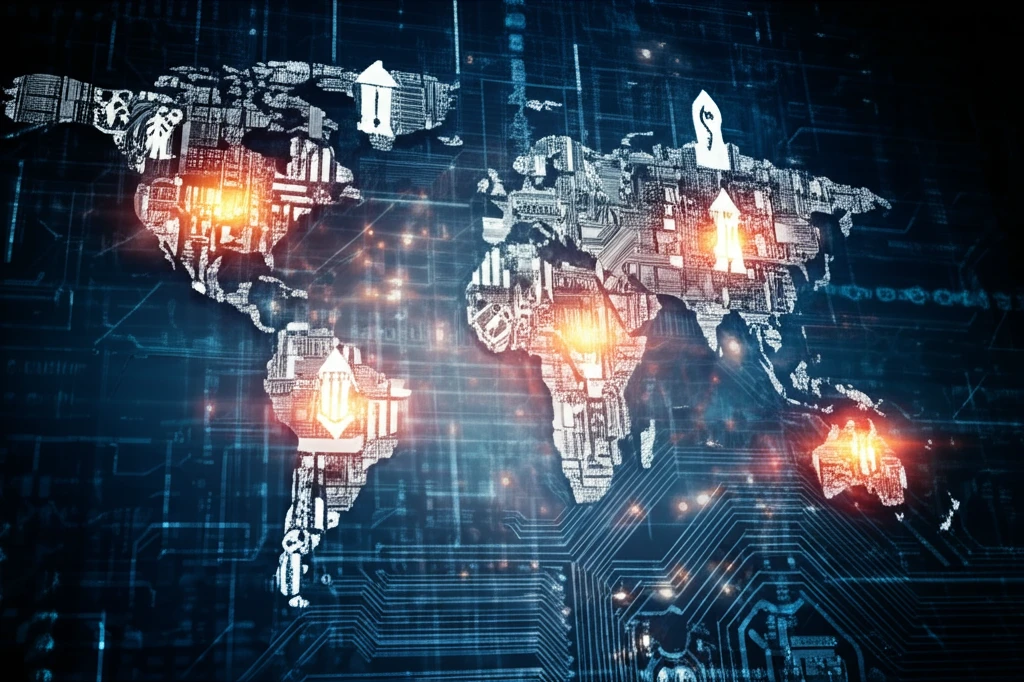
Global financial markets interconnectedness.

Decoding the Global Financial Web: How Interconnected Markets Impact Your Investments

"Unraveling the complex connections in the global financial market to help you make smarter investment decisions."


The global financial system is a complex web of cross-border interconnections and interdependencies. In this highly interconnected environment, local financial shocks and events can quickly amplify and turn into global events. Understanding these connections is crucial for investors looking to navigate the international markets effectively.

Financial contagion—the spread of market disturbances across countries—has been observed time and again. Consider the 2008 financial crisis, the Eurozone debt crisis, and the more recent COVID-19 pandemic. These events highlight how interconnected our financial systems have become, where problems in one region can rapidly impact markets worldwide. But how can you, as an investor, make sense of these complex dynamics and protect your portfolio?

This article analyzes the dependencies among nearly 4,000 stocks from 15 countries, using a sophisticated model to untangle the intricate relationships that tie global markets together. This analysis reveals which sectors act as key connectors and how these relationships shift over time, offering you a clearer picture of the forces that shape your investments.

What Sectors Act as Key Connectors in Global Markets?

Global financial markets interconnectedness.

The research identifies specific sectors that play a leading role in connecting global markets. The energy, materials, and financial sectors emerge as key players, acting as critical links between different economies. This means that events impacting these sectors can have ripple effects across the globe.

Interestingly, the influence of the energy and materials sectors has grown over time, indicating their increasing importance in the global financial landscape. This could be due to increased globalization, greater demand for resources, or the growing interconnectedness of supply chains.

  • Energy Sector: Companies involved in the production, distribution, and sale of energy (oil, gas, renewable energy).
  • Materials Sector: Companies that discover, develop, and process raw materials (mining, chemicals, construction materials).
  • Financial Sector: Banks, investment firms, insurance companies, and other institutions providing financial services.
Understanding the role of these sectors allows you to better assess the potential impact of various events on your investment portfolio. For example, geopolitical tensions affecting energy supplies or changes in global demand for materials could have significant implications for markets worldwide.

Adapt Your Investment Strategy to the Interconnected World

Navigating the global financial market requires more than just tracking local events. By understanding the intricate connections between markets and the key sectors driving these relationships, you can make more informed investment decisions and protect your portfolio from unexpected shocks. Stay informed, diversify wisely, and always consider the global picture when managing your investments.

About this Article -

This article was crafted using a human-AI hybrid and collaborative approach. AI assisted our team with initial drafting, research insights, identifying key questions, and image generation. Our human editors guided topic selection, defined the angle, structured the content, ensured factual accuracy and relevance, refined the tone, and conducted thorough editing to deliver helpful, high-quality information.See our About page for more information.

Everything You Need To Know

1

How does understanding the interconnectedness of global markets help investors?

Understanding the interconnectedness of global markets allows investors to make more informed investment decisions. By recognizing how events in one region or sector can impact others, investors can better assess risks and opportunities, diversify their portfolios effectively, and protect themselves from unexpected financial shocks. This knowledge is crucial for navigating the complexities of international markets.

2

What are the key sectors that act as connectors in global financial markets, and why are they important?

The energy, materials, and financial sectors are identified as key connectors in global financial markets. The energy sector, including companies involved in the production, distribution, and sale of energy, is critical due to its influence on global supply chains and economic activity. The materials sector, encompassing companies that discover, develop, and process raw materials, plays a vital role because of the fundamental need for resources across industries. The financial sector, comprised of banks, investment firms, and insurance companies, serves as the backbone for capital flow and investment activity worldwide. Events impacting these sectors can have significant ripple effects across global markets.

3

How has the influence of the energy and materials sectors changed in the global financial landscape over time?

The influence of the energy and materials sectors has grown over time in the global financial landscape. This increase in importance could be attributed to several factors, including increased globalization, which leads to a greater interconnectedness of supply chains and markets. Additionally, the growing global demand for resources, driven by population growth and industrialization, has amplified the role of the materials sector. Geopolitical events and policy changes affecting energy production and distribution also contribute to the increased importance of the energy sector. This trend indicates that these sectors are becoming increasingly vital in shaping global financial dynamics.

4

Can you provide examples of past events that illustrate financial contagion and the interconnectedness of global financial systems?

Examples of past events that illustrate financial contagion include the 2008 financial crisis, which originated in the United States and quickly spread globally due to the interconnectedness of financial institutions and markets. The Eurozone debt crisis demonstrated how sovereign debt issues in one country could impact the entire region and beyond. The more recent COVID-19 pandemic also showcased how a health crisis could trigger economic shutdowns, supply chain disruptions, and market volatility worldwide, highlighting the vulnerability of interconnected systems.

5

What strategies can investors use to adapt to the interconnectedness of the global financial world and protect their investments?

To adapt to the interconnectedness of the global financial world, investors should stay informed about both local and global events, particularly those affecting the energy, materials, and financial sectors. Diversifying investments across different asset classes, industries, and geographic regions can help mitigate risk. It's crucial to consider the potential impact of global events, such as geopolitical tensions or changes in international trade policies, on your portfolio. Regularly reassessing your investment strategy based on current market conditions and global trends is also essential.

Newsletter Subscribe

Subscribe to get the latest articles and insights directly in your inbox.