
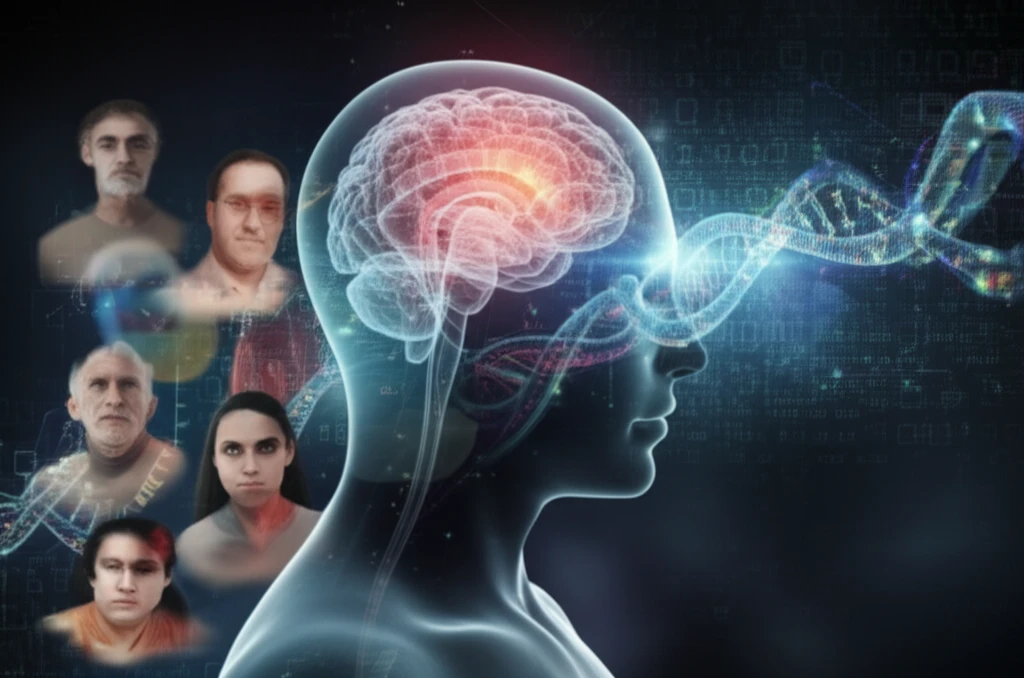
Illustration of a family tree with DNA strands, depicting the complexity of genetics in Parkinson's disease.

Decoding the Genetic Puzzle: How a Rare Italian Family is Reshaping Our Understanding of Parkinson's Disease

"Unraveling the Mysteries of PARK2 and Parkinson's: A Look at an Italian Family with Unexpected Genetic Findings."


Parkinson's disease (PD), a neurodegenerative disorder, affects millions worldwide, primarily impacting motor functions. While genetic factors can play a role, the disease's onset and progression are often complex and unpredictable. This article explores the fascinating case of an Italian family, whose experiences with the PARK2 gene shed new light on the unpredictable nature of Parkinson's.

The PARK2 gene, responsible for encoding the Parkin protein, is a significant player in early-onset Parkinson's. Mutations in this gene are typically associated with a more aggressive form of the disease. However, the family in this study presents a compelling paradox that challenges our understanding of how these mutations affect the disease's manifestation.

This article will analyze the genetic findings within this family, highlighting the unexpected discovery of a homozygous aunt who, despite carrying the same gene duplication as her affected nephew, shows minimal symptoms. Through this case study, we aim to explore the complexities of genetic penetrance and the influence of additional, yet-unidentified, factors on Parkinson's development.

The Italian Family's Genetic Paradox: A Closer Look at PARK2 Mutations

Illustration of a family tree with DNA strands, depicting the complexity of genetics in Parkinson's disease.

The core of this investigation lies in the genetic analysis of the Italian family. The proband, a 41-year-old male, exhibited early-onset Parkinson's symptoms at age 36. Genetic testing revealed a heterozygous duplication of exons 2 and 3 of the PARK2 gene. This type of mutation is usually associated with the disease in individuals who carry two copies of the mutated gene.

However, the story takes an intriguing turn when the patient's 71-year-old paternal aunt was also tested. The results showed that she carried a homozygous duplication of the same PARK2 gene exons. Surprisingly, the aunt displayed minimal symptoms, primarily postural tremor and slight hand dystonia—a stark contrast to the typical manifestations of the disease.

  • Proband (41-Year-Old Male): Diagnosed with early-onset Parkinson's, exhibiting typical motor symptoms. Carries a heterozygous duplication of PARK2 exons 2 and 3.
  • Paternal Aunt (71-Year-Old Female): Found to be homozygous for the same PARK2 gene duplication. Displays mild symptoms (tremor and dystonia) but no significant parkinsonian signs.
  • Genetic Testing: Utilized Multiplex ligation-dependent probe analysis (MLPA) and quantitative real-time polymerase chain reaction (qRT-PCR) to confirm the exon duplications.
This unusual situation raises important questions about the relationship between genotype (genetic makeup) and phenotype (observable traits). The aunt's case suggests that additional factors play a crucial role in the development and progression of Parkinson's disease. This may include other genetic modifiers, environmental factors, or lifestyle choices.

Implications for Research and Patient Care

This case study underscores the complexities of Parkinson's disease and the challenges faced by clinicians and researchers alike. It highlights the need for more in-depth research to identify the factors that influence the disease's progression. Further investigation is needed to uncover the other genetic, environmental, and lifestyle factors that could modify the penetrance of PARK2 mutations and, ultimately, improve patient outcomes. These findings also emphasize the importance of comprehensive genetic counseling for individuals and families affected by Parkinson's disease, enabling them to make informed decisions based on the best available scientific knowledge.

About this Article -

This article was crafted using a human-AI hybrid and collaborative approach. AI assisted our team with initial drafting, research insights, identifying key questions, and image generation. Our human editors guided topic selection, defined the angle, structured the content, ensured factual accuracy and relevance, refined the tone, and conducted thorough editing to deliver helpful, high-quality information.See our About page for more information.

Everything You Need To Know

1

What is the role of the PARK2 gene in Parkinson's disease, and why is it important to study?

The PARK2 gene encodes the Parkin protein, which is crucial for maintaining healthy nerve cells. Mutations in PARK2 are often linked to early-onset Parkinson's disease. Studying families with these mutations, like the Italian family, is vital because it can reveal how genetic variations influence the onset, progression, and severity of Parkinson's. This knowledge is essential for developing targeted therapies and improving genetic counseling.

2

How did the genetic findings in the Italian family challenge existing understandings of PARK2 mutations and Parkinson's?

The Italian family presented a paradox: the proband, a 41-year-old male, had early-onset Parkinson's with a heterozygous duplication of PARK2 exons 2 and 3. His paternal aunt, however, had a homozygous duplication of the same PARK2 gene exons but displayed only mild symptoms (postural tremor and slight hand dystonia). This contrasts with the typical expectation that homozygous mutations lead to more severe disease manifestations. This challenges the direct genotype-phenotype correlation and suggests other factors influence the disease's development.

3

What specific genetic testing methods were used to analyze the PARK2 gene mutations in the Italian family?

Multiplex ligation-dependent probe analysis (MLPA) and quantitative real-time polymerase chain reaction (qRT-PCR) were employed to confirm the exon duplications in the PARK2 gene of the Italian family members. MLPA is effective for detecting abnormal copy numbers of specific DNA sequences, while qRT-PCR helps quantify the expression levels of genes. These methods provided crucial evidence for understanding the genetic makeup of the proband and his aunt.

4

Besides genetics, what other factors might explain the difference in Parkinson's symptoms between the nephew and aunt in the Italian family?

The discrepancy in symptom severity between the nephew and aunt suggests that factors beyond PARK2 gene mutations play a significant role in Parkinson's. These could include other genetic modifiers (variations in other genes that influence the effects of PARK2), environmental factors (exposure to toxins or protective agents), and lifestyle choices (diet, exercise, and occupational exposures). Further research is needed to identify these contributing factors and their interactions.

5

What are the implications of this study on the Italian family for genetic counseling and future Parkinson's research?

The case study emphasizes the need for comprehensive genetic counseling that considers the complexities of genetic penetrance and other modifying factors. It highlights that having a PARK2 mutation does not guarantee a predictable disease course. Future research should focus on identifying additional genetic, environmental, and lifestyle factors that modify the penetrance of PARK2 mutations. This will enable more accurate risk assessments, personalized treatment strategies, and ultimately, improved patient outcomes. Understanding these complexities is crucial for managing expectations and making informed decisions for individuals and families affected by Parkinson's.

Newsletter Subscribe

Subscribe to get the latest articles and insights directly in your inbox.