
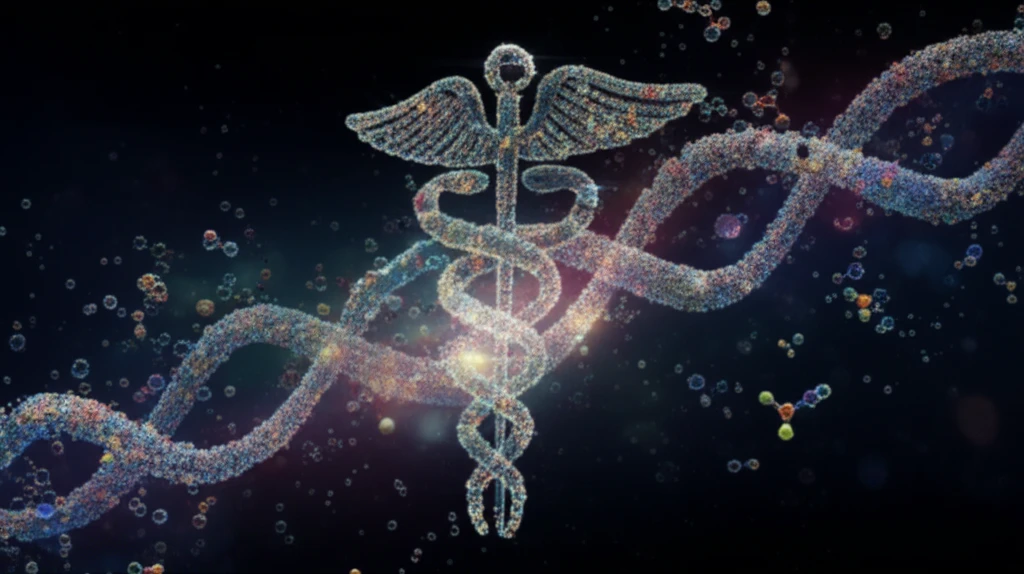
Intertwined DNA strands forming a caduceus symbol, with glowing molecules floating around it.

Decoding the Future of Medicine: How Chemical Research is Shaping Health

"Exploring the innovative landscape of medicinal chemistry and its potential to revolutionize treatment and wellness."


In the ever-evolving field of healthcare, medicinal chemistry stands as a cornerstone of innovation. It's where chemistry and biology converge to design and develop new pharmaceuticals. The insights of researchers around the globe are not just incremental advancements; they represent a potential paradigm shift in how diseases are treated and prevented.

This article explores the dynamic landscape of medicinal chemistry. The goal is to break down complex concepts and highlight the most promising research directions. As we navigate through these advancements, we will see how crucial these discoveries are in shaping the future of medicine. It will allow for more targeted, effective, and personalized healthcare solutions.

We'll delve into the specifics of drug annotations, the collaborative efforts of editorial boards, and the forward-thinking perspectives of leading scientists. Ultimately, the aim is to understand how this field addresses some of humanity's most pressing health challenges.

The Building Blocks of Better Health: Innovations in Drug Design

Intertwined DNA strands forming a caduceus symbol, with glowing molecules floating around it.

At the heart of medicinal chemistry lies the intricate process of drug design. Scientists meticulously craft molecules to interact with specific biological targets within the body, such as proteins or enzymes. The intention is to disrupt disease pathways or enhance the body's natural defenses. The process demands a deep understanding of molecular structures, biological mechanisms, and the delicate balance of efficacy and safety.

Recent innovations in drug design are leveraging cutting-edge technologies like artificial intelligence and computational modeling. These tools allow researchers to screen vast libraries of chemical compounds and predict their potential therapeutic effects. This is revolutionizing the pace and precision of drug discovery. A new era of targeted therapies and personalized medicine is emerging.

  • AI-Driven Drug Discovery: Accelerating the identification of promising drug candidates through machine learning algorithms.
  • Personalized Medicine: Tailoring treatments to an individual's unique genetic makeup for optimal results.
  • Targeted Therapies: Developing drugs that selectively attack diseased cells while sparing healthy tissue.
The development of new antibiotics is one area where drug design is essential. As antibiotic resistance continues to rise, medicinal chemists are working tirelessly to discover novel compounds that can overcome bacterial defenses. Likewise, innovative approaches to cancer therapy, such as immunotherapies and targeted drug delivery systems, rely heavily on the principles of medicinal chemistry to selectively destroy cancer cells while minimizing side effects.

The Future is Bright

The ongoing research in medicinal chemistry holds immense promise for the future of healthcare. By continuing to push the boundaries of scientific knowledge and technological innovation, medicinal chemists are paving the way for a world where diseases are treated more effectively, and human health is optimized. As the field evolves, continued collaboration and knowledge-sharing will be crucial to unlocking its full potential and improving the lives of countless individuals worldwide.

About this Article -

This article was crafted using a human-AI hybrid and collaborative approach. AI assisted our team with initial drafting, research insights, identifying key questions, and image generation. Our human editors guided topic selection, defined the angle, structured the content, ensured factual accuracy and relevance, refined the tone, and conducted thorough editing to deliver helpful, high-quality information.See our About page for more information.

Everything You Need To Know

1

What is medicinal chemistry and why is it important?

Medicinal chemistry is a field where chemistry and biology meet to create new medicines. Researchers design molecules that interact with biological targets like proteins and enzymes. The goal is to disrupt disease pathways or improve the body's defenses. This field uses knowledge of molecular structures and biological mechanisms, carefully balancing how well a drug works with how safe it is. It is significant because it is a cornerstone of innovation in healthcare.

2

What is drug design and why is it important in medicinal chemistry?

Drug design is the detailed process where scientists create molecules to interact with specific biological targets in the body. It's important because it allows researchers to disrupt disease pathways or enhance the body's natural defenses. This process is vital for developing new treatments, including antibiotics to combat resistance and targeted cancer therapies that minimize side effects. Recent innovations in drug design leverage technologies like AI and computational modeling to speed up the identification of potential therapeutic effects.

3

What are AI-Driven Drug Discovery, Personalized Medicine, and Targeted Therapies, and why are they significant?

AI-Driven Drug Discovery uses machine learning to quickly identify potential drug candidates. Personalized medicine involves tailoring treatments based on an individual's unique genetic makeup. Targeted therapies are drugs designed to selectively attack diseased cells, like cancer cells, while leaving healthy tissue unharmed. They are significant because they make treatments more effective, reduce side effects, and create personalized healthcare solutions.

4

What is personalized medicine, and what are the implications for healthcare?

Personalized medicine customizes medical treatment to each person's unique genetic makeup. It's significant because it allows treatments to be more effective and reduces potential side effects by targeting the specific characteristics of an individual's disease. The implications of personalized medicine include more precise and effective therapies, reduced healthcare costs, and improved patient outcomes.

5

How does medicinal chemistry address antibiotic resistance and contribute to new cancer therapies?

Medicinal chemistry is important for addressing antibiotic resistance and developing novel cancer therapies. As bacteria become resistant to existing drugs, medicinal chemists work to discover new compounds that can overcome these defenses. In cancer therapy, medicinal chemistry is crucial for creating immunotherapies and targeted drug delivery systems that selectively destroy cancer cells while minimizing harm to healthy tissue. It is important because these efforts are crucial for combating serious health challenges and improving patient outcomes.

Newsletter Subscribe

Subscribe to get the latest articles and insights directly in your inbox.