
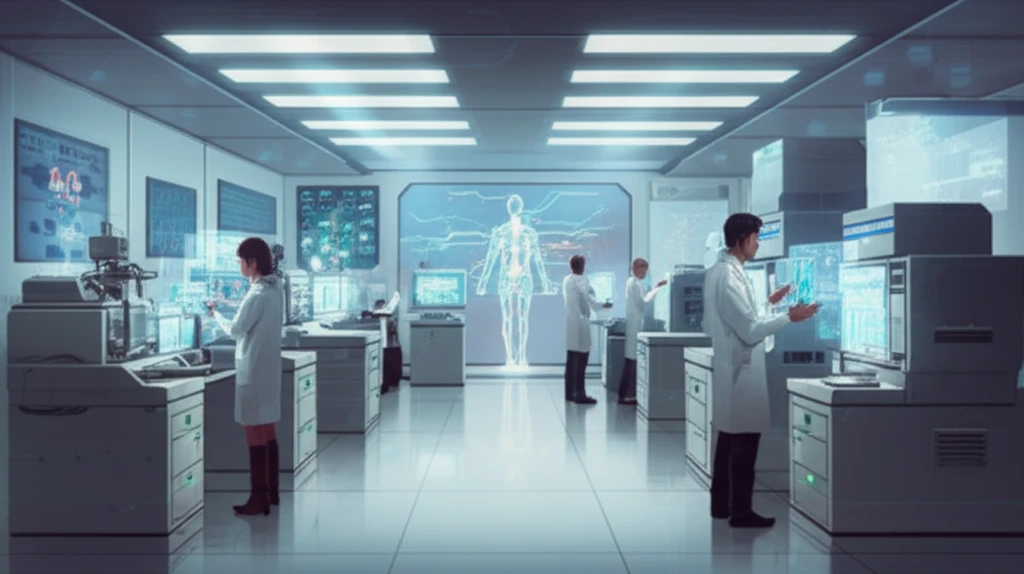
Futuristic medical lab with advanced 'omics' technology equipment and a stylized human body with glowing pathways.

Decoding the Future of Health: How 'Omics' Technologies are Revolutionizing Military Medicine

"From Battlefield to Beyond: Discover how cutting-edge science is reshaping healthcare for soldiers and offering insights for everyone's well-being."


In an era where technology constantly reshapes our world, healthcare stands at the cusp of a monumental transformation. Groundbreaking 'omics' technologies – genomics, epigenomics, transcriptomics, proteomics, and metabolomics – are emerging as powerful tools, particularly within military medicine, promising a new era of proactive health management and personalized treatment. But how do these complex technologies work, and what does their application mean for the future of healthcare for both soldiers and civilians?

Military medicine, with its unique demands and challenges, has always been at the forefront of medical innovation. 'Omics' technologies offer unprecedented opportunities to monitor warfighter exposure, prevent diseases, and tailor treatments to individual needs. These advances are not just for the battlefield; they provide a window into the future of how we all can understand and manage our health.

This article delves into the fascinating world of 'omics' technologies, exploring their potential in military health surveillance and beyond. We will examine the core principles, applications, and the profound implications these advancements hold for all of us. This isn't just about the future of military medicine; it's a glimpse into the future of health itself.

Understanding 'Omics': The Building Blocks of a Health Revolution

Futuristic medical lab with advanced 'omics' technology equipment and a stylized human body with glowing pathways.

At the heart of this revolution lies the field of 'omics,' a term that encompasses various scientific disciplines focused on the comprehensive analysis of biological molecules. Think of it as an orchestra of the human body, with 'omics' technologies as the instruments that help us understand how it plays. Each 'omic' area focuses on a specific set of molecules: genomics studies DNA, epigenomics examines modifications to DNA, transcriptomics analyzes RNA, proteomics investigates proteins, and metabolomics studies the small molecules involved in metabolism.

By studying these molecules, researchers can gain insights into how our bodies function, how they respond to environmental factors, and how diseases develop. This holistic approach contrasts with traditional medical methods that often focus on individual genes or proteins. The 'omics' approach provides a much broader view, offering a richer understanding of human health.

  • Genomics: Studying the complete set of DNA instructions.
  • Epigenomics: Examining how environmental factors affect gene expression.
  • Transcriptomics: Analyzing RNA to understand gene activity.
  • Proteomics: Investigating the complete set of proteins.
  • Metabolomics: Studying the small molecules involved in metabolism.
These 'omics' technologies are not just theoretical concepts; they are rapidly evolving into practical tools with real-world applications, particularly in military medicine, where they hold the promise of transforming healthcare.

The Future of Healthcare: A Promise of Proactive and Personalized Wellness

The advancements in 'omics' technologies mark a pivotal shift in how we approach healthcare. By providing a deeper understanding of our bodies and the factors that influence our health, these technologies pave the way for proactive measures and personalized treatments. While the initial focus is on military medicine, the implications of these discoveries extend to the entire population, promising a future where healthcare is more predictive, preventive, and precisely tailored to individual needs.

About this Article -

This article was crafted using a human-AI hybrid and collaborative approach. AI assisted our team with initial drafting, research insights, identifying key questions, and image generation. Our human editors guided topic selection, defined the angle, structured the content, ensured factual accuracy and relevance, refined the tone, and conducted thorough editing to deliver helpful, high-quality information.See our About page for more information.

This article is based on research published under:

DOI-LINK: 10.7205/milmed-d-15-00050, Alternate LINK

Title: Overview Of ‘Omics Technologies For Military Occupational Health Surveillance And Medicine

Subject: Public Health, Environmental and Occupational Health

Journal: Military Medicine

Publisher: Oxford University Press (OUP)

Authors: Christopher Bradburne, David Graham, H. M. Kingston, Ruth Brenner, Matt Pamuku, Lucy Carruth

Published: 2015-10-01

Everything You Need To Know

1

What are 'omics' technologies and how are they changing healthcare?

'Omics' technologies are a set of scientific disciplines that comprehensively analyze biological molecules. The main areas include genomics (DNA), epigenomics (DNA modifications), transcriptomics (RNA), proteomics (proteins), and metabolomics (metabolism). In healthcare, these technologies provide a deeper understanding of how our bodies function and respond to environmental factors, moving away from traditional methods to a more holistic view. They are particularly impactful in military medicine for monitoring warfighter exposure, preventing diseases, and personalizing treatments. This shift allows for proactive health management and tailored care, which benefits everyone.

2

How does military medicine specifically benefit from the application of 'omics' technologies?

Military medicine leverages 'omics' technologies to address its unique challenges. These technologies enable the monitoring of warfighter exposure to various environmental factors, aiding in the early detection and prevention of diseases. By analyzing genomics, epigenomics, transcriptomics, proteomics, and metabolomics, military medical professionals can tailor treatments to individual needs, leading to more effective healthcare. This personalized approach is crucial in a high-stress, high-risk environment where rapid and precise medical interventions are vital.

3

What is the difference between genomics and epigenomics, and why are both important in healthcare?

Genomics studies the complete set of DNA instructions within an organism, focusing on the genetic code itself. Epigenomics, on the other hand, examines modifications to DNA that affect gene expression without altering the DNA sequence. These modifications are influenced by environmental factors. Both are critical because genomics provides a blueprint of the body, while epigenomics reveals how this blueprint is read and used, which is influenced by external factors such as diet, stress, and toxins. By understanding both genomics and epigenomics, healthcare professionals can gain a comprehensive view of a person's health and risk factors, paving the way for more effective prevention and personalized treatments.

4

How do transcriptomics, proteomics, and metabolomics contribute to the 'omics' approach in healthcare?

Transcriptomics analyzes RNA to understand gene activity, providing insights into which genes are active and how they influence cellular functions. Proteomics investigates proteins, which are the workhorses of cells, revealing their roles in various biological processes and potential disease markers. Metabolomics studies small molecules involved in metabolism, offering a snapshot of the body's chemical processes and how they are affected by health and disease. Together, these three 'omics' areas provide a detailed picture of the body's internal environment, complementing genomics and epigenomics to offer a holistic view of health and disease.

5

Beyond military medicine, how will 'omics' technologies impact the future of healthcare for everyone?

The advancements in 'omics' technologies promise a future of proactive and personalized healthcare for everyone. By providing a deeper understanding of individual health, these technologies will enable earlier disease detection, more effective prevention strategies, and treatments tailored to individual genetic profiles and lifestyle factors. The application of genomics, epigenomics, transcriptomics, proteomics, and metabolomics will lead to predictive healthcare, where potential health risks are identified before symptoms appear, and personalized medicine, where treatments are optimized for each patient, ultimately improving health outcomes for the entire population.

Newsletter Subscribe

Subscribe to get the latest articles and insights directly in your inbox.