
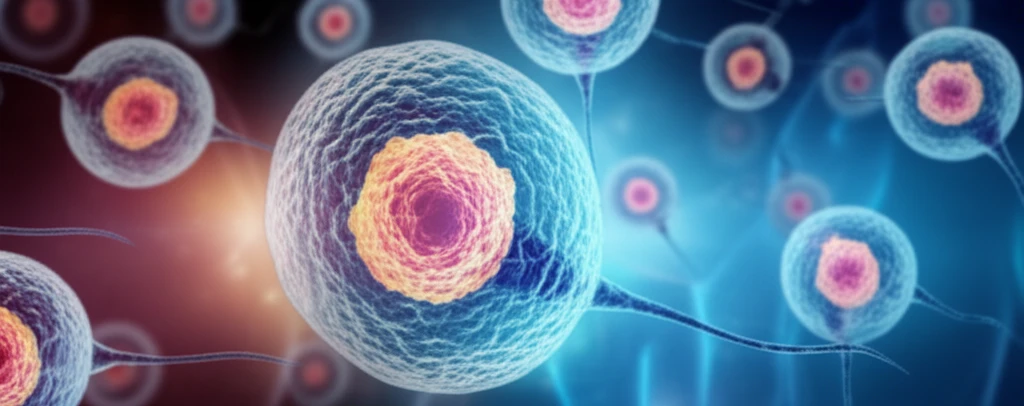
Illustration of stem cells dividing and transforming, representing regenerative medicine.

Decoding the Future: How Stem Cell Research Is Revolutionizing Health

"Explore the groundbreaking advancements in stem cell research and its potential to transform medicine, offering hope for treating diseases and enhancing human health."


In the realm of medical science, few areas hold as much promise as stem cell research. These remarkable cells, capable of transforming into various specialized cell types, are at the forefront of innovation in treating diseases and improving human health. This article delves into the exciting world of stem cells, exploring their potential to revolutionize medicine and offering a glimpse into the future of healthcare.

From understanding the basics of stem cells to examining their applications in regenerative medicine, this exploration will provide you with a comprehensive overview of this rapidly evolving field. We'll navigate through the current research, highlighting the potential breakthroughs and the challenges that lie ahead. The aim is to inform, educate, and inspire curiosity about the science shaping our future.

As we embark on this journey, we will look into the functional analysis of transcripts of unknown functions, the selective differentiation of ESCs and iPS cells using different small molecules, monitoring developmental and cardiovascular toxicity gene signatures, and pathways using reporter line technologies. The aim is to provide a comprehensive insight into this groundbreaking field and its potential to redefine healthcare as we know it.

Understanding Stem Cells: The Building Blocks of Life and Medicine

Illustration of stem cells dividing and transforming, representing regenerative medicine.

Stem cells are unique cells with the extraordinary ability to differentiate into specialized cell types, offering incredible potential for regenerative medicine and disease treatment. They exist in two primary forms: embryonic stem cells (ESCs) and adult stem cells. ESCs, derived from early-stage embryos, are pluripotent, meaning they can become any cell type in the body. Adult stem cells, found in various tissues, are more limited in their differentiation potential, typically becoming cells of their origin tissue.

The applications of stem cells are vast and varied. They are being actively researched for treating a wide range of diseases, including heart disease, diabetes, Alzheimer's, and spinal cord injuries. Stem cell therapies aim to repair damaged tissues, replace diseased cells, and promote the body's natural healing processes. Clinical trials are underway, and some therapies have already been approved, showcasing the tangible impact of this research.

  • Embryonic Stem Cells (ESCs): Derived from early-stage embryos, ESCs are pluripotent, able to become any cell type.
  • Adult Stem Cells: Found in various tissues, these cells are more limited in differentiation, typically becoming cells of their origin.
  • Induced Pluripotent Stem Cells (iPSCs): Adult cells reprogrammed to behave like ESCs, offering personalized medicine possibilities.
  • Therapeutic Applications: Stem cells are being explored for treating heart disease, diabetes, Alzheimer's, spinal cord injuries, and more.
The field of stem cell research is not without its challenges. Ethical considerations surrounding the use of ESCs, the potential for immune rejection, and the need for standardized protocols are ongoing. However, researchers are actively addressing these challenges, developing innovative solutions to advance the field responsibly.

The Future of Health: Embracing the Promise of Stem Cell Research

Stem cell research is a dynamic and promising field, poised to transform healthcare. As research progresses and challenges are addressed, the potential benefits for human health are vast. From treating debilitating diseases to enhancing our understanding of human biology, stem cells are unlocking new possibilities. Embracing this future requires continued investment in research, ethical considerations, and a commitment to translating scientific discoveries into tangible therapies. The journey into this field is a testament to human ingenuity, offering hope for a healthier tomorrow.

About this Article -

This article was crafted using a human-AI hybrid and collaborative approach. AI assisted our team with initial drafting, research insights, identifying key questions, and image generation. Our human editors guided topic selection, defined the angle, structured the content, ensured factual accuracy and relevance, refined the tone, and conducted thorough editing to deliver helpful, high-quality information.See our About page for more information.

Everything You Need To Know

1

What are the two primary forms of stem cells, and how do their capabilities differ?

The two primary forms of stem cells are Embryonic Stem Cells (ESCs) and Adult Stem Cells. ESCs, derived from early-stage embryos, are pluripotent, meaning they can differentiate into any cell type in the body. Adult Stem Cells, found in various tissues, have more limited differentiation potential, typically becoming cells of their origin tissue. This difference in potential is crucial for their respective applications in regenerative medicine and disease treatment. The advent of Induced Pluripotent Stem Cells (iPSCs) further expands the possibilities, allowing for the creation of patient-specific pluripotent cells, circumventing some of the limitations and ethical concerns associated with ESCs. However, iPSCs also present challenges related to the reprogramming process and potential for tumor formation, which require careful consideration.

2

What are some of the diseases and conditions that stem cell therapies are being explored to treat?

Stem cell therapies are being actively researched for treating a wide range of diseases, including heart disease, diabetes, Alzheimer's, and spinal cord injuries. These therapies aim to repair damaged tissues, replace diseased cells, and promote the body's natural healing processes. While the focus is on these conditions, the functional analysis of transcripts of unknown functions, selective differentiation of ESCs and iPS cells using different small molecules, and monitoring developmental and cardiovascular toxicity gene signatures and pathways using reporter line technologies are also crucial in ensuring the safety and efficacy of these treatments. Other potential targets for stem cell therapy include Parkinson's disease, macular degeneration, and autoimmune disorders, highlighting the broad potential of this field.

3

What are induced pluripotent stem cells (iPSCs), and why are they considered promising in the field of stem cell research?

Induced Pluripotent Stem Cells (iPSCs) are adult cells that have been reprogrammed to behave like Embryonic Stem Cells (ESCs). This reprogramming gives iPSCs the ability to differentiate into various cell types, similar to ESCs. iPSCs are promising because they offer the potential for personalized medicine, as they can be derived from a patient's own cells, reducing the risk of immune rejection. Additionally, iPSCs bypass some of the ethical concerns associated with using ESCs, which are derived from embryos. However, generating iPSCs is complex and involves genetic manipulation, so researchers are also actively working on methods to improve the efficiency and safety of the reprogramming process.

4

What are some of the ethical considerations and challenges associated with stem cell research, particularly concerning Embryonic Stem Cells (ESCs)?

Ethical considerations surrounding the use of Embryonic Stem Cells (ESCs) are a primary concern, as ESCs are derived from early-stage embryos, raising questions about the moral status of the embryo. Other challenges include the potential for immune rejection of stem cell therapies, as the recipient's body may recognize the transplanted cells as foreign. Standardizing protocols for stem cell derivation, differentiation, and transplantation is also essential to ensure the reliability and reproducibility of research findings and therapeutic outcomes. Overcoming these ethical and practical challenges is crucial for responsible advancement in the field and translating stem cell research into safe and effective treatments.

5

Beyond treating diseases, how might stem cell research enhance our understanding of human biology and potentially redefine healthcare?

Stem cell research extends beyond just treating diseases; it enhances our understanding of fundamental human biology, offering insights into developmental processes, gene regulation, and cellular differentiation. By studying how stem cells differentiate into specialized cells, scientists can gain a better understanding of how tissues and organs develop and function. This knowledge can lead to new strategies for preventing and treating a wide range of diseases, not just those directly targeted by stem cell therapies. Furthermore, the ability to create functional tissues and organs in the lab could revolutionize drug development and testing, reducing reliance on animal models and enabling personalized approaches to medicine. This shift requires continued investment in research, ethical oversight, and a commitment to translating scientific discoveries into tangible therapies, ultimately redefining healthcare as we know it.

Newsletter Subscribe

Subscribe to get the latest articles and insights directly in your inbox.