
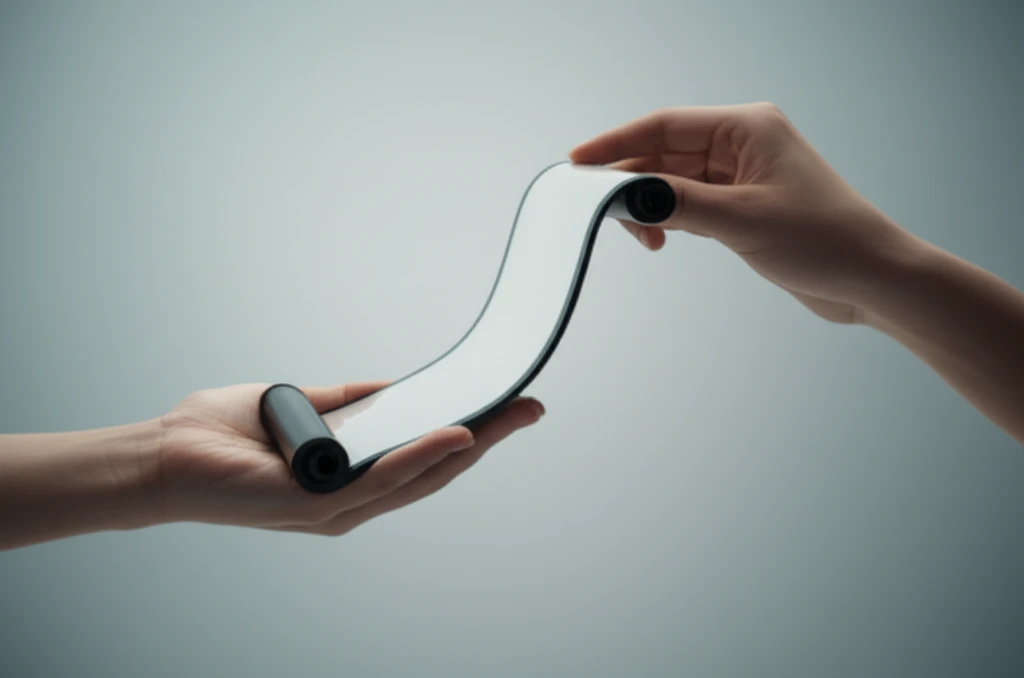
Illustration of a hand unrolling a futuristic rollable display device.

Decoding the Future: How Rollable Display Devices are Redefining Comfort and Design

"Exploring the ergonomics behind the next generation of screens, where form meets function for a seamless user experience."


In a world constantly evolving, technology continues to push boundaries, promising innovations that were once the stuff of science fiction. Among these cutting-edge advancements, rollable display devices stand out, offering a glimpse into the future of mobile technology. These devices, capable of unfurling and retracting with ease, are set to redefine how we interact with screens, making them more portable, versatile, and user-friendly.

However, the sleek aesthetics and futuristic appeal of rollable displays are not just about visual appeal; they are also deeply rooted in ergonomic principles. As these devices become more prevalent, understanding how they interact with the human form is crucial. This article delves into the core of these ergonomic considerations, examining how hand length and device thickness influence the design, comfort, and overall user experience of rollable displays.

The core of this exploration is an in-depth look at the study, 'Determining ergonomic forms for rollable display devices,' by Songil Lee and colleagues. Their research provides valuable insights into the critical factors that shape the design of these devices, ensuring they are not only visually stunning but also comfortable and intuitive to use. The findings of this study offer a comprehensive understanding of how to design these devices.

The Ergonomics of Rollable Displays: A Deep Dive

Illustration of a hand unrolling a futuristic rollable display device.

The primary goal of the study by Lee et al. was to determine the optimal ergonomic design for rollable displays, focusing on the interplay between device dimensions and user comfort. The researchers explored how hand length and device thickness impact the required grip area and overall user experience. These factors are crucial in ensuring that the device is easy to hold, manipulate, and use for extended periods.

The study involved a group of young adults who interacted with prototypes of rollable displays. The researchers carefully manipulated hand length and device thickness to understand their effects on grip comfort. Participants were asked to unroll and roll the displays, and their comfort levels were meticulously assessed. This hands-on approach allowed the researchers to gather practical insights into the ergonomic design of these devices.

  • Hand Length: Researchers investigated how different hand sizes impact the grip area.
  • Device Thickness: The study explored how the thickness of the device affects comfort.
  • User Comfort Ratings: Participants rated their comfort levels, providing data on how different design elements affected their experience.
The study's findings revealed that the width of the grip area and the thickness of the device have a significant impact on comfort. The researchers found that users preferred devices with thicker designs. These insights are crucial for designers aiming to create rollable displays that are both aesthetically pleasing and user-friendly. The design considerations, while seemingly minor, play a critical role in the overall usability of the device.

Looking Ahead: The Future of Rollable Displays

The findings of the study underscore the importance of considering ergonomic factors when designing rollable display devices. As this technology continues to evolve, prioritizing user comfort and usability will be essential. By focusing on dimensions like device thickness and grip area, designers can create devices that are not only innovative but also a pleasure to use, paving the way for a future where technology seamlessly integrates into our daily lives.

About this Article -

This article was crafted using a human-AI hybrid and collaborative approach. AI assisted our team with initial drafting, research insights, identifying key questions, and image generation. Our human editors guided topic selection, defined the angle, structured the content, ensured factual accuracy and relevance, refined the tone, and conducted thorough editing to deliver helpful, high-quality information.See our About page for more information.

This article is based on research published under:

DOI-LINK: 10.1177/1541931218621234, Alternate LINK

Title: Determining Ergonomic Forms For Rollable Display Devices

Subject: General Medicine

Journal: Proceedings of the Human Factors and Ergonomics Society Annual Meeting

Publisher: SAGE Publications

Authors: Songil Lee, Donghee Choi, Hyeeun Choi, Kitae Hwang, Seonghyeok Park, Minjoong Kim, Jihhyeon Yi, Si Jung Kim, Gyouhyung Kyung*

Published: 2018-09-01

Everything You Need To Know

1

What are rollable display devices and what makes them different from other mobile technologies?

Rollable display devices represent a cutting-edge advancement in mobile technology, distinguished by their ability to unfurl and retract, which enhances portability and versatility. Unlike traditional fixed-screen devices, rollable displays can adapt their form factor, making them more user-friendly. Their design incorporates ergonomic principles, focusing on how they interact with the human form to ensure comfort and intuitive use, as highlighted in the study by Songil Lee and colleagues.

2

Why is ergonomics an important consideration in the design of rollable display devices?

Ergonomics is crucial in the design of rollable display devices because it directly impacts user comfort and usability. As these devices become more common, understanding how hand length and device thickness affect the user experience is essential. The research conducted by Lee et al. emphasizes that prioritizing ergonomic factors, such as grip area and device dimensions, ensures that rollable displays are not only innovative but also a pleasure to use for extended periods.

3

What were the key findings of the study by Songil Lee and colleagues regarding the ergonomic design of rollable displays?

The study 'Determining ergonomic forms for rollable display devices' by Songil Lee and colleagues revealed that device thickness and grip area significantly influence user comfort. The researchers found that users preferred devices with thicker designs. By manipulating hand length and device thickness, the study provided practical insights into how these factors affect the overall user experience when unrolling and rolling the displays. These findings underscore the importance of considering these specific ergonomic factors during the design process.

4

How did the study by Lee et al. assess user comfort with different designs of rollable display devices?

In the study by Lee et al., young adults interacted with prototypes of rollable displays, and researchers carefully manipulated hand length and device thickness. Participants were asked to unroll and roll the displays, and their comfort levels were meticulously assessed. User comfort ratings were collected to provide data on how different design elements, such as the width of the grip area and the thickness of the device, impacted their experience. This hands-on approach allowed the researchers to gather practical insights into the ergonomic design of these devices.

5

What are the implications of the research on rollable display ergonomics for the future of device design and user experience?

The research findings on rollable display ergonomics have significant implications for the future of device design and user experience. Prioritizing factors like device thickness and grip area will be essential for creating devices that seamlessly integrate into daily life. By focusing on these dimensions, designers can develop rollable displays that are not only aesthetically pleasing but also user-friendly, ensuring comfort and ease of use. This approach paves the way for technological innovations that enhance, rather than hinder, the user's interaction with technology.

Newsletter Subscribe

Subscribe to get the latest articles and insights directly in your inbox.