
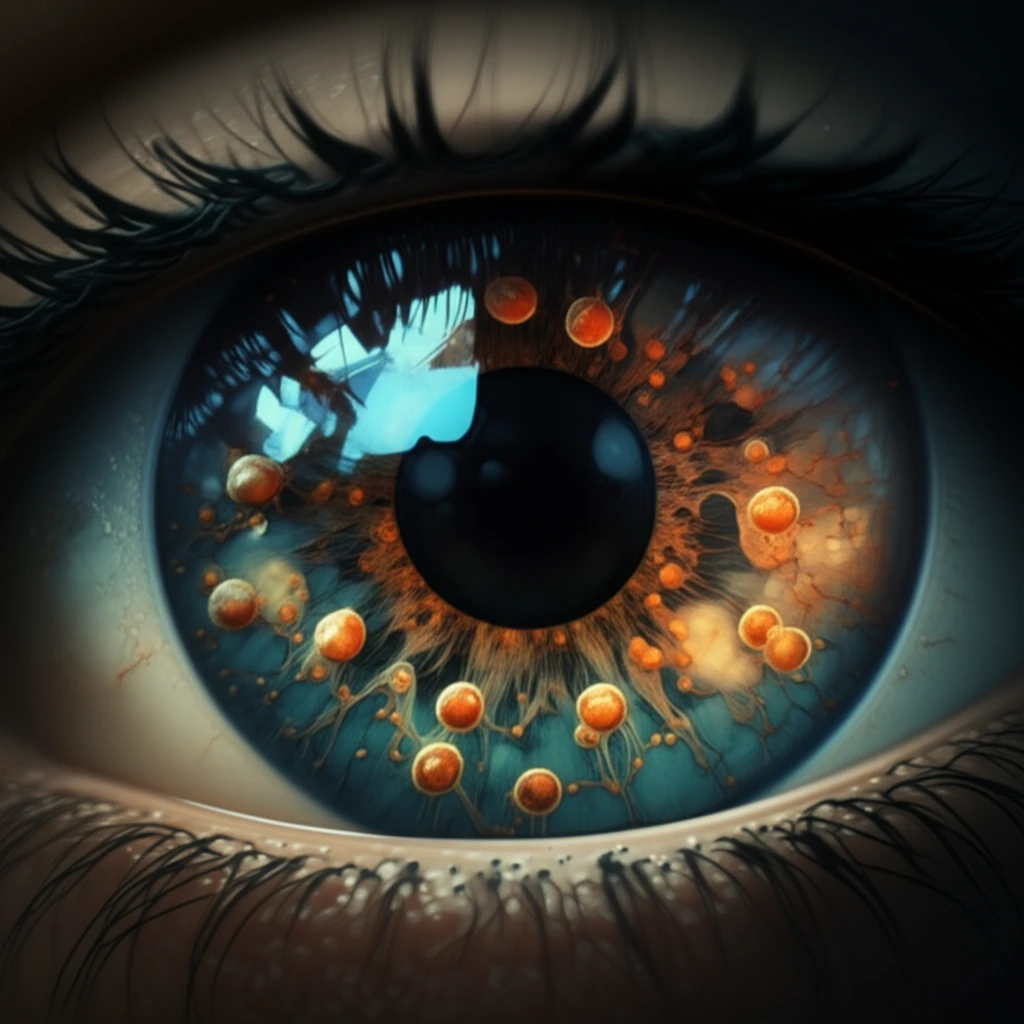
Microscopic view of the human eye lens showcasing interconnected, glowing cells in a spectrum of colors.

Decoding the Eye's Lens: How Single-Cell Analysis Reveals Secrets of Clarity

"Unlocking the potential for new treatments: Groundbreaking research into the ocular lens reveals regulated heterogeneity of gene expression, illuminating the path to preventing vision impairment."


The eye lens, a marvel of biological engineering, presents an ideal platform for studying spatial transcriptomics. Its unique structure, composed of highly organized, elongated, and transparent fiber cells, makes it an exceptional model for understanding how cells specialize and function within a tissue.

Each fiber cell in the lens is a unique optical unit, contributing to the lens's refractive properties. These properties, vital for clear vision, are directly influenced by the cell's gene activity, particularly the expression of crystallins, proteins essential for lens transparency. This direct relationship between gene activity and physical function makes the lens a prime target for studying how genes orchestrate complex biological structures.

Recent research has taken a deep dive into this connection, probing the expression of 17 crystallin genes and 77 other genes within single fiber cells. By isolating cells from different regions of the developing lens, scientists are tracing the molecular steps of cell differentiation, offering unprecedented insights into the processes that ensure our vision remains sharp and clear.

What Makes Lens Fiber Cells Unique?

Microscopic view of the human eye lens showcasing interconnected, glowing cells in a spectrum of colors.

Unlike many tissues with diverse cell types, the eye lens is remarkably simple. It primarily consists of two cell types: the anterior epithelium, which acts as a progenitor, and the fiber cells, which are derived from it. This simplicity allows researchers to focus specifically on how epithelial cells differentiate into fiber cells, a process that's crucial for maintaining the lens’s transparency and refractive index.

The lens’s development is a continuous process. Epithelial cells at the lens's edge, known as the equator, differentiate and add new fiber cells to the existing mass. This means the youngest cells are at the periphery, while the oldest, most differentiated cells reside at the center, forming the lens nucleus.

Here's what makes this organization ideal for scientific study:
  • Spatial Context: The lens provides a clear spatial arrangement where cells at different stages of development are neatly organized.
  • Direct Correlation: Each fiber cell's gene activity directly relates to its function as an optical unit.
  • Accessibility: The lens's pliable nature allows for easy isolation of single fiber cells from specific regions.
Researchers are leveraging these characteristics to study how gene expression varies across different regions of the lens. By focusing on crystallins, which make up 95% of the lens's protein content, and other relevant genes, they aim to understand how each cell contributes to the lens's overall transparency and refractive properties.

Why This Research Matters for Your Future Vision

This study offers valuable insights into how molecular diversity can finely tune an organ's function. By pinpointing the genes responsible for maintaining lens clarity and refractive index, scientists are paving the way for new treatments for cataracts and other vision impairments. As research progresses, we may see innovations that prevent age-related vision decline, ensuring sharper and clearer vision for generations to come.

About this Article -

This article was crafted using a human-AI hybrid and collaborative approach. AI assisted our team with initial drafting, research insights, identifying key questions, and image generation. Our human editors guided topic selection, defined the angle, structured the content, ensured factual accuracy and relevance, refined the tone, and conducted thorough editing to deliver helpful, high-quality information.See our About page for more information.

Everything You Need To Know

1

What is the primary focus of the research on the eye's lens?

The research focuses on the regulated heterogeneity of gene expression within the ocular lens. Scientists are using spatial transcriptomics to analyze individual fiber cells, aiming to understand how gene activity influences lens development, transparency, and refractive properties. The goal is to uncover the molecular steps of cell differentiation and identify potential targets for treating vision impairments.

2

How does the structure of the eye's lens facilitate scientific study?

The eye lens is an ideal model for study due to its unique structure. It primarily consists of anterior epithelium, which acts as a progenitor, and fiber cells. The fiber cells are highly organized, elongated, and transparent. This organization offers a clear spatial context, with cells at different developmental stages neatly arranged. Each fiber cell's gene activity is directly correlated with its function as an optical unit, and the lens is pliable, enabling easy isolation of single fiber cells from specific regions. This makes it easier to study gene expression variations across different lens regions.

3

What is the role of crystallins in the context of lens transparency?

Crystallins are proteins essential for lens transparency, and they make up 95% of the lens's protein content. The expression of crystallin genes, along with other genes, plays a vital role in maintaining the lens's clarity and refractive index. By studying these genes within single fiber cells, researchers aim to understand how each cell contributes to the lens's overall function. Disruptions in crystallin expression can lead to vision impairments such as cataracts.

4

How does the development of the eye lens work, and why is it significant?

The lens develops continuously, with epithelial cells at the equator differentiating and adding new fiber cells to the existing mass. The youngest cells are at the periphery, and the oldest are at the center (nucleus). This continuous process is significant because it provides a clear spatial arrangement for studying cell differentiation. Understanding this process is crucial for maintaining the lens's transparency and refractive index, and any disruption in this process can lead to vision problems. This understanding is key for developing treatments for age-related vision decline.

5

What potential benefits might come from this research regarding the ocular lens?

This research offers valuable insights into how molecular diversity finely tunes an organ's function. By pinpointing the genes responsible for maintaining lens clarity and refractive index, scientists are paving the way for new treatments for cataracts and other vision impairments. The ultimate goal is to prevent age-related vision decline, ensuring sharper and clearer vision for future generations. This may include new therapies that target specific genes or pathways involved in lens cell differentiation and function.

Newsletter Subscribe

Subscribe to get the latest articles and insights directly in your inbox.