
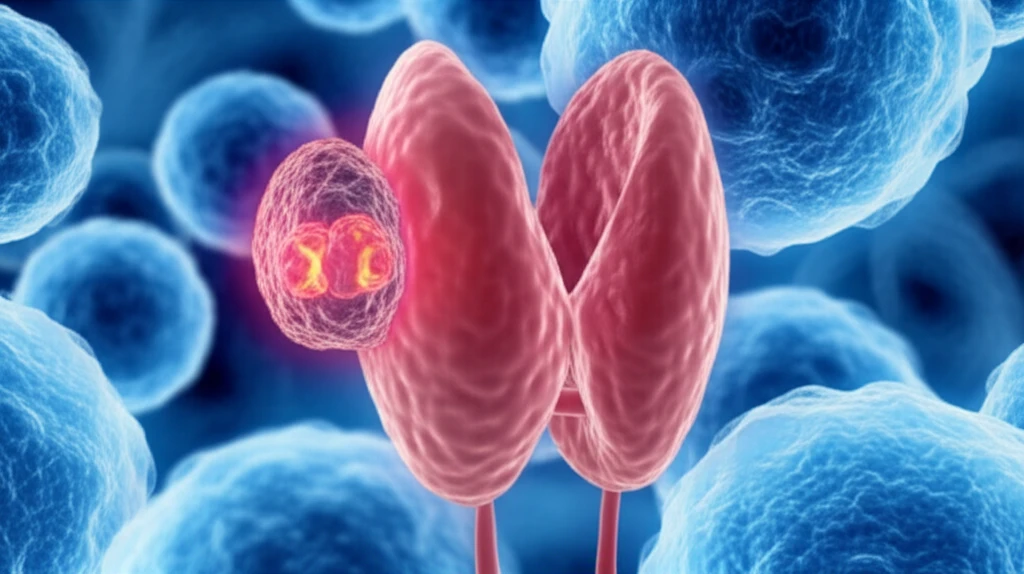
Illustration of a parathyroid gland affected by carcinoma, showcasing its complexities.

Decoding the Enigma: Navigating the Challenges of Parathyroid Carcinoma

"Understanding a Rare Endocrine Cancer and Its Impact on Your Health"


Parathyroid carcinoma (PTCA) is a rare endocrine malignancy that presents unique challenges in diagnosis and treatment. Affecting less than 1% of individuals with primary hyperparathyroidism, this condition demands a deeper understanding to ensure effective patient care. This article aims to shed light on PTCA, offering comprehensive insights into its clinical manifestations, diagnostic complexities, and management strategies.

The parathyroid glands, small structures located near the thyroid, play a crucial role in regulating calcium levels in the body. When these glands develop cancer, the consequences can be severe. This article explores the intricacies of PTCA, emphasizing the need for early detection and precise interventions.

This information is designed to provide general insights and is not intended to be a substitute for professional medical advice. Always consult with a qualified healthcare provider for any questions you may have regarding a medical condition or treatment. Early detection and appropriate treatment are critical for managing this rare and complex condition.

What is Parathyroid Carcinoma? Unveiling the Basics and Causes

Illustration of a parathyroid gland affected by carcinoma, showcasing its complexities.

Parathyroid carcinoma (PTCA) is a very rare form of cancer that originates in the parathyroid glands. These glands, located in the neck near the thyroid, are responsible for producing parathyroid hormone (PTH), which regulates calcium levels in the blood. While the exact causes of PTCA are not fully understood, certain factors have been associated with an increased risk. These include a history of radiation exposure to the head and neck, and possibly some genetic predispositions such as multiple endocrine neoplasia type 1 (MEN1) syndrome and familial hyperparathyroidism.

Unlike more common cancers, PTCA presents a unique challenge due to its rarity. This scarcity can make it difficult for both patients and healthcare providers to be immediately familiar with the disease. Diagnosing PTCA often requires a combination of clinical evaluation, imaging studies, and pathological analysis. It is important to understand that while the prevalence of PTCA is low, its impact on patients' lives can be significant.

  • Rarity: PTCA affects less than 1% of individuals with primary hyperparathyroidism.
  • Cause: Exact causes are unclear, but potential factors include radiation exposure and certain genetic conditions.
  • Impact: PTCA can lead to severe health complications, including high calcium levels (hypercalcemia) and bone disease.
In the article, we'll focus on the diagnostic complexities of PTCA, helping to recognize the symptoms and signs that may indicate this condition. We also will show you how to understand the treatment options and the importance of early intervention. The goal is to empower you with the knowledge you need to take charge of your health and partner with healthcare providers for the best possible outcome.

Empowering Your Health Journey: A Path Forward

Navigating the complexities of parathyroid carcinoma requires a proactive approach. Through knowledge, early detection, and collaboration with healthcare professionals, individuals can effectively manage this rare cancer. This article aims to be a valuable resource, empowering you to take control of your health journey. The information provided should not substitute for professional medical advice. Always consult a healthcare provider for any health concerns.

About this Article -

This article was crafted using a human-AI hybrid and collaborative approach. AI assisted our team with initial drafting, research insights, identifying key questions, and image generation. Our human editors guided topic selection, defined the angle, structured the content, ensured factual accuracy and relevance, refined the tone, and conducted thorough editing to deliver helpful, high-quality information.See our About page for more information.

This article is based on research published under:

DOI-LINK: 10.13181/mji.v21i3.496, Alternate LINK

Title: Parathyroid Carcinoma: Review Of A Problematic Case

Subject: General Medicine

Journal: Medical Journal of Indonesia

Publisher: Faculty of Medicine, Universitas Indonesia

Authors: Rizky I. Putri, Benyamin Makes

Published: 2012-08-01

Everything You Need To Know

1

What exactly is parathyroid carcinoma and how does it differ from other types of cancer?

Parathyroid carcinoma (PTCA) is a rare cancer originating in the parathyroid glands, which are responsible for producing parathyroid hormone (PTH) to regulate calcium levels. Unlike many other cancers, PTCA's rarity makes it less familiar to both patients and healthcare providers. The main concern with PTCA is the resulting hyperparathyroidism, leading to elevated calcium levels (hypercalcemia). While other cancers may indirectly affect calcium levels, PTCA directly impacts calcium regulation through uncontrolled PTH secretion. More common cancers may also have more established screening and treatment protocols, which are still evolving for PTCA due to its rarity.

2

What are the primary risk factors associated with developing parathyroid carcinoma, and are there any preventative measures one can take?

The exact causes of parathyroid carcinoma (PTCA) are not fully understood, but some associated risk factors include a history of radiation exposure to the head and neck area. Certain genetic conditions like multiple endocrine neoplasia type 1 (MEN1) syndrome and familial hyperparathyroidism may also increase the risk. Since the causes aren't completely clear, specific preventative measures are limited. However, avoiding unnecessary radiation exposure and regular monitoring for individuals with related genetic predispositions are advisable. Further research is needed to fully understand the genetic and environmental factors contributing to PTCA.

3

How is parathyroid carcinoma typically diagnosed, and what role do imaging studies and pathological analysis play in the diagnostic process?

Diagnosing parathyroid carcinoma (PTCA) typically involves a combination of clinical evaluation, imaging studies, and pathological analysis. Clinical evaluation includes assessing symptoms and signs indicative of hypercalcemia. Imaging studies like ultrasound, CT scans, or MRI help locate and evaluate any parathyroid masses. However, a definitive diagnosis often requires pathological analysis of tissue obtained through biopsy or surgery. Pathological examination can identify the malignant characteristics of the parathyroid cells. This integrated approach is crucial because imaging alone cannot always differentiate PTCA from benign parathyroid tumors.

4

What are the potential long-term health implications of parathyroid carcinoma, and how does it impact overall quality of life?

Parathyroid carcinoma (PTCA) can have significant long-term health implications, primarily due to the effects of hypercalcemia caused by excessive parathyroid hormone (PTH) production. Chronically elevated calcium levels can lead to kidney stones, bone disease (osteoporosis), cardiovascular problems, and neurological symptoms. These complications can severely impact a person's quality of life by causing pain, fatigue, cognitive dysfunction, and reduced mobility. Effective management of PTCA is essential to mitigate these long-term effects and improve overall well-being. However, the specific impact can vary depending on the stage at diagnosis, the effectiveness of treatment, and individual patient factors.

5

In addition to surgery, what other treatment options are available for managing parathyroid carcinoma, and how effective are they in preventing recurrence?

While surgery, specifically parathyroidectomy, is the primary treatment for parathyroid carcinoma (PTCA), other options include radiation therapy and chemotherapy. Radiation therapy may be used after surgery to target any remaining cancer cells or for cases where surgery is not feasible. Chemotherapy is less commonly used due to its limited effectiveness against PTCA. The effectiveness of these treatments in preventing recurrence varies. Complete surgical removal of the tumor offers the best chance of long-term control. However, PTCA can recur, necessitating ongoing monitoring and potential additional treatments. Research is ongoing to explore more effective systemic therapies for PTCA. The role of targeted therapies and immunotherapies are also being investigated.

Newsletter Subscribe

Subscribe to get the latest articles and insights directly in your inbox.