
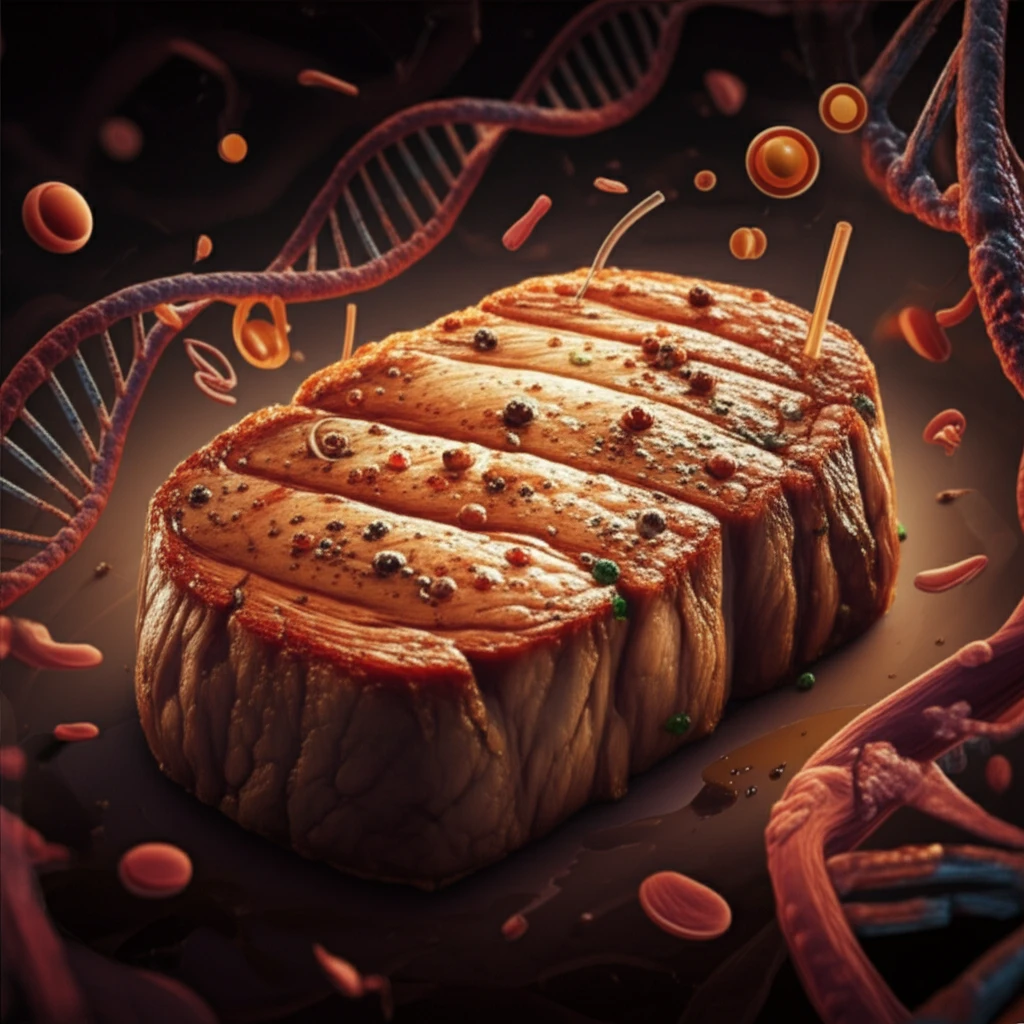
Decoding the Dinner Plate: How Beef Genetics Influence Tenderness and Quality

"Unlocking the Secrets of Meat: Exploring the Science Behind Tender Beef and the Role of Genetics"
Ever wondered why some steaks melt in your mouth while others require a bit more…effort? The answer lies not only in the cooking, but also in the very DNA of the cow. For those of us who enjoy a good steak, the quest for the perfect bite is a constant pursuit. But what if the secret to that perfect tenderness was already predetermined, locked within the animal's genetic code? Recent research dives deep into the world of beef genetics, revealing the intricate relationship between specific genes and the quality of the meat we consume.
This isn't just about satisfying our taste buds. Understanding the genetic factors influencing meat quality has significant implications for the beef industry, consumers, and even the environment. Selective breeding can lead to more efficient production, reduce waste, and ultimately, improve the overall sustainability of beef farming. But the journey to understanding this starts with unraveling the complex interplay of genes that determine meat tenderness, marbling, and overall eating experience.
This article explores a fascinating study that identifies specific genes, CAPN1 and HRSP12, which play a crucial role in determining the quality of beef. We will examine how these genes influence key traits like tenderness and marbling, and what this means for both the future of beef production and your next dining experience. Prepare to have your understanding of the perfect steak completely transformed.
The Genetic Blueprint of Beef: CAPN1, HRSP12, and the Quest for Tenderness
The journey to understanding meat tenderness begins with two key players: Calpain 1 (CAPN1) and its activator HRSP12. These aren't just any genes; they're the architects of the beef-eating experience. CAPN1, a gene encoding a protease, is essentially an enzyme that breaks down proteins, while HRSP12, its activator, is like the ignition key. Together, they orchestrate the tenderization process that occurs after slaughter. When these genes function effectively, the result is a more tender and enjoyable cut of meat.
- Marbling Matters: The study found that specific variations in both CAPN1 and HRSP12 genes were associated with marbling. This means the amount of intramuscular fat, which contributes significantly to flavor and tenderness, is partially determined by these genes.
- Tenderness Traits: Certain genetic combinations were linked to higher tenderness scores. This is a direct indicator of the eating experience, the easier it is to chew and enjoy the meat.
- Breed Specifics: The impact of these genes varied across different breeds, highlighting the complex interplay between genetics and environment.
The Future of Beef: A Bite into Tomorrow
The findings from this study are more than just scientific data; they represent a significant step toward a future where beef production is more efficient, sustainable, and tailored to consumer preferences. As our understanding of these genetic factors grows, so too will our ability to select and breed cattle with superior meat quality traits. So, the next time you savor a tender steak, remember the science behind every delicious bite – a testament to the remarkable interplay between genetics, agriculture, and the pursuit of culinary excellence.