
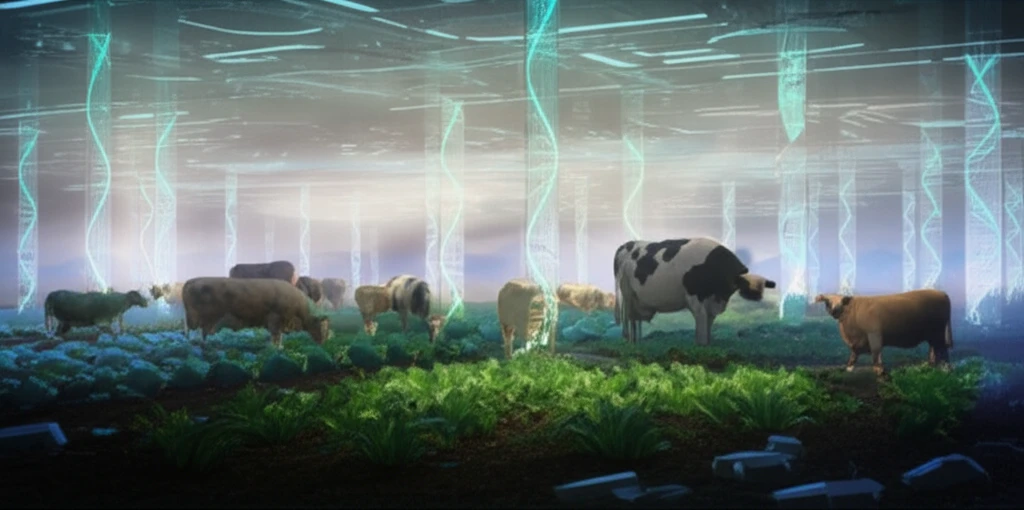
Decoding the Debate: Is Genetically Engineered Feed Really a Threat?

"Unraveling the science and separating fact from fiction in the GE feed conversation."
Genetically engineered (GE) crops have become staples in agriculture since their introduction in 1996. Today, over 90% of the U.S. acreage for crops like sugar beet, soy, cotton, and corn is planted with GE varieties. With an estimated 70-90% of GE crop biomass being consumed by food-producing animals for the past two decades, questions about the safety and impact of GE feed are increasingly relevant.
The debate surrounding GE feed is often fueled by misinformation and concerns about animal health and product safety. However, numerous studies have consistently demonstrated compositional equivalence between GE and non-GE crops. Additionally, extensive peer-reviewed research has found no deleterious health effects associated with feeding GE crops to livestock. USDA productivity trends and health metrics also show no unexpected problems after the introduction of GE crops into the US feed supply.
This article aims to clarify the science behind GE feed, address common concerns, and provide insights into the implications of GE feed for consumers, producers, and the future of sustainable agriculture. By examining the facts and debunking myths, this discussion empowers you to make informed decisions about the food you consume and the agricultural practices you support.
The Science of GE Feed: What Does the Research Say?
For years, scientists have rigorously investigated the effects of GE feed on livestock. Compositional analyses consistently show that GE crops are nutritionally equivalent to their non-GE counterparts. This means that the levels of proteins, carbohydrates, fats, vitamins, and minerals are substantially the same in both types of crops.
- No Detectable GE Material in Animal Products: Recombinant DNA (rDNA) or protein from GE feed crops are not reliably detected in milk, meat, and eggs from livestock that consume GE feed.
- Digestive Breakdown: Studies show that DNA from GE crops is chemically equivalent to DNA from non-GE crops and is broken down similarly during digestion.
- Limited DNA Transfer: There is no evidence to suggest DNA or rDNA transfer from plants to animals.
The Future of GE Feed: Sustainability and Consumer Choice
The debate surrounding GE feed is not solely about science; it also touches on issues of labeling, consumer choice, and sustainable agriculture. While mandatory labeling of products from animals fed GE feed would be complicated and expensive, some advocate for voluntary labeling programs to provide consumers with more information.
From a sustainability perspective, GE crops offer several advantages. They can reduce the need for pesticides, increase crop yields, and improve water use efficiency. These benefits can contribute to a more sustainable and environmentally friendly agricultural system.
Ultimately, the future of GE feed depends on open communication, informed decision-making, and a commitment to sustainable agricultural practices. By embracing scientific evidence and addressing consumer concerns, we can harness the potential of GE technology to feed a growing population while protecting our planet.