
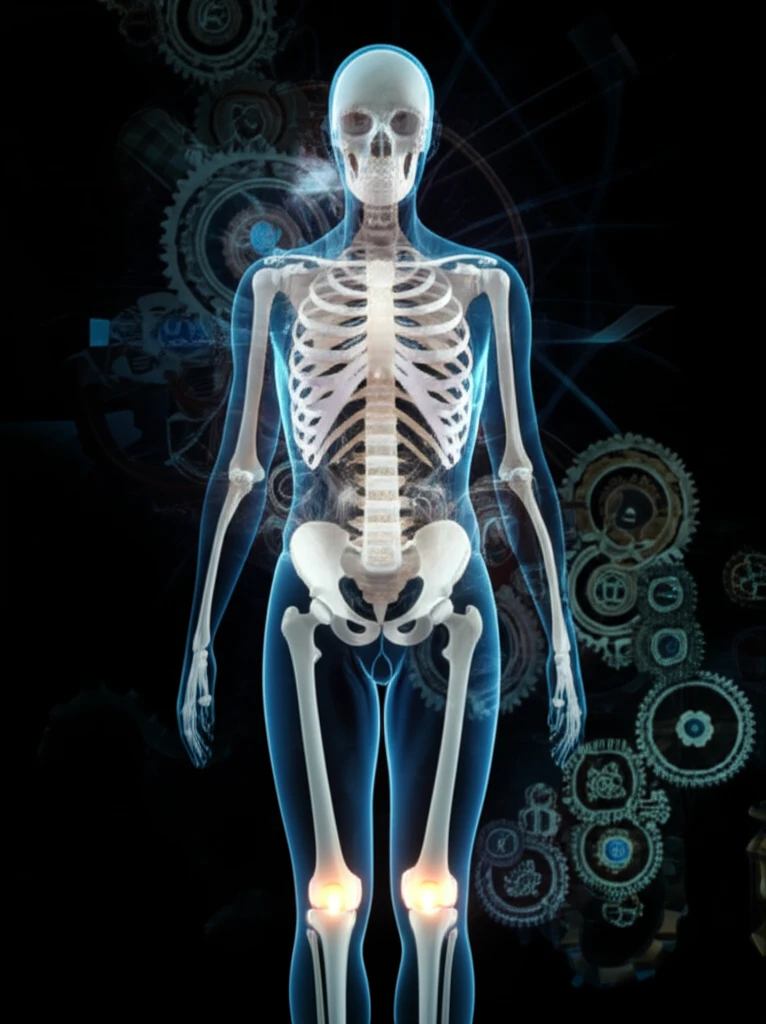
Illustration of a human skeleton with glowing joints, representing innovation in joint biomechanics.

Decoding the Body's Blueprint: Unraveling the Secrets of Joint Biomechanics and Engineering

"From Hip Simulators to Human Movement: How Engineering is Revolutionizing Medicine."


The human body, a marvel of natural engineering, is a complex system of interconnected parts. Among these, joints play a crucial role in enabling movement, withstanding immense forces, and ensuring our ability to navigate the world. For years, scientists and engineers have been intrigued by the way our bodies function, and the challenges posed by joint wear and tear. As the population ages, understanding and addressing these challenges becomes increasingly vital.

At the forefront of this fascinating field is biomechanics, a discipline that blends the principles of engineering, physics, and biology. It seeks to understand the mechanical behavior of biological systems, and apply this knowledge to develop effective treatments for a range of medical conditions. Joint biomechanics, in particular, focuses on the function, structure, and mechanics of joints, providing invaluable insights into the causes of joint damage and the design of effective interventions.

This article explores how engineering and medicine intersect to unravel the mysteries of joint mechanics and the critical implications of simultaneous measurement of friction and wear. We will examine how innovative research is changing how we think about human movement and providing leading-edge medical solutions. This is not just an academic pursuit; it's a path toward better care for individuals dealing with joint ailments and conditions.

Engineering the Future of Joint Health: A Deep Dive into Friction, Wear, and Advanced Medical Solutions

Illustration of a human skeleton with glowing joints, representing innovation in joint biomechanics.

Joints, the intricate hinges of our bodies, are subjected to continuous stress and strain. The ability of joints to move seamlessly is a testament to their resilient design. Yet, with age and use, these essential structures can degrade, leading to pain, reduced mobility, and diminished quality of life. This reality has driven the need for innovation in engineering and medicine, providing new ways to address joint health problems.

A primary focus within joint biomechanics is the measurement and understanding of friction and wear. Friction, the force that resists motion between two surfaces, plays a crucial role in joint function. In healthy joints, a small amount of friction enables smooth and controlled movement. However, in artificial joints, excessive friction can lead to wear and damage, reducing their lifespan and effectiveness. Wear, on the other hand, is the process of material removal from a surface due to friction. Over time, wear can cause implants to fail, necessitating revision surgeries.

  • The measurement and control of friction are essential for optimizing the performance of artificial joints. Engineers have developed innovative methods for assessing friction in laboratory settings, using specialized equipment and simulations.
  • Wear analysis is an essential element of the design process, and in testing the durability of joint implants. Various techniques, like microscopy and tribology, help to evaluate wear patterns and predict the longevity of these devices.
  • Research in this field not only guides the design of more durable joint replacements but also advances our understanding of natural joint mechanics. These insights allow medical professionals to tailor treatments based on the patient's needs.
The field of joint biomechanics is in a constant state of progress, fueled by scientific advancements and the spirit of innovation. Scientists and engineers collaborate to address the challenges of joint damage and to improve people's health and quality of life. The outcomes of these efforts are far-reaching, offering new hope for people grappling with joint-related diseases. The continuing advancements in joint biomechanics hold tremendous promise for enhancing human health, by understanding natural joint mechanics, designing longer-lasting joint replacements, and providing patients with new, better-quality care.

Embracing the Future of Movement: A Promise of Healthier Joints and Active Lives

As we move forward, the collaboration between engineering and medicine will continue to unlock the secrets of human movement. Innovations in joint biomechanics are a testament to the commitment of scientists and engineers who seek to enhance human health and well-being. This is a journey that ensures individuals of all ages can move freely, and embrace life to its fullest, without the constraints of joint pain or immobility.

About this Article -

This article was crafted using a human-AI hybrid and collaborative approach. AI assisted our team with initial drafting, research insights, identifying key questions, and image generation. Our human editors guided topic selection, defined the angle, structured the content, ensured factual accuracy and relevance, refined the tone, and conducted thorough editing to deliver helpful, high-quality information.See our About page for more information.

Everything You Need To Know

1

What exactly is "joint biomechanics" and how does it relate to treating joint problems?

"Joint biomechanics" is a field that combines engineering, physics, and biology to study how joints function, their structure, and their mechanics. It helps us understand the causes of joint damage. This understanding enables the design of effective interventions and treatments for various joint-related medical conditions. Without biomechanics we would lack the fundamental understadning to create effective treaments.

2

Why are "friction" and "wear" so important when it comes to artificial joints?

"Friction" and "wear" are critical because they directly impact the performance and longevity of artificial joints. In artificial joints, excessive "friction" can lead to "wear" and damage, reducing the lifespan and effectiveness of the implant. "Wear", which is the removal of material due to friction, can eventually cause the implant to fail, potentially requiring revision surgeries. Managing friction and wear helps optimize the durability and function of these artificial joints.

3

How do engineers measure "friction" and "wear" in joint implants, and why is this important?

Engineers use specialized equipment and simulations in laboratory settings to assess "friction" in artificial joints. "Wear" analysis involves techniques like microscopy and tribology to evaluate wear patterns and predict the longevity of joint implants. Measuring and understanding these factors is essential for designing more durable joint replacements. It also helps in understanding natural joint mechanics, allowing medical professionals to tailor treatments to individual patient needs.

4

What role does engineering play in addressing the challenges of joint health as people age?

Engineering plays a crucial role in addressing joint health challenges by providing innovative ways to understand and treat joint problems that become more prevalent with age. This involves the measurement and control of "friction" and "wear" in artificial joints, the design of more durable joint replacements, and the application of engineering principles to understand natural joint mechanics. All of this can improve quality of life.

5

How does the collaboration between engineering and medicine contribute to improving treatments for joint-related diseases, and what are the potential long-term benefits?

The collaboration between engineering and medicine is vital for unlocking the secrets of human movement and developing advanced medical solutions for joint-related diseases. By combining engineering principles with medical knowledge, scientists and engineers can enhance our understanding of natural joint mechanics, design longer-lasting joint replacements, and provide better-quality care for patients. The long-term benefits include healthier joints, more active lives, and improved overall well-being for individuals dealing with joint ailments and conditions.

Newsletter Subscribe

Subscribe to get the latest articles and insights directly in your inbox.