
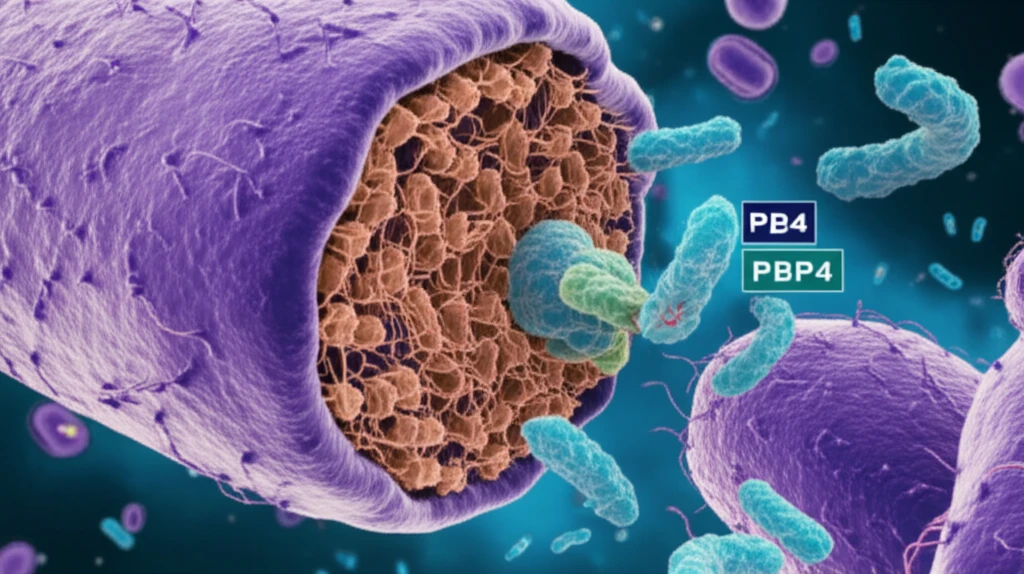
Decoding the Antibiotic Resistance Crisis: How a Tiny Protein is Changing the Game

"Scientists uncover the critical role of PBP4 in bacterial defense, paving the way for new strategies against antibiotic-resistant infections."
In the ongoing battle against infectious diseases, the rise of antibiotic resistance stands as a formidable challenge. Bacteria, with their remarkable ability to adapt and evolve, are increasingly shrugging off the effects of life-saving medications. This alarming trend threatens to reverse decades of medical progress, making even common infections potentially lethal. But, as scientists race to understand these resistant mechanisms, they're uncovering critical insights that could reshape our approach to treatment.
A recent study published in the journal Antimicrobial Agents and Chemotherapy shines a light on a specific protein, known as PBP4, and its surprising role in bacterial defense. This research offers a new perspective on how bacteria develop resistance, focusing on the intricate molecular dance that allows them to survive exposure to antibiotics. Understanding the roles of these bacterial proteins is a step toward finding new ways to circumvent drug resistance and improve patient outcomes.
This article will explore the research findings, breaking down complex scientific concepts into clear, accessible language. We'll examine the significance of PBP4, its functions, and the implications of this discovery for future antibiotic development and patient care. This is more than just a scientific update; it's a story about innovation, persistence, and the ongoing effort to protect public health.
Unraveling the Mystery of PBP4: A Key Player in Bacterial Resistance
Antibiotic resistance in bacteria is a complex problem, often involving multiple mechanisms working in concert. One of the primary ways bacteria resist antibiotics is by altering their cell walls, the protective outer layers that shield them from harm. This is where proteins like PBP4 come into play.
- Cell Wall Synthesis: PBP4 is involved in creating the cell wall, a crucial structure that protects the bacterium.
- Resistance Mechanisms: It helps bacteria withstand antibiotics.
- Mutations & Resistance: Certain mutations in PBP4 have been linked to greater resistance levels.
- Implications: Understanding PBP4 is vital for developing new drugs.
Looking Ahead: The Future of Antibiotic Development
The discovery of PBP4's role in antibiotic resistance marks a significant step forward in understanding how bacteria defend themselves. This research highlights the need for ongoing studies and innovation in the field of antibiotic development. As we face the increasing threat of drug-resistant infections, such knowledge is vital to develop more effective treatments and safeguard global health. It shows the importance of scientific research to understand and protect our health.