
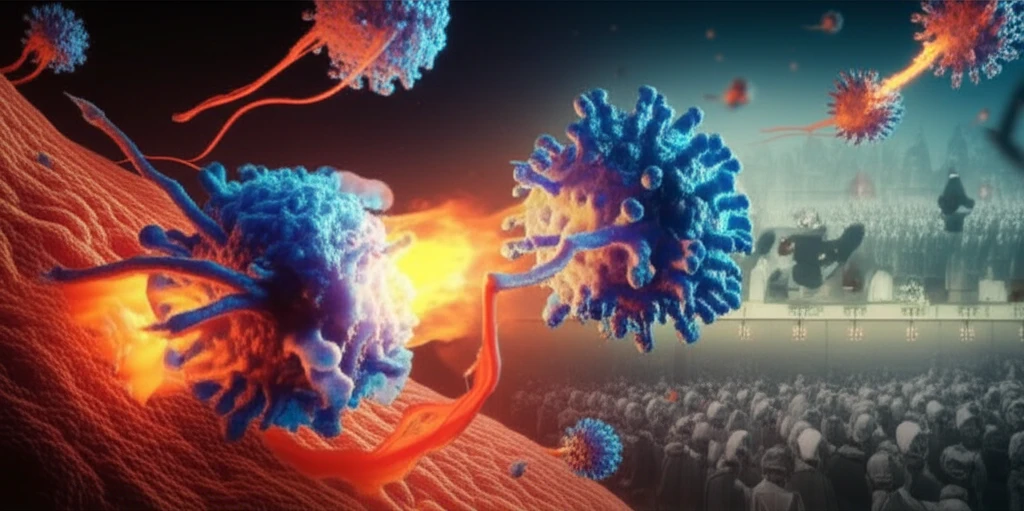
Decoding the 1918 Flu Pandemic: How T-Cells Shaped Immunity and Why It Still Matters

"Unraveling the Mysteries of the 1918 Influenza Pandemic: A Look into Host T-Cell Responses and Their Lasting Legacy on Immunity."
The 1918 influenza pandemic, often called the 'Spanish Flu,' remains one of history's deadliest events, infecting an estimated 500 million people worldwide and causing an estimated 50 million deaths. Beyond the staggering loss of life, this pandemic served as a crucible for scientific discovery, particularly in the field of immunology. The scientific community was driven to understand how the virus behaved and how the human body responded. This quest unveiled critical aspects of the antiviral immune response, fundamentally changing our approach to vaccines and public health.
A central focus of this research was the host T-cell response. T-cells, a type of white blood cell, play a crucial role in recognizing and eliminating virus-infected cells. Understanding the mechanisms behind T-cell activity during the 1918 pandemic has not only illuminated the history of influenza but also informed modern strategies for combating the flu and other viral threats. This includes the development of more effective vaccines and therapies.
This article delves into the legacy of the 1918 pandemic, exploring the pivotal role of T-cells in the host immune response. We'll examine the key discoveries made during this time, their implications for vaccine development, and why this knowledge remains vital in our ongoing efforts to control influenza and prepare for future pandemics. It's a story of scientific breakthroughs, relentless curiosity, and the enduring power of the human immune system.
Unveiling the Power of T-Cells: How They Fight the Flu
The scientific study of the 1918 influenza virus was driven by the need to understand and control its devastating impact. Scientists quickly realized that the body's immune system played a crucial role in determining the severity and frequency of epidemics. This led to a deep dive into the intricate world of T-cell immunity, a field that continues to evolve.
- CD8 T Cells: These cells are crucial for recognizing and eliminating influenza-infected cells. They are highly specific, able to target cells displaying small viral fragments on their surface.
- MHC Restriction: CTLs are 'restricted' by MHC molecules, meaning they only recognize viral peptides when presented by specific MHC molecules on the surface of infected cells.
- Fine Specificity: CTLs can distinguish between different strains of influenza. This specificity is crucial for targeting the virus while avoiding harm to healthy cells.
Looking Ahead: The Enduring Lessons of the 1918 Pandemic
The legacy of the 1918 influenza pandemic continues to shape our understanding of immunity and disease. The discoveries made during this period, particularly regarding T-cell responses, have had a lasting impact on vaccine development, antiviral therapies, and public health strategies. As we face new and evolving viral threats, the knowledge gained from this devastating pandemic remains an invaluable resource, guiding us in our ongoing efforts to protect global health. The critical role of T-cells, once a mystery, is now a cornerstone of modern immunology, reminding us of the intricate and powerful mechanisms within our own bodies.