
Decoding Tech Trends: How User Behavior Models Shape the Future of Smartphones and Wearables

"A deep dive into understanding technology adoption, enhancing user experience, and predicting market evolution in the age of smart devices."
Smartphones have revolutionized daily life since 2007, evolving from simple communication tools to essential hubs for payments, meetings, and personal organization. This rapid integration necessitates a deeper understanding of user attitudes and adoption patterns, especially as smartphones connect with other smart devices like smartwatches and fitness trackers.
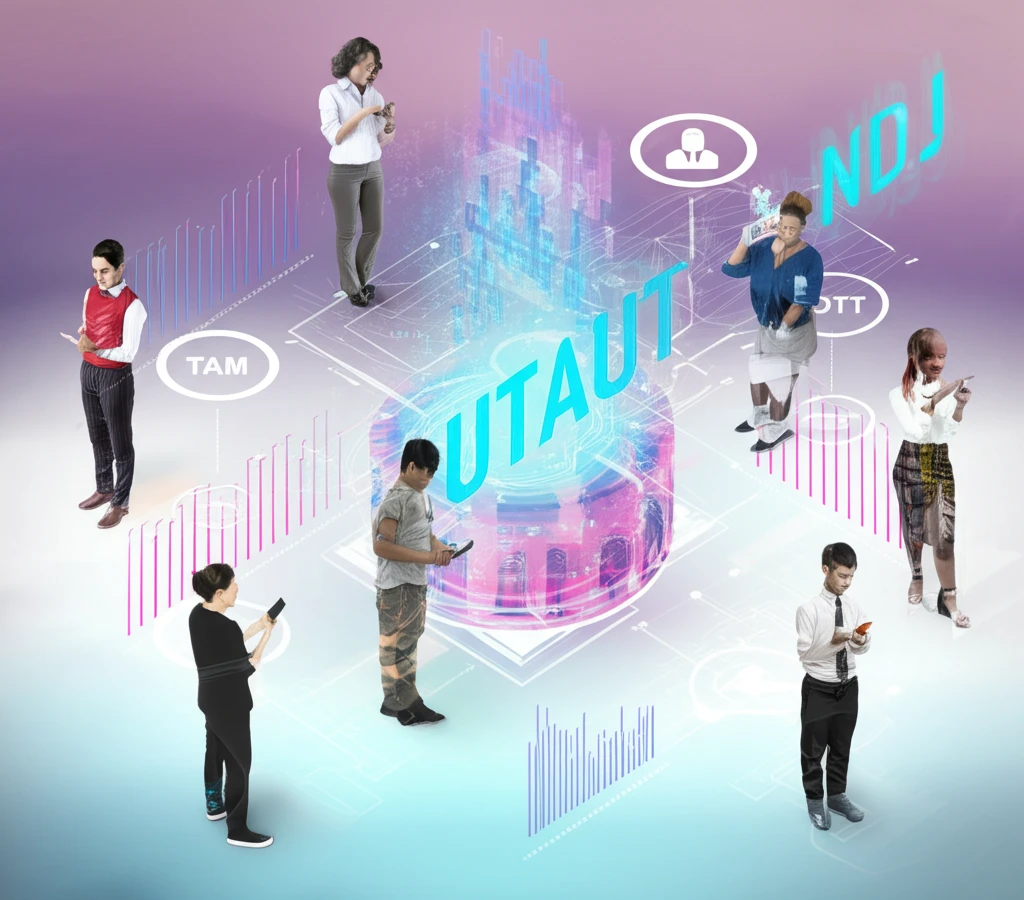
To navigate these trends, researchers are increasingly using technology adoption models—such as the Technology Acceptance Model (TAM), the Unified Theory of Acceptance and Use of Technology (UTAUT), and Innovation Diffusion Theory (IDT). These models help explain how and why users adopt new technologies, providing valuable insights for manufacturers and developers.
This article explores how these models apply to the smartphone and wearable tech markets, examining current research and future directions. By understanding these dynamics, we can better predict and shape the technological landscape.
Technology's Expanding Role in Modern Life
Technology is defined as the application of conceptual knowledge to achieve practical goals in a reproducible way, encompassing both tangible products such as tools and machines, and intangible ones such as software. Information technology specifically involves the study and use of computers, telecommunication systems, and other devices to create, process, store, retrieve, and transmit information. From hand tools to computers and engineering, technology encompasses nearly everything that applies scientific knowledge to practical aims of human life. People use technology to produce goods, provide services, carry out goals such as scientific investigation, and solve complex problems.
Tracking Innovation Through News and Analysis
Staying current with technology news and innovations is essential for understanding breakthroughs in AI, gadgets, robotics, space tech, and digital trends that shape the future. The landscape of technology reporting itself reflects how rapidly the field evolves, requiring continuous monitoring of developments across multiple domains. This approach to tracking progress helps identify emerging patterns before they become mainstream. However, the sheer volume of information can make it challenging to distinguish meaningful trends from short-lived hype cycles.
The Evolution of Technological Progress
The word technology has been in use since the 17th century, reflecting humanity's long history of developing skills, methods, and processes to achieve goals. Over time, technology has progressed from basic tools and steam turbines to sophisticated digital systems that permeate every aspect of daily life. While no single milestone defines the trajectory, the cumulative effect of these advances has been transformative across industries and societies. Understanding this historical arc provides context for evaluating where current innovations might lead in the coming decades.
Understanding Technology Adoption Models: A Practical Guide
Technology adoption models offer frameworks for understanding how users accept and integrate new technologies. Each model provides a unique lens for examining the factors that influence adoption, from perceived usefulness to social influence.
- Technology Acceptance Model (TAM): Introduced by Davis in 1986, TAM focuses on perceived usefulness and ease of use as key determinants of technology adoption. It’s a straightforward model that helps explain voluntary technology use.
- Unified Theory of Acceptance and Use of Technology (UTAUT): This model, developed by Venkatesh et al., integrates eight different theories to identify factors affecting IT adoption. UTAUT considers performance expectancy, effort expectancy, social influence, and facilitating conditions.
- Innovation Diffusion Theory (IDT): Rogers introduced IDT in 1962, emphasizing relative advantage, compatibility, complexity, trialability, and observability. IDT is valuable for assessing how new technologies are integrated into society.
Emerging Research in User Behavior and Device Innovation
Research into user behavior models continues to evolve as smartphones and wearables become more deeply integrated into daily routines. While specific recent studies were not available for this section, the general trajectory suggests increasing sophistication in how manufacturers analyze and respond to user interactions. This ongoing research aims to make devices more intuitive, predictive, and personalized. The field remains dynamic, with new methodologies and frameworks being proposed as data collection capabilities expand.
Challenges and Skepticism in Behavior-Driven Design
Despite enthusiasm for user behavior modeling, significant challenges and counterarguments persist in the industry. Concerns about privacy, data accuracy, and the risk of over-optimizing for engagement at the expense of user wellbeing are frequently raised. Some argue that behavior models can create feedback loops that narrow rather than expand user experiences. These critiques suggest that the path forward requires balancing innovation with ethical considerations and genuine user benefit.
Evaluating Different Approaches to Predictive Technology
Various approaches to predicting and shaping user behavior in smartphones and wearables exist, each with distinct tradeoffs. Some methods rely heavily on quantitative data and machine learning, while others incorporate qualitative insights from user research and ethnographic studies. The effectiveness of each approach likely depends on the specific use case and the type of user behavior being modeled. Without more concrete comparative data, it remains difficult to definitively rank these methodologies against one another.
Future Directions: Maximizing User Engagement
As technology evolves, so must our understanding of user behavior. By continuing to refine and apply technology adoption models, we can create more intuitive, user-friendly devices and services. Future research should focus on incorporating moderating factors like age and gender, as well as exploring mediation effects to provide a more complete picture of technology adoption in an ever-changing world.
Integrating Insights for a Holistic View
Synthesizing the various threads of research, debate, and industry practice around user behavior models points to a technology landscape that is increasingly responsive but also more complex. Expert perspectives generally emphasize the need for interdisciplinary approaches that combine technical capability with human-centered design principles. The integration of behavioral science into technology development represents a significant shift from purely feature-driven innovation. This holistic view suggests that future successes will depend on how well companies balance data-driven insights with empathy for diverse user needs.
Where Behavior Models May Lead Next
Looking ahead, user behavior models are likely to play an even more central role as smartphones and wearables evolve into more ambient, always-on technologies. Advances in sensor technology, edge computing, and AI may enable devices to understand context and intent with greater nuance than ever before. However, the precise trajectory remains uncertain, as breakthroughs in adjacent fields could reshape assumptions about what is possible. The next frontier will likely involve not just predicting behavior, but actively supporting user goals in ways that feel seamless and empowering.
Navigating Wider Implications of Behavior-Shaping Tech
The broader context for user behavior models includes systemic challenges that extend beyond individual devices or applications. Issues of digital equity, algorithmic bias, and the environmental impact of constant device upgrades are all relevant considerations. As behavior-shaping technologies become more pervasive, their effects on societal norms and individual autonomy warrant careful scrutiny. Addressing these challenges will likely require collaboration between technologists, policymakers, and civil society to ensure that innovation serves the public good.
Technology's Effect on People and Communities
Ultimately, the real-world impact of user behavior models is measured not in data points or engagement metrics, but in how they affect people's lives and communities. Well-designed technology can enhance productivity, connectivity, and health outcomes, while poorly conceived implementations may contribute to stress, distraction, or social isolation. The human element remains at the center of the technology equation, reminding developers and designers that user behavior models should serve people rather than the reverse. Recognizing this priority is essential for building a technology future that is both innovative and genuinely beneficial.