
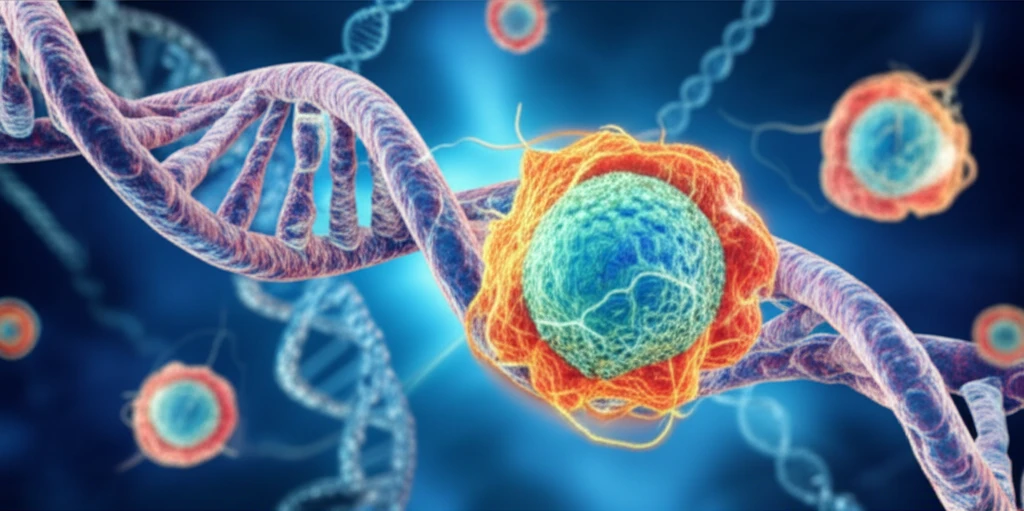
Microscopic view of cancer cells with highlighted p53 protein.

Decoding Synovial Sarcoma: Can p53 Expression Predict Outcomes?

"Unraveling the role of p53 and other factors in synovial sarcoma prognosis for better treatment strategies."


Synovial sarcoma is an aggressive type of cancer that primarily affects young adults. It often starts in the soft tissues around joints, particularly in the arms and legs. While relatively rare, synovial sarcoma is known for its potential to recur and metastasize, making effective diagnosis and treatment crucial.

At the heart of synovial sarcoma development is a genetic anomaly: the fusion of the SYT gene on chromosome 18 with an SSX gene on the X chromosome. This fusion disrupts normal cellular processes, impacting the expression of key proteins like p53, a well-known tumor suppressor.

Recent research has focused on understanding how p53 expression, along with other factors like tumor size and cell division rates (mitosis), affects the prognosis of synovial sarcoma. This knowledge could pave the way for more targeted and effective treatment strategies, improving outcomes for those affected by this challenging disease.

What is the Role of p53 in Synovial Sarcoma?

Microscopic view of cancer cells with highlighted p53 protein.

p53, often called the "guardian of the genome," plays a critical role in preventing cancer development. It acts as a key regulator, monitoring DNA damage and triggering cell cycle arrest or apoptosis (programmed cell death) when necessary. However, in synovial sarcoma, the SYT-SSX gene fusion can interfere with p53's normal function, potentially leading to uncontrolled cell growth.

The interplay between p53 expression and the SYT-SSX fusion is complex. Some research suggests that the fusion protein can enhance the degradation of p53, reducing its levels and effectiveness. Understanding this interaction is crucial for developing therapies that can restore p53 function and combat the disease.

  • Tumor Size: Smaller tumors (less than 5 cm) showed a correlation with positive p53 expression.
  • Mitosis: No direct link was found between p53 expression and the rate of cell division (mitosis).
  • Histological Subtype: The study found no association between p53 expression and whether the tumor was biphasic (containing both spindle and epithelial cells) or monophasic (containing only one cell type).
  • SYT Gene Translocation: The presence or absence of the SYT gene translocation, a hallmark of synovial sarcoma, did not appear to influence p53 expression in this study.
While these findings provide valuable insights, it's important to remember that synovial sarcoma is a complex disease, and p53 expression is just one piece of the puzzle. Other factors, such as the specific SYT-SSX fusion subtype and individual patient characteristics, can also play a significant role in determining prognosis.

Future Directions: Personalized Treatment Strategies

The study underscores the need for a more comprehensive approach to understanding synovial sarcoma. Future research should focus on integrating p53 expression data with other molecular markers and clinical information to develop personalized treatment strategies. By tailoring therapies to individual patients based on their unique tumor profiles, we can potentially improve outcomes and quality of life for those affected by this challenging disease.

About this Article -

This article was crafted using a human-AI hybrid and collaborative approach. AI assisted our team with initial drafting, research insights, identifying key questions, and image generation. Our human editors guided topic selection, defined the angle, structured the content, ensured factual accuracy and relevance, refined the tone, and conducted thorough editing to deliver helpful, high-quality information.See our About page for more information.

This article is based on research published under:

DOI-LINK: 10.13181/mji.v21i4.503, Alternate LINK

Title: P53 Expression In Synovial Sarcoma And Its Association With Prognostic Factors

Subject: General Medicine

Journal: Medical Journal of Indonesia

Publisher: Faculty of Medicine, Universitas Indonesia

Authors: Muhammad I. Ilmiawan, Puspita E. Wuyung, Nurjati C. Siregar

Published: 2012-11-01

Everything You Need To Know

1

What is synovial sarcoma, and where does it typically occur?

Synovial sarcoma is an aggressive form of cancer, primarily affecting young adults. This cancer often originates in the soft tissues around joints, such as those in the arms and legs. The disease is characterized by its potential to recur and metastasize, making its diagnosis and treatment especially crucial for patient outcomes. The location near the joints highlights the importance of early detection and effective treatment strategies.

2

How does the SYT-SSX gene fusion relate to the development of synovial sarcoma?

The SYT-SSX gene fusion is a genetic anomaly central to the development of synovial sarcoma. This fusion occurs when the SYT gene on chromosome 18 merges with an SSX gene on the X chromosome. This disruption interferes with normal cellular processes, impacting the expression of key proteins, including p53. The fusion's impact underscores the critical role of genetic factors in the disease's onset and progression.

3

What is the role of p53 in synovial sarcoma, and how is it affected by the disease?

p53, known as the "guardian of the genome," plays a crucial role in preventing cancer by monitoring DNA damage and initiating cell cycle arrest or programmed cell death (apoptosis). However, in synovial sarcoma, the SYT-SSX gene fusion can interfere with p53's normal function. Research suggests that the fusion protein may enhance the degradation of p53, reducing its levels and effectiveness. Understanding this interplay is key to developing therapies that can restore p53 function and combat the disease.

4

How do tumor size, mitosis, and histological subtype influence outcomes in synovial sarcoma based on the study?

According to the study, smaller tumors (less than 5 cm) showed a correlation with positive p53 expression. There was no direct link found between p53 expression and the rate of cell division (mitosis). Also, there was no association between p53 expression and whether the tumor was biphasic or monophasic. The study findings highlight the complexity of synovial sarcoma, where p53 expression is just one factor among many, and other characteristics like the SYT-SSX fusion subtype and individual patient features may also affect the prognosis.

5

What are the implications of this research for the future treatment of synovial sarcoma?

This research underscores the necessity for a more comprehensive approach to understanding and treating synovial sarcoma. Future research should focus on integrating p53 expression data with other molecular markers and clinical information to develop personalized treatment strategies. By tailoring therapies to individual patients based on their unique tumor profiles, it's possible to improve outcomes and quality of life. Such personalized strategies represent a significant step forward in managing this challenging disease.

Newsletter Subscribe

Subscribe to get the latest articles and insights directly in your inbox.