
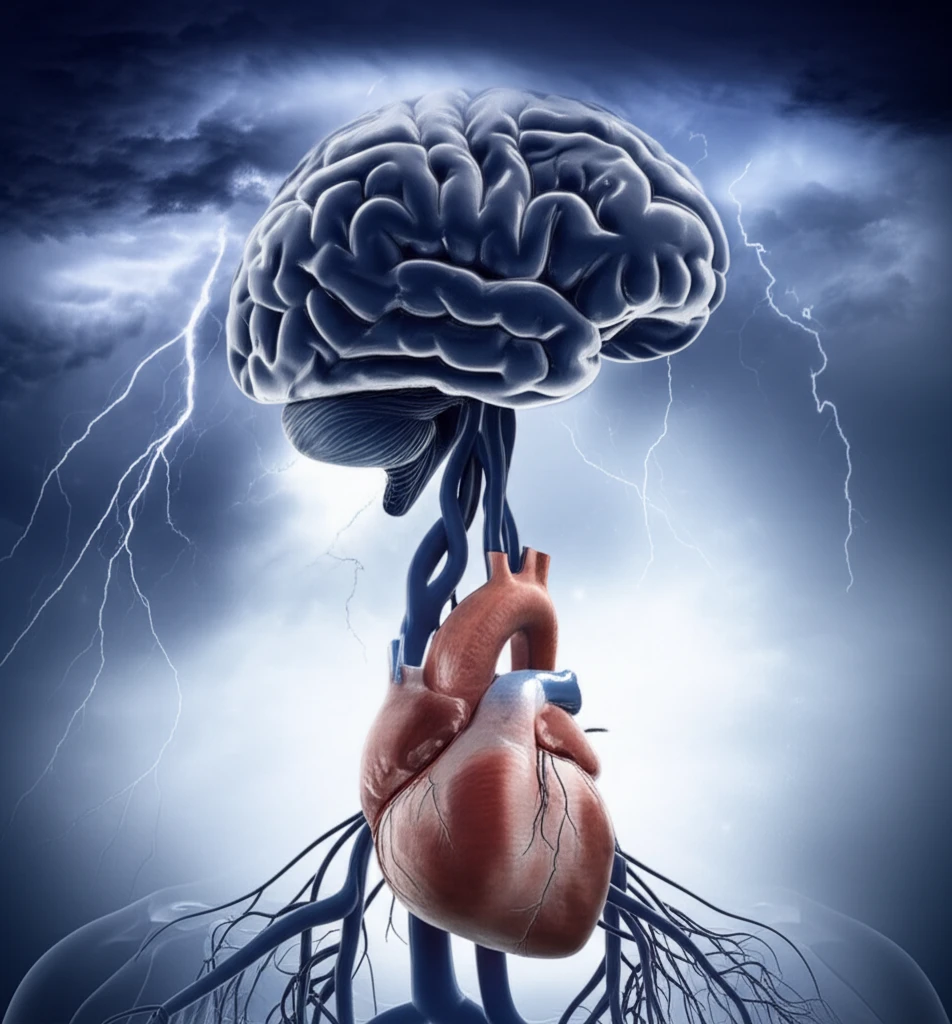
Heart and brain connected symbolizing cardioembolic stroke risk

Decoding Stroke Risks: Is Your Heart Trying to Tell You Something?

"A deep dive into cardioembolic strokes, understanding their unique dangers, and strategies for proactive heart health."


Strokes are a leading cause of long-term disability and death, but not all strokes are created equal. While many people are aware of risk factors like high blood pressure and cholesterol, the specific causes and types of strokes are less commonly understood. Knowing the subtle differences in stroke etiology can be important, and can significantly impact prognosis and treatment strategies.

One particularly dangerous type is the cardioembolic stroke, originating from the heart. These strokes occur when blood clots form in the heart, travel to the brain, and block blood flow, leading to brain damage. This is why conditions like atrial fibrillation, heart valve problems, and even recent heart attacks can dramatically increase stroke risk.

Recent research sheds new light on the unique risks associated with cardioembolic strokes, emphasizing the need for increased awareness and proactive heart health management. Understanding this connection could be key to preventing strokes and improving long-term outcomes.

Cardioembolic Strokes: Why They're Different & What It Means for You

Heart and brain connected symbolizing cardioembolic stroke risk

Cardioembolic strokes differ from other stroke subtypes in their origin and, often, in their severity. Unlike strokes caused by plaque buildup in arteries (atherosclerotic strokes) or small vessel disease, cardioembolic strokes involve a clot that has traveled from the heart. This means that the size of the clot can be larger, potentially leading to more extensive brain damage. This explains why they often present with more severe initial symptoms.

A study published in "Stroke Research and Treatment" examined the outcomes of 500 patients who experienced acute ischemic stroke (AIS). The research highlighted a disturbing trend: cardioembolic strokes were a significant predictor of long-term mortality, even after accounting for factors like age and stroke severity at the time of presentation. The Trail of ORG 10172 in Acute Stroke Treatment (TOAST) criteria, a well-established classification system for stroke subtypes, was used to categorize the strokes in the study.

  • Large Artery Atherosclerosis: Strokes caused by plaque buildup in major arteries.
  • Cardioembolic: Strokes resulting from blood clots originating in the heart.
  • Small Vessel Disease: Strokes affecting small arteries deep within the brain.
  • Other Determined Cause: Strokes due to less common causes like vasculitis or hypercoagulable states.
  • Cryptogenic: Strokes with no identifiable cause despite thorough investigation.
The study found that patients with cardioembolic strokes had significantly lower survival rates compared to those with other stroke subtypes. Specifically, survival rates at 90, 180, and 360 days were notably lower in the cardioembolic group. This suggests that the underlying heart conditions contributing to these strokes have a profound impact on long-term health and longevity.

Take Action: Protecting Your Heart, Protecting Your Brain

The connection between heart health and stroke risk is clear, and understanding your individual risk factors is crucial for prevention. If you have any of the heart conditions mentioned, proactive management is key. Stay informed, advocate for your health, and work closely with your healthcare team to minimize your stroke risk.

About this Article -

This article was crafted using a human-AI hybrid and collaborative approach. AI assisted our team with initial drafting, research insights, identifying key questions, and image generation. Our human editors guided topic selection, defined the angle, structured the content, ensured factual accuracy and relevance, refined the tone, and conducted thorough editing to deliver helpful, high-quality information.See our About page for more information.

This article is based on research published under:

DOI-LINK: 10.4061/2011/281496, Alternate LINK

Title: Cardioembolic But Not Other Stroke Subtypes Predict Mortality Independent Of Stroke Severity At Presentation

Subject: Neurology (clinical)

Journal: Stroke Research and Treatment

Publisher: Hindawi Limited

Authors: Latha Ganti Stead, Rachel M. Gilmore, M. Fernanda Bellolio, Anunaya Jain, Alejandro A. Rabinstein, Wyatt W. Decker, Dipti Agarwal, Robert D. Brown

Published: 2011-01-01

Everything You Need To Know

1

What is a cardioembolic stroke, and how does it differ from other types of strokes?

A cardioembolic stroke is a specific type of stroke that originates from the heart. It occurs when blood clots form within the heart and then travel to the brain, where they block blood flow. Unlike strokes caused by plaque buildup (atherosclerotic strokes) or those affecting small vessels, cardioembolic strokes involve clots that originate in the heart. These clots can be larger, often leading to more severe initial symptoms and potentially more extensive brain damage. The TOAST criteria is often used to differentiate between stroke subtypes, including cardioembolic, large artery atherosclerosis, small vessel disease, other determined causes, and cryptogenic strokes.

2

What heart conditions increase the risk of experiencing a cardioembolic stroke?

Several heart conditions significantly increase the risk of cardioembolic strokes. These include atrial fibrillation, which is an irregular heart rhythm that can lead to clot formation; heart valve problems, where damaged or malfunctioning valves can cause clots; and even recent heart attacks, which can damage the heart and promote clot formation. These conditions create environments where blood clots are more likely to form, increasing the risk of these clots traveling to the brain and causing a stroke.

3

Why are cardioembolic strokes considered more dangerous than some other types of strokes?

Cardioembolic strokes are often considered more dangerous due to the potential for larger clot size and the resulting severity of brain damage. Studies show that patients experiencing cardioembolic strokes have significantly lower survival rates compared to those with other stroke subtypes. This higher risk is linked to the underlying heart conditions, such as atrial fibrillation and heart valve problems, which often contribute to these strokes and can significantly impact long-term health and longevity. The study published in "Stroke Research and Treatment" examined the outcomes of patients who experienced acute ischemic strokes, and the research highlighted a disturbing trend: cardioembolic strokes were a significant predictor of long-term mortality.

4

How does the TOAST classification system help in understanding stroke subtypes?

The TOAST (Trial of ORG 10172 in Acute Stroke Treatment) criteria is a well-established classification system used to categorize stroke subtypes. It helps doctors and researchers understand the different causes of strokes, including cardioembolic, large artery atherosclerosis, small vessel disease, other determined causes, and cryptogenic strokes. By classifying strokes into these subtypes, medical professionals can better determine the underlying cause of the stroke, which is crucial for diagnosis, treatment, and predicting the prognosis of the patient. This classification is very important for better understanding of stroke risks and outcomes.

5

What steps can someone take to protect their heart and reduce their risk of a cardioembolic stroke?

To protect your heart and minimize your risk of a cardioembolic stroke, it's crucial to understand your individual risk factors and proactively manage any existing heart conditions. If you have conditions like atrial fibrillation or heart valve problems, it is critical to work closely with your healthcare team. This might include regular check-ups, medications to prevent blood clots, and lifestyle adjustments to support heart health. Staying informed about your condition, advocating for your health, and following your healthcare provider's recommendations are key steps in preventing strokes and improving long-term outcomes. It's important to be aware of the connection between heart health and stroke risk.

Newsletter Subscribe

Subscribe to get the latest articles and insights directly in your inbox.