
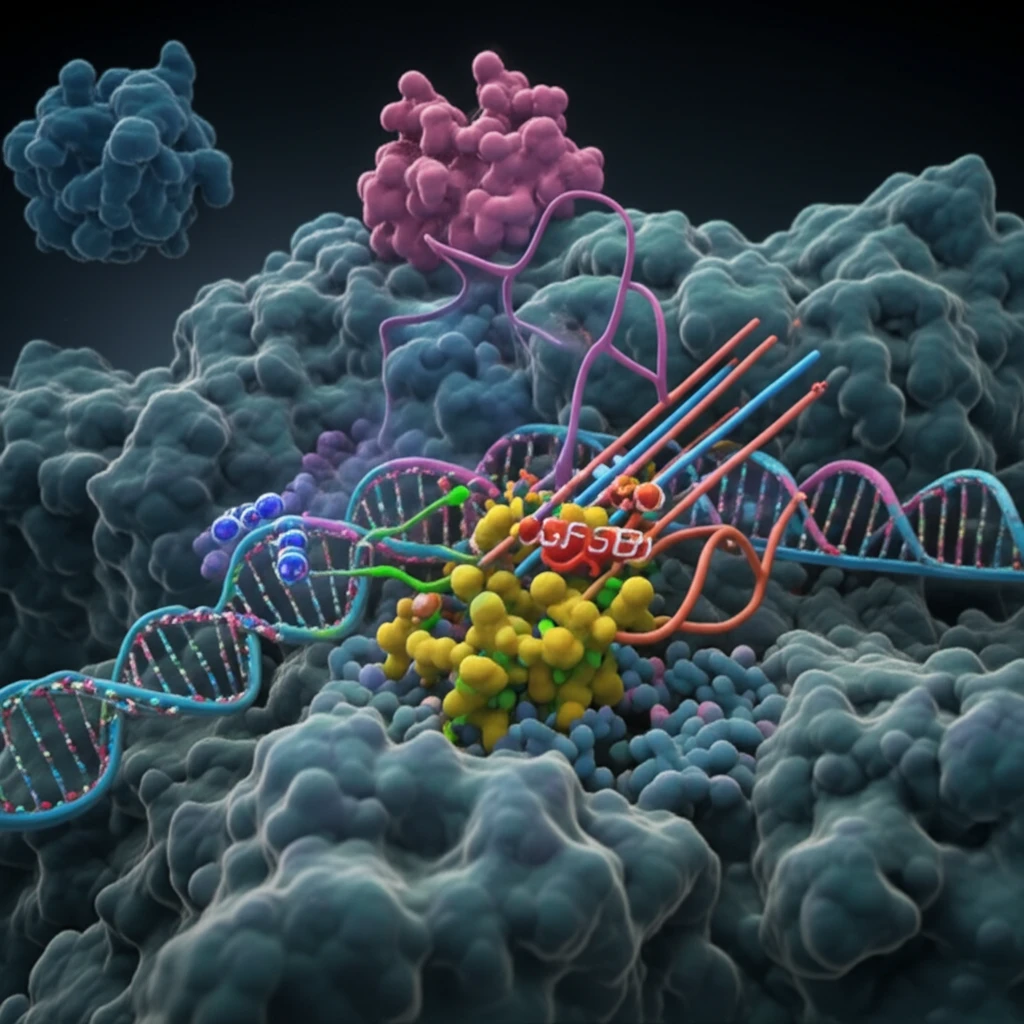
Decoding Spliceosome Inhibition: How New Molecules Combat Aberrant Exon Skipping

"A correction highlights the importance of targeting SF3B1 to correct splicing errors, offering hope for treating diseases caused by these errors."
In the realm of molecular biology, precision is paramount. The spliceosome, a complex molecular machine, plays a crucial role in gene expression by removing non-coding regions (introns) from pre-mRNA, piecing together the remaining coding regions (exons) to form mature mRNA. Errors in this splicing process can lead to a variety of diseases.
A groundbreaking study published in RNA journal (RNA 24: 1056–1066 (2018)) shed light on how inhibiting the SF3B1 protein, a key component of the spliceosome, can lead to massive aberrant exon skipping. This phenomenon, where exons are skipped during splicing, results in dysfunctional proteins and potential disease states. A subsequent correction acknowledged a typo in the original manuscript, emphasizing the commitment to accuracy in scientific communication.
This article aims to unpack the core findings of this research, explaining its significance for a broad audience. We will explore how targeting SF3B1 with specific molecules can correct splicing errors, opening new avenues for therapeutic interventions. Understanding this process is crucial for anyone interested in the future of genetic medicine and the treatment of splicing-related disorders.
Targeting SF3B1: A Novel Approach to Correct Splicing Errors
The study focuses on the inhibition of SF3B1, a protein crucial for spliceosome function. Researchers discovered that by using molecules to target SF3B1, they could disrupt the normal splicing process, leading to significant exon skipping. While initially this might seem detrimental, the controlled disruption offers a pathway to correct aberrant splicing patterns.
- SF3B1 Inhibition: Molecules targeting SF3B1 can disrupt its function within the spliceosome.
- Aberrant Exon Skipping: This disruption leads to the skipping of exons during splicing.
- Therapeutic Potential: Correcting aberrant splicing holds promise for treating various diseases.
The Future of Splicing Correction: Towards Targeted Therapies
The research on SF3B1 inhibition and its effects on exon skipping represents a significant step forward in understanding and potentially treating splicing-related diseases. By identifying the precise mechanisms that govern splicing, scientists can develop targeted therapies that address the root cause of these disorders.
While challenges remain in translating these findings into clinical applications, the potential benefits are immense. Imagine a future where genetic diseases caused by splicing errors can be effectively treated by simply correcting the splicing process. This is the promise of SF3B1-targeted therapies.
Further research is needed to fully elucidate the complexities of the spliceosome and its regulation. However, the insights gained from this study provide a solid foundation for future investigations and the development of novel therapeutic strategies. As our understanding of RNA splicing deepens, so too will our ability to combat a wide range of diseases linked to splicing errors.