
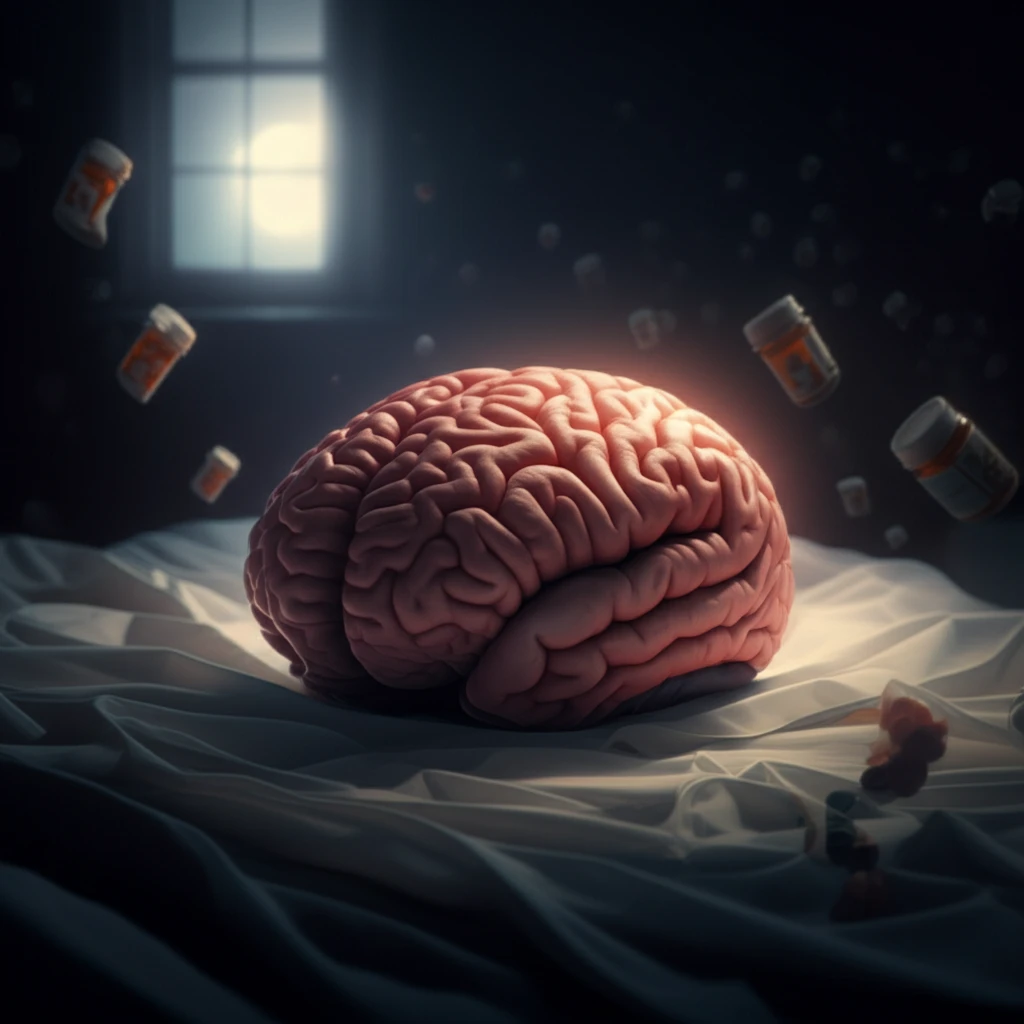
Brain-shaped pillow on a messy bed symbolizing sleep problems after a brain injury.

Decoding Sleep After Brain Injury: What's Really Going On?

"Uncover the truth about sleep disturbances after a traumatic brain injury and how medication might be playing a bigger role than you think."


Sleep-wake disturbances are common after a traumatic brain injury (TBI), affecting up to 70% of individuals. This can lead to an excessive need for sleep, difficulty staying awake during the day, and a host of related issues that significantly impact daily life and recovery.

While many people with TBI report changes in their sleep patterns, such as earlier bedtimes, longer sleep durations, and more daytime naps, it's not always clear if these changes are directly related to the injury itself or other factors. These difficulties can persist for years after the initial injury, highlighting the need for a deeper understanding of the underlying causes.

A new study published in Sleep Medicine sheds light on this complex issue by examining sleep patterns in adults with moderate to severe TBI. The study uses actigraphy, a method of monitoring sleep-wake cycles through a wrist-worn device, to provide a more objective look at sleep habits. It also considers the influence of factors such as injury severity, co-existing health conditions, and medication use.

Unmasking the Real Sleep Culprits After TBI

Brain-shaped pillow on a messy bed symbolizing sleep problems after a brain injury.

The study compared 34 adults with moderate to severe TBI to a control group of 34 people without TBI. Participants underwent a thorough assessment, including questionnaires about sleep quality, fatigue, and mood, as well as seven days of actigraphy monitoring to track their sleep and wake patterns. Researchers looked at various factors, including the severity of the TBI, any additional health issues (comorbidities) like pain, anxiety, or depression, and whether or not participants were taking psychoactive medications.

Here's what they found:

  • Subjective Complaints: TBI participants reported significantly more sleepiness and fatigue, along with poorer overall sleep quality, compared to the control group.
  • Objective Measures: Actigraphy revealed that TBI participants went to bed earlier and spent more time in bed. However, their sleep efficiency (the percentage of time in bed actually spent sleeping) was similar to the control group. TBI participants also took more naps and accumulated more total sleep time over a 24-hour period.
  • Medication Matters: The differences in sleep patterns were more pronounced among TBI participants who were taking psychoactive medications.
  • Severity and Comorbidities: More severe injuries, longer hospital stays, and the presence of other health issues were all linked to greater fatigue, sleepiness, and longer sleep durations.
These findings suggest that while people with TBI do experience sleep disturbances, the objective changes in their sleep-wake schedules may not be as drastic as their subjective complaints suggest. The longer time spent in bed could be an attempt to compensate for fatigue and sleepiness. Also, psychoactive medications could play a significant role in disrupting sleep patterns in individuals with TBI.

Putting It All Together: What This Means for You

If you're struggling with sleep after a TBI, know that you're not alone. This study highlights the importance of addressing both the physical and psychological factors that can contribute to sleep disturbances. Talk to your doctor about a comprehensive approach that includes managing pain, anxiety, and depression, as well as carefully evaluating any medications you're taking. By understanding the complex interplay of these factors, you can take steps toward better sleep and a more complete recovery.

About this Article -

This article was crafted using a human-AI hybrid and collaborative approach. AI assisted our team with initial drafting, research insights, identifying key questions, and image generation. Our human editors guided topic selection, defined the angle, structured the content, ensured factual accuracy and relevance, refined the tone, and conducted thorough editing to deliver helpful, high-quality information.See our About page for more information.

Everything You Need To Know

1

What kind of sleep problems are common after a brain injury?

Following a Traumatic Brain Injury, sleep disturbances are very common, affecting a large percentage of individuals. These disturbances manifest as an excessive need for sleep and difficulty staying awake during the day. The changes include earlier bedtimes, longer sleep durations, and frequent daytime naps. Addressing these issues is important for overall recovery.

2

What is 'actigraphy' and why is it used in sleep studies related to brain injuries?

Actigraphy is a method used to monitor sleep-wake cycles through a wrist-worn device. Its significance lies in providing objective data on sleep habits, offering a more accurate understanding compared to subjective reports. Actigraphy helps to uncover sleep patterns in individuals with Traumatic Brain Injuries, and allows medical professionals to track the effectiveness of various treatments.

3

How do psychoactive medications affect sleep after a traumatic brain injury?

Psychoactive medications can have a significant impact on sleep patterns, especially in individuals with Traumatic Brain Injuries. These medications can disrupt the natural sleep-wake cycle, leading to further sleep disturbances. It's crucial to evaluate the medications someone is taking and how they might be affecting their sleep.

4

How does the severity of a brain injury or other health problems affect sleep?

The severity of a Traumatic Brain Injury and the presence of comorbidities, such as pain, anxiety, or depression, can significantly influence sleep patterns. More severe injuries and co-existing health issues are linked to increased fatigue, sleepiness, and longer sleep durations. Managing these factors is essential for improving sleep quality.

5

What does 'sleep efficiency' mean, and how does it relate to sleep problems after a brain injury?

Sleep efficiency refers to the percentage of time in bed actually spent sleeping. While individuals with Traumatic Brain Injuries may spend more time in bed, their sleep efficiency might be similar to those without such injuries. This suggests that the increased time in bed is an attempt to compensate for fatigue and sleepiness, highlighting the need to improve the quality of sleep during that time.

Newsletter Subscribe

Subscribe to get the latest articles and insights directly in your inbox.