
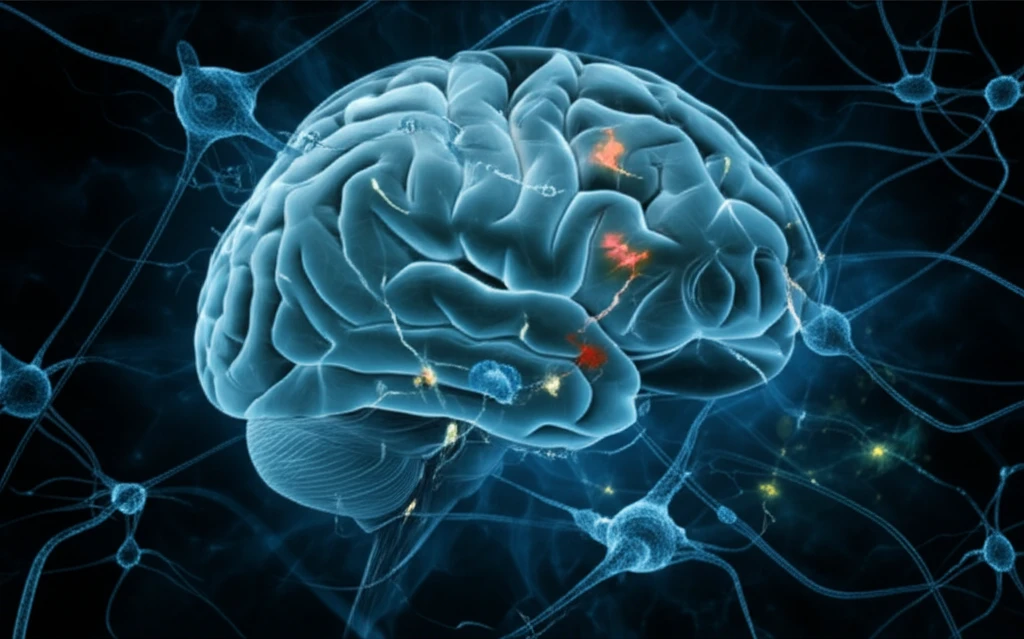
Brain intertwined with immune cells, symbolizing the connection between mental health and the immune system.

Decoding Psychosis: How Immune Cell Signals Hold the Key to Understanding and Managing the Illness

"New research reveals a surprising link between immune cell activity and the different stages of psychosis, offering potential clues for earlier diagnosis and personalized treatment."


Psychotic disorders, such as schizophrenia and bipolar disorder with psychosis, have long been associated with altered immune system activity. While scientists have observed unusual levels of inflammatory substances in the blood of individuals with psychosis, the precise role of the immune system in the development and progression of these conditions has remained unclear.

Emerging research suggests that the brain is not as isolated from the immune system as previously thought. Immune cells and the substances they produce can influence brain function, potentially contributing to the symptoms of psychosis. This has fueled interest in understanding how immune cells behave in individuals with psychotic disorders and how their activity relates to the different stages of the illness.

A recent study has focused on the JAK-STAT1 signaling pathway, a critical communication system within immune cells that regulates inflammation. By examining the activity of this pathway in immune cells from individuals with psychosis, researchers have uncovered surprising patterns related to the duration and severity of the illness, offering potential new avenues for diagnosis and treatment.

The Surprising Twist: Lowered Immune Activity in Early Psychosis

Brain intertwined with immune cells, symbolizing the connection between mental health and the immune system.

The researchers initially expected to find increased activity in the JAK-STAT1 pathway in individuals with psychosis, consistent with the idea of heightened inflammation. However, their findings revealed a more complex picture. They discovered that the JAK-STAT1 signature, a measure of the pathway's activity, was actually suppressed in individuals who were in the early stages of psychosis or experiencing a severe episode requiring hospitalization.

This unexpected result suggests that the immune system's response in psychosis may not be a simple case of overactivation. Instead, there might be a disruption in the normal signaling processes within immune cells, leading to a dampened inflammatory response in certain phases of the illness. This could have implications for how we understand the underlying mechanisms of psychosis and how we approach treatment.

  • IFNG (Interferon Gamma): Plays a crucial role in stimulating and directing immune responses, especially against viruses and certain bacteria.
  • CXCL10 (C-X-C Motif Chemokine Ligand 10): Attracts immune cells to sites of inflammation, essential for immune cell trafficking.
  • IRF1 (Interferon Regulatory Factor 1): Regulates the expression of genes involved in immune responses, cell growth, and tumor suppression.
  • STAT1 (Signal Transducer and Activator of Transcription 1): Transmits signals from cell surface receptors to the nucleus, activating gene transcription in response to immune stimuli.
  • TLR4 (Toll-Like Receptor 4): Detects molecules associated with pathogens and triggers immune responses, crucial for recognizing and responding to infections.
The study also found that the suppressed JAK-STAT1 signature tended to normalize over time, as the duration of the illness increased. This suggests that the immune system may adapt or compensate for the initial disruption, potentially contributing to the fluctuating nature of psychotic symptoms. However, this normalization was only observed in individuals with chronic, but not acute, psychopathology, indicating the importance of the clinical context.

New Avenues for Understanding and Treating Psychosis

These findings highlight the complex interplay between the immune system and psychosis, challenging the traditional view of inflammation as a simple driver of the illness. The study suggests that disruptions in immune cell signaling, particularly in the JAK-STAT1 pathway, may play a critical role in the early stages of psychosis and during acute exacerbations.

By identifying these specific immune signatures, researchers hope to develop new diagnostic tools that can detect psychosis earlier and more accurately. Furthermore, understanding how the immune system changes over the course of the illness could lead to personalized treatment strategies that target specific immune pathways at different stages.

While further research is needed to fully elucidate the role of the immune system in psychosis, this study provides valuable insights into the functional state of circulating immune cells and their relationship to clinical characteristics. These findings pave the way for a more nuanced understanding of psychosis and the development of innovative therapies that address both the neurological and immunological aspects of the illness.

About this Article -

This article was crafted using a human-AI hybrid and collaborative approach. AI assisted our team with initial drafting, research insights, identifying key questions, and image generation. Our human editors guided topic selection, defined the angle, structured the content, ensured factual accuracy and relevance, refined the tone, and conducted thorough editing to deliver helpful, high-quality information.See our About page for more information.

This article is based on research published under:

DOI-LINK: 10.1016/j.bbi.2018.11.317, Alternate LINK

Title: The Jak-Stat1 Transcriptional Signature In Peripheral Immune Cells Reveals Alterations Related To Illness Duration And Acuity In Psychosis

Subject: Behavioral Neuroscience

Journal: Brain, Behavior, and Immunity

Publisher: Elsevier BV

Authors: Jennifer K. Melbourne, Cherise Rosen, Benjamin Feiner, Yanzhen Pang, Rajiv P. Sharma

Published: 2019-03-01

Everything You Need To Know

1

How does immune cell activity differ in the early stages of psychosis compared to later stages?

Research indicates that during the early stages of psychosis, activity in the JAK-STAT1 signaling pathway within immune cells is surprisingly suppressed, rather than elevated. This unexpected finding challenges the assumption that psychosis is simply driven by heightened inflammation. Instead, it suggests a disruption in the normal communication and signaling processes within immune cells during the initial phases of the illness. This is a departure from the expected heightened inflammation, revealing a more intricate role for the immune system.

2

What does the normalization of the JAK-STAT1 signature over time suggest about the immune system's role in psychosis?

The study revealed that the suppressed JAK-STAT1 signature, indicative of the pathway's activity, tended to normalize as the duration of the illness increased. This normalization suggests that the immune system may adapt over time, potentially influencing the fluctuating nature of psychotic symptoms. However, this normalization was only observed in individuals with chronic, but not acute, psychopathology, highlighting the importance of the clinical context.

3

Can you explain the significance of the JAK-STAT1 signaling pathway in the context of psychosis and its potential impact on the disease?

The JAK-STAT1 signaling pathway is a crucial communication system within immune cells that regulates inflammation. It involves the transmission of signals from cell surface receptors to the nucleus, activating gene transcription in response to immune stimuli. Disruptions in this pathway may play a critical role in the early stages of psychosis and during acute exacerbations. Key elements related to the pathway, such as Interferon Gamma (IFNG), CXCL10, IRF1, STAT1, and TLR4, play different critical roles in modulating immune responses.

4

Given the findings about suppressed immune activity, how might treatment strategies for psychosis evolve?

The discovery of suppressed immune activity, specifically in the JAK-STAT1 pathway, during early psychosis opens new avenues for understanding and potentially treating the condition. Instead of focusing solely on reducing inflammation, therapeutic strategies might aim to restore or modulate the disrupted signaling processes within immune cells. Future research should further examine how immune-modulating therapies can influence the course of psychosis, particularly in the early stages.

5

Besides the JAK-STAT1 signaling pathway, what other immune-related factors could contribute to psychosis?

While the research highlights the role of the JAK-STAT1 signaling pathway, other immune-related molecules and pathways could also be involved in psychosis. For instance, further research could explore the role of cytokines beyond those directly related to the JAK-STAT1 pathway, as well as the involvement of other immune cell types and their interactions with brain cells. Understanding these broader immune mechanisms might lead to a more comprehensive understanding of psychosis and identify additional therapeutic targets.

Newsletter Subscribe

Subscribe to get the latest articles and insights directly in your inbox.