
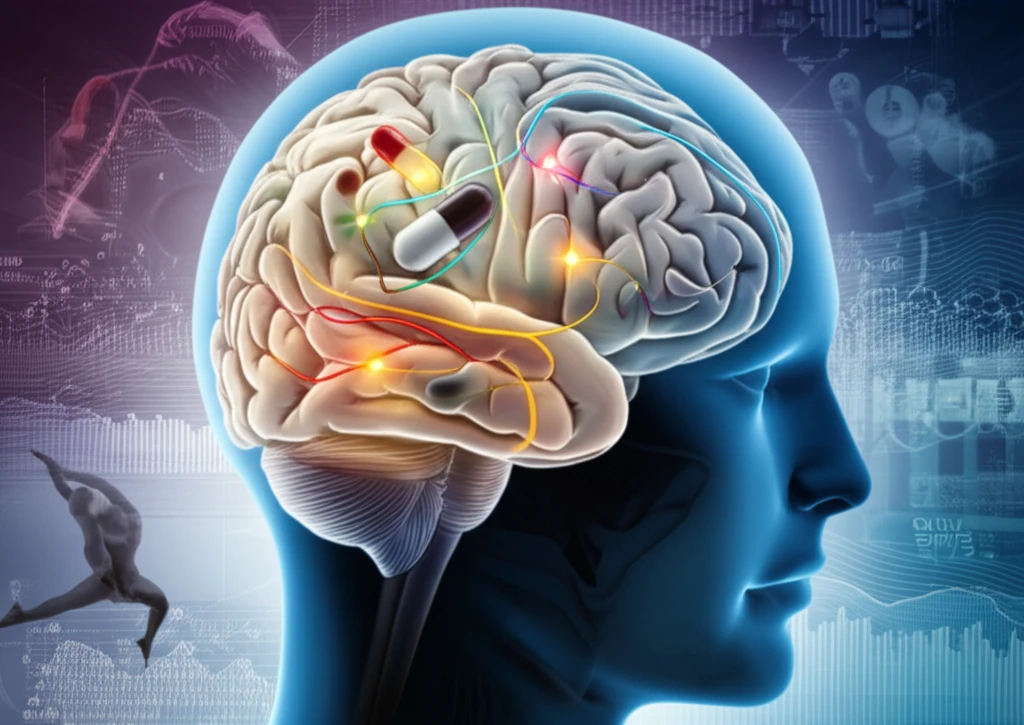
Illustration of a brain highlighting neural pathways, medication symbols, and a dancer, representing the effects of Parkinson's disease and the impact of treatment.

Decoding Parkinson's: How Brain Connectivity Reveals the Secrets of Movement and Medication

"Scientists are unlocking the mysteries of Parkinson's disease by studying brain connections, offering new hope for understanding and treating this complex condition."


Parkinson's disease, a progressive neurological disorder, affects millions worldwide. Characterized by tremors, stiffness, and difficulty with movement, it presents a complex challenge to both those affected and the medical community. While existing treatments offer relief, scientists are constantly seeking a deeper understanding of the disease's underlying mechanisms. This involves exploring the intricate network of the brain, specifically how different regions connect and communicate.

Recent advancements in brain imaging, such as functional magnetic resonance imaging (fMRI), are providing unprecedented insights into the brain's inner workings. By observing brain activity, researchers can now map the complex pathways that control movement and cognitive function. This groundbreaking approach is revolutionizing how we understand and approach neurological disorders like Parkinson's, offering new hope for improved treatments and quality of life.

This article delves into cutting-edge research that utilizes fMRI to examine brain connectivity in Parkinson's disease. We'll explore how these studies shed light on the disease's impact on brain function, the effects of medication, and the potential for developing targeted therapies. By understanding the intricate connections within the brain, we move closer to unraveling the mysteries of Parkinson's and providing better care for those living with this condition.

Unraveling the Brain's Network: How fMRI Illuminates Parkinson's Disease

Illustration of a brain highlighting neural pathways, medication symbols, and a dancer, representing the effects of Parkinson's disease and the impact of treatment.

The brain is an incredibly complex network, with billions of neurons communicating through intricate pathways. In Parkinson's disease, this network is disrupted, leading to the debilitating symptoms that characterize the condition. fMRI allows researchers to visualize these disruptions by measuring changes in blood flow within the brain. Areas with increased activity require more oxygen, which the fMRI detects, enabling scientists to map the brain's activity during various tasks or at rest.

Researchers are using fMRI to explore several key areas in Parkinson's disease:

  • Mapping Connectivity Changes: fMRI helps identify how connections between different brain regions are altered in individuals with Parkinson's disease. This includes examining the motor network, which controls movement, and other areas involved in cognitive function and emotional regulation.
  • Understanding Medication Effects: Scientists use fMRI to observe how medications, such as levodopa, influence brain activity and connectivity. This helps determine the mechanisms by which these drugs alleviate symptoms and can guide the development of more effective treatments.
  • Identifying Biomarkers: By analyzing fMRI data, researchers aim to identify unique patterns of brain activity (biomarkers) that can help diagnose Parkinson's disease early, track disease progression, and predict treatment response.
These studies have revealed fascinating insights. For example, research has shown that in Parkinson's patients, there can be reduced connectivity within the motor network, which explains the motor symptoms. Furthermore, fMRI studies demonstrate how medications can restore some of these connections, thus easing the symptoms. By mapping these connections, researchers are also beginning to distinguish between different subtypes of the disease, which can help tailor treatment strategies to the individual.

A Brighter Future for Parkinson's Disease Research and Treatment

The application of brain connectivity research holds immense promise for the future of Parkinson's disease treatment. It is anticipated that a deeper understanding of the brain's networks will lead to more targeted therapies, potentially addressing the specific disruptions in brain function caused by the disease. Moreover, early diagnosis and personalized treatment plans, based on individual brain activity patterns, may become a reality. While there's still much to learn, the use of fMRI and other advanced imaging techniques is paving the way for a brighter future for those affected by Parkinson's disease, offering hope for better treatments, improved quality of life, and, ultimately, a cure.

About this Article -

This article was crafted using a human-AI hybrid and collaborative approach. AI assisted our team with initial drafting, research insights, identifying key questions, and image generation. Our human editors guided topic selection, defined the angle, structured the content, ensured factual accuracy and relevance, refined the tone, and conducted thorough editing to deliver helpful, high-quality information.See our About page for more information.

This article is based on research published under:

DOI-LINK: 10.1016/j.nicl.2017.09.004, Alternate LINK

Title: Distinct Alterations In Parkinson'S Medication-State And Disease-State Connectivity

Subject: Cognitive Neuroscience

Journal: NeuroImage: Clinical

Publisher: Elsevier BV

Authors: Bernard Ng, Gael Varoquaux, Jean Baptiste Poline, Bertrand Thirion, Michael D. Greicius, Kathleen L. Poston

Published: 2017-01-01

Everything You Need To Know

1

What is the role of fMRI in Parkinson's disease research, and what specific aspects of the disease does it help illuminate?

Functional magnetic resonance imaging, or fMRI, plays a crucial role by allowing scientists to visualize and map brain activity in individuals with Parkinson's disease. This technology helps illuminate several key aspects of the condition, including mapping connectivity changes within the brain, understanding the effects of medications like levodopa on brain activity, and identifying potential biomarkers for early diagnosis, tracking disease progression, and predicting treatment response. By measuring changes in blood flow, fMRI can reveal how connections between different brain regions, such as the motor network, are altered, thus enhancing our understanding of the neurological disorder.

2

How does Parkinson's disease disrupt the brain's network, and what are the observable effects of these disruptions?

Parkinson's disease disrupts the brain's complex network by affecting the communication pathways between neurons. This disruption leads to observable effects such as reduced connectivity within the motor network, which results in motor symptoms like tremors, stiffness, and difficulty with movement. Scientists use fMRI to visualize these disruptions by measuring changes in blood flow, allowing them to observe which areas of the brain are affected and how the connectivity between them is altered. Further research is needed to fully understand the wide range of effects on cognitive and emotional brain function.

3

In what ways can medications like levodopa affect brain activity and connectivity in Parkinson's patients, as observed through fMRI?

Medications like levodopa can influence brain activity and connectivity in Parkinson's patients. Scientists use fMRI to observe these effects, revealing how these drugs can restore some of the disrupted connections within the brain's networks, particularly in the motor network. This restoration helps alleviate motor symptoms. fMRI studies enable researchers to understand the mechanisms by which these medications work, guiding the development of more effective and targeted treatments. Further studies are required to understand long term effects.

4

Beyond symptom relief, what potential do brain connectivity studies offer for developing targeted therapies and personalized treatment plans for Parkinson's disease?

Brain connectivity studies, particularly those using fMRI, offer the potential for developing targeted therapies and personalized treatment plans by allowing researchers to identify specific disruptions in brain function caused by Parkinson's disease. Understanding the intricate connections within the brain can lead to treatments that address these disruptions directly. Additionally, by analyzing individual brain activity patterns, it may become possible to diagnose Parkinson's disease early, track its progression, and tailor treatment strategies to the individual, potentially improving the quality of life for those affected. This also offers great promise for developing personalized treatment plans.

5

What are 'biomarkers' in the context of Parkinson's research, and how can fMRI be utilized to identify them for improved diagnosis and treatment?

In Parkinson's research, 'biomarkers' refer to unique patterns of brain activity that can help diagnose the disease early, track its progression, and predict an individual's response to treatment. fMRI can be utilized to identify these biomarkers by analyzing brain activity data and pinpointing distinctive patterns associated with Parkinson's disease. These biomarkers can then be used to differentiate between subtypes of the disease, enabling tailored treatment strategies. Early identification of these markers is crucial for timely intervention and more effective management of the condition. Further research is required to validate and standardize these biomarkers for widespread clinical use.

Newsletter Subscribe

Subscribe to get the latest articles and insights directly in your inbox.