
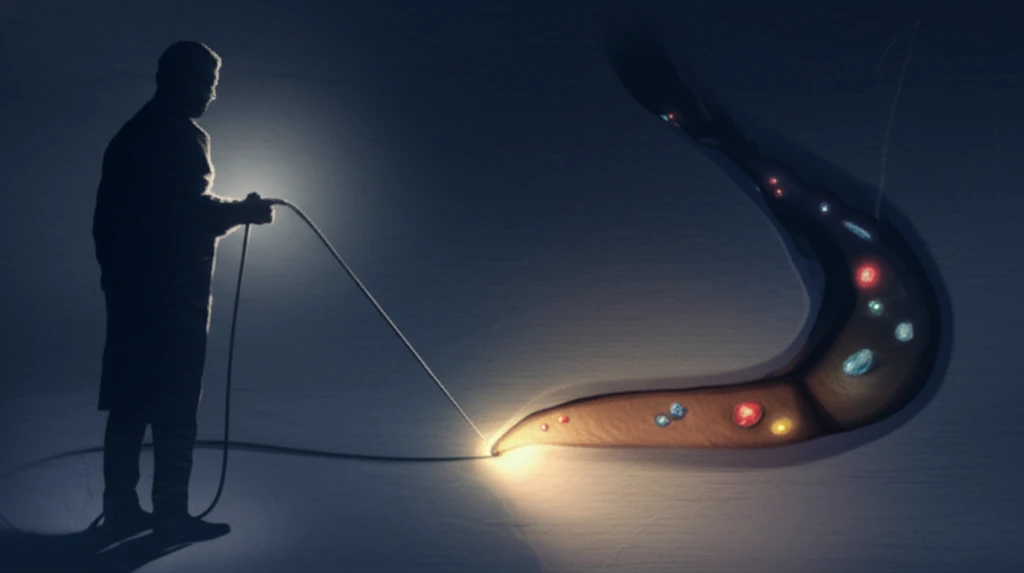
Illustration of a doctor using an endoscopic ultrasound probe to discover hidden causes of pancreatitis.

Decoding Pancreatitis: How Advanced Imaging Can Spot Hidden Causes

"Unexplained pancreatitis? Discover how endoscopic ultrasound (EUS) and magnetic resonance cholangiopancreatography (MRCP) can uncover hidden factors, even after a CT scan comes back negative."


Acute pancreatitis, a painful inflammation of the pancreas, can be a frightening experience. While many cases are quickly attributed to gallstones or alcohol use, a significant number remain unexplained even after thorough initial investigations, including computed tomography (CT) scans. This leaves patients and doctors searching for answers and, more importantly, a way to prevent future attacks.

The challenge lies in the limitations of CT scans. Although useful for visualizing the pancreas, CT scans can sometimes miss subtle abnormalities, such as tiny stones in the bile duct (choledocholithiasis), small pancreatic tumors, or structural irregularities in the ducts that carry digestive fluids. These hidden factors can be the key to understanding why pancreatitis occurred in the first place.

Fortunately, advanced imaging techniques like endoscopic ultrasound (EUS) and magnetic resonance cholangiopancreatography (MRCP) offer a more detailed look. This article explores how these methods can help uncover the hidden causes of acute pancreatitis when CT scans come back negative, providing clarity and guiding appropriate treatment strategies.

EUS and MRCP: Finding What CT Misses?

Illustration of a doctor using an endoscopic ultrasound probe to discover hidden causes of pancreatitis.

When a CT scan doesn't reveal the cause of acute pancreatitis, doctors often turn to EUS and MRCP for a more in-depth evaluation. Both techniques offer unique advantages in visualizing the pancreas and surrounding structures:

Endoscopic Ultrasound (EUS):

  • EUS involves inserting a thin, flexible tube with an ultrasound probe attached into the esophagus and stomach. This allows the doctor to get very close to the pancreas and bile ducts, providing high-resolution images.
  • EUS is particularly good at detecting small stones in the bile duct (choledocholithiasis), even those that are too small to be seen on a CT scan. It can also identify small tumors or cysts in the pancreas.
  • Additionally, EUS can visualize abnormalities in the pancreaticobiliary common channel (PBCC), where the pancreatic and bile ducts join.
Magnetic Resonance Cholangiopancreatography (MRCP): MRCP uses magnetic resonance imaging (MRI) to create detailed images of the bile ducts and pancreatic ducts. It's a non-invasive technique, meaning nothing needs to be inserted into the body. MRCP is excellent for visualizing the overall structure of the ducts and can identify abnormalities like pancreatic divisum (a congenital condition where the pancreas is divided into two parts) or tumors. While MRCP provides a broader view, it may not be as sensitive as EUS for detecting very small stones.

Getting to the Root Cause

When dealing with acute pancreatitis with no clear cause, EUS and MRCP offer powerful tools to find what other scans miss. EUS leads in spotting issues like small stones or structural problems. Using these methods helps doctors give better, more informed care, greatly improving results and quality of life for patients facing this tough situation.

About this Article -

This article was crafted using a human-AI hybrid and collaborative approach. AI assisted our team with initial drafting, research insights, identifying key questions, and image generation. Our human editors guided topic selection, defined the angle, structured the content, ensured factual accuracy and relevance, refined the tone, and conducted thorough editing to deliver helpful, high-quality information.See our About page for more information.

This article is based on research published under:

DOI-LINK: 10.1097/mpa.0000000000001149, Alternate LINK

Title: The Role Of Endoscopic Ultrasonography And Magnetic Resonance Cholangiopancreatography In Patients With Acute Pancreatitis After Negative Computed Tomography Findings Of The Etiology

Subject: Endocrinology

Journal: Pancreas

Publisher: Ovid Technologies (Wolters Kluwer Health)

Authors: Dae Bum Kim, Chang-Nyol Paik, Do Seon Song, Hyun A. Kim, Yeon-Ji Kim, Ji Min Lee, Seong Su Hwang

Published: 2018-10-01

Everything You Need To Know

1

Why are endoscopic ultrasound (EUS) and magnetic resonance cholangiopancreatography (MRCP) considered when a CT scan doesn't explain acute pancreatitis?

When initial CT scans don't reveal the cause of acute pancreatitis, endoscopic ultrasound (EUS) and magnetic resonance cholangiopancreatography (MRCP) are used because they offer more detailed visualization of the pancreas and surrounding structures. EUS can detect small stones in the bile duct, small pancreatic tumors, and abnormalities in the pancreaticobiliary common channel (PBCC), while MRCP provides a broader view of the bile and pancreatic ducts, identifying conditions like pancreatic divisum or tumors that CT scans might miss.

2

What specific advantages does endoscopic ultrasound (EUS) offer in diagnosing the underlying causes of pancreatitis?

Endoscopic ultrasound (EUS) offers several key advantages. It involves inserting a thin, flexible tube with an ultrasound probe into the esophagus and stomach, allowing close proximity to the pancreas and bile ducts for high-resolution imaging. EUS excels at detecting choledocholithiasis (small stones in the bile duct) that CT scans may overlook. It can also identify small tumors or cysts in the pancreas and visualize abnormalities in the pancreaticobiliary common channel (PBCC).

3

How does magnetic resonance cholangiopancreatography (MRCP) aid in diagnosing pancreatitis, and what are its limitations compared to endoscopic ultrasound (EUS)?

Magnetic resonance cholangiopancreatography (MRCP) uses magnetic resonance imaging (MRI) to create detailed images of the bile ducts and pancreatic ducts non-invasively. It’s particularly useful for visualizing the overall structure of the ducts and identifying abnormalities like pancreatic divisum or tumors. However, while MRCP provides a broader view, it may not be as sensitive as endoscopic ultrasound (EUS) in detecting very small stones in the bile duct.

4

In cases of unexplained acute pancreatitis, what role does the pancreaticobiliary common channel (PBCC) play, and how is it examined?

The pancreaticobiliary common channel (PBCC), where the pancreatic and bile ducts join, is crucial in understanding unexplained acute pancreatitis. Abnormalities in this area can contribute to pancreatic issues. Endoscopic ultrasound (EUS) is used to visualize the PBCC effectively, allowing doctors to identify structural irregularities that could be causing pancreatitis.

5

If imaging reveals pancreatic divisum as the cause of pancreatitis, what does this condition entail, and how is magnetic resonance cholangiopancreatography (MRCP) utilized in its diagnosis?

Pancreatic divisum is a congenital condition where the pancreas is divided into two separate parts instead of being a single, unified organ. This structural abnormality can sometimes lead to pancreatitis due to impaired drainage of pancreatic fluids. Magnetic resonance cholangiopancreatography (MRCP) is well-suited for diagnosing pancreatic divisum because it provides a comprehensive, non-invasive view of the pancreatic ducts, allowing doctors to visualize the divided structure and assess its impact on pancreatic function.

Newsletter Subscribe

Subscribe to get the latest articles and insights directly in your inbox.