
Decoding Pancreatic Cancer: How Precise Margin Assessment Can Improve Outcomes

"A deep dive into how color-coded tissue marking enhances the accuracy of surgical margin evaluation and its impact on recurrence-free survival for pancreatic cancer patients."
Pancreatic cancer, particularly pancreatic ductal adenocarcinoma (PDAC), remains one of the most aggressive and challenging cancers to treat. Despite advancements in detection and treatment, the overall five-year survival rate hovers around a discouraging 6%. Surgical resection, specifically pancreatoduodenectomy, offers the best chance for a cure, yet only a small fraction of patients are eligible due to the advanced stage of the disease at diagnosis. For those who undergo surgery, achieving negative surgical margins—where no cancer cells are present at the edge of the removed tissue—is critical for improving prognosis.
However, determining what constitutes an adequate surgical margin has been a subject of ongoing debate. The complex anatomy of the pancreas, coupled with variable tumor characteristics, makes it difficult to standardize the evaluation of surgical margins. Traditional methods often rely on macroscopic evaluation and sampling from representative areas, which may not capture the full extent of tumor involvement. This lack of standardization has led to conflicting results in studies examining the impact of surgical margins on patient survival.
A recent study published in "Pancreas" journal sheds light on this critical issue by employing a color-coding method with tissue marking dyes to meticulously evaluate surgical margins. This innovative approach aims to provide a more accurate assessment of margin status and its correlation with postoperative recurrence, offering new insights into optimizing surgical strategies for pancreatic cancer.
A Common Cancer With a Grim Toll
Pancreatic cancer is the 12th most common cancer worldwide, according to the World Cancer Research Fund. In the United States, it ranks as the third leading cause of cancer death, and only about 11% of patients survive five years after diagnosis, as reported by fact-checked statistics resources. The age-adjusted incidence rate in the US was 12.1 per 100,000 individuals in 2023, based on SEER data. The American Cancer Society likewise publishes updated US estimates and statistics for the disease.
Symptom-Driven Diagnosis and Treatment Limits
Pancreatic cancer symptoms can include abdominal pain, jaundice, and weight loss, which often prompt the imaging and diagnostic work-up. Desmoplasia is a hallmark of the pancreatic ductal adenocarcinoma (PDAC) microenvironment, creating a physical and immunologic barrier that contributes to limitations in early detection and treatment. At present, no standard protocols stipulate clinical treatment of pancreatic cancer, and the benefit rate of new targeted therapies is low. For inoperable disease, the goals of treatment are to palliate symptoms and prolong life, with improved survival in locally advanced disease demonstrated for chemoradiation plus fluorouracil or gemcitabine alone.
Milestones in Diagnosis and Risk
Pancreatic ductal adenocarcinoma (PDAC) is clinically challenging both because of its late stage at diagnosis and its resistance to chemotherapy. Diagnosis begins with a complete medical history and examination before imaging and diagnostics such as endoscopic retrograde cholangiopancreatography (ERCP) are performed. Among established risk factors, about 25% of pancreatic cancers are thought to be caused by cigarette smoking, with cigar smoking and smokeless tobacco also increasing risk.
The Color-Coding Revolution in Surgical Margin Assessment
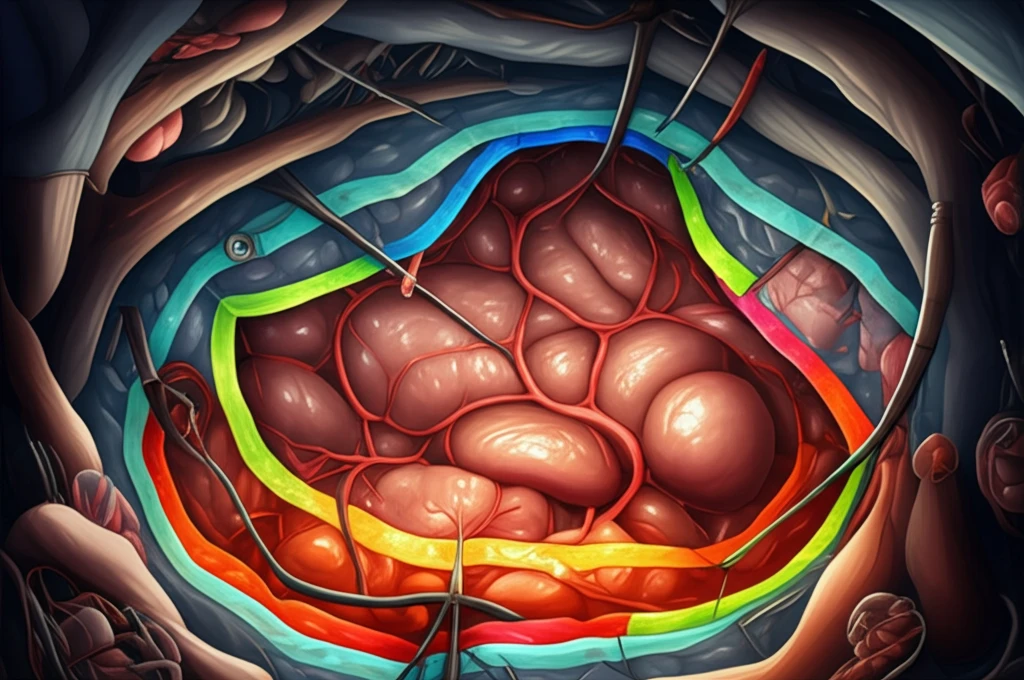
The cornerstone of this study is the implementation of a unified protocol for processing pancreatoduodenectomy specimens. This protocol involves marking five surgical margins with distinct colors using tissue-marking dyes. These margins include the anterior surface, posterior margin, portal vein/superior mesenteric vein (PV/SMV) groove margin, superior mesenteric artery (SMA) margin, and the pancreas cut-end margin (PCM). This color-coding technique allows pathologists to systematically evaluate each margin and precisely measure the resection margin distance (RMD)—the distance from the closest tumor cell to the marked margin.
- Improved Standardization: Provides a consistent method for margin assessment.
- Enhanced Accuracy: Allows for precise measurement of resection margin distance.
- Better Risk Stratification: Helps identify patients at higher risk of locoregional recurrence.
- Potential for Personalized Treatment: May inform decisions about adjuvant therapy.
New Targets and Clinical Trial Activity
An estimated 67,530 people in the U.S. will be diagnosed with pancreatic cancer in 2026, according to the American Cancer Society's latest report as highlighted by AARP. Current research attention centers on vaccines, KRAS targets, and the newest clinical trials. ScienceDaily tracks ongoing medical research on pancreatic cancer and emerging treatment options, while the World Cancer Research Fund supports pancreatic cancer research through its grant programmes.
Why Detection Still Fails
Doctors rely on imaging tests such as CT, MRI, and endoscopic ultrasound, along with biopsies, to make accurate diagnoses. Even so, pancreatic cancer is often diagnosed at an advanced stage when treatment options are limited, and current tests such as CA 19-9 are good at indicating prognosis but not sensitive enough for early-stage detection. In response, researchers at Oregon Health & Science University report a new blood test that identifies hard-to-detect pancreatic cancer with 85% accuracy. Additionally, the DPC4 gene status of the primary carcinoma correlates with patterns of failure in pancreatic cancer patients.
How Pancreatic Cancer Compares
Pancreatic cancer is the fourth leading cause of cancer deaths and accounts for about 7% of all cancer-related deaths, with roughly 75% of pancreatic carcinomas occurring in the head or neck of the pancreas. Its symptoms overlap substantially with pancreatitis, including abdominal and/or back pain, bloating, weight loss, and depression. Comparative survival research uses Kaplan-Meier curves and Cox regression analyses to identify risk factors associated with survival. Treatment comparisons, such as brand versus generic pancreatic enzyme products like pancreatin, are also part of routine management decisions.
A Path Forward in Pancreatic Cancer Treatment
This study underscores the critical role of precise surgical margin assessment in improving outcomes for pancreatic cancer patients. The color-coding method offers a standardized, accurate approach that can help surgeons and pathologists better evaluate resection margins and identify patients at high risk for recurrence. While early detection of small-sized tumors without lymph node metastasis remains paramount, optimizing surgical techniques and margin assessment is a crucial step towards enhancing the effectiveness of pancreatic cancer treatment and improving patient survival rates. Further research is needed to validate these findings and explore the potential for personalized treatment strategies based on margin status. As we continue to refine our approaches, the hope for better outcomes in this challenging disease grows ever stronger.
Expert Consensus on a Tough Disease
Pancreatic cancer is defined as any cancer with a primary location in the pancreas, arising when cells in the pancreas multiply out of control and form a mass. Expert opinion describes it as a devastating diagnosis with a very poor prognosis; despite recent advances, only about 20% of patients are diagnosed with potentially curable disease. Epidemiological evidence indicates a direct association between type 2 diabetes and pancreatic cancer, while supporting an inverse relation with diabetes duration. A major remaining challenge in PDAC is identifying the subgroups of patients who will benefit from treatment, with minimally invasive biomarker tests for drug sensitivity and toxicity to be developed alongside anticancer therapies.
Divergent Market Forecasts, Shared Optimism
Market analysts expect continued growth in pancreatic cancer treatment spending, though their projections differ substantially: one analysis values the market at USD 5.516 billion in 2025, growing to USD 8.698 billion by 2035 at a 4.66% CAGR, while another estimates USD 3.25 billion in 2025 rising to USD 11.47 billion by 2035 at a 13.44% CAGR. Because the two forecasts disagree on both market size and growth rate, these figures should be read as divergent estimates rather than settled projections. Separately, the Pancreatic Cancer Action Network reports it is working toward better treatment options and ways to find the disease earlier, with a stated determination to improve patient outcomes.
From Lab to Bedside
Bringing laboratory discoveries to patients is a core challenge in pancreatic cancer care. MD Anderson Cancer Center reports that its pioneering pancreatic cancer research provides patients with tomorrow's therapies today, translating the most advanced research into clinical practice as quickly as possible. The institution describes its patients as benefiting from the most advanced pancreatic cancer research, applied to the clinic as rapidly as possible.
Real-World Impact and Earlier Detection
Real-world evidence is reshaping pancreatic cancer care, including precision medicine initiatives such as the Individualized Molecular Pancreatic Cancer Therapy (IMPaCT) trial and real-time genomic characterization of advanced disease. A retrospective case-series analysis of real-world outcomes with targeted and standard therapies in RAF-altered pancreatic cancer indicated that further examination of RAF-directed therapies is warranted, according to Andrew Hendifar, MD. On early detection, the National Cancer Institute highlighted a blood test that may accurately detect pancreatic cancer at its earliest stages, when it is most likely to respond to treatment. In parallel, researchers applied a deep learning algorithm to clinical data from 6 million patients, including 24,000 pancreatic cancer cases, in Denmark to predict the risk of pancreatic cancer.