
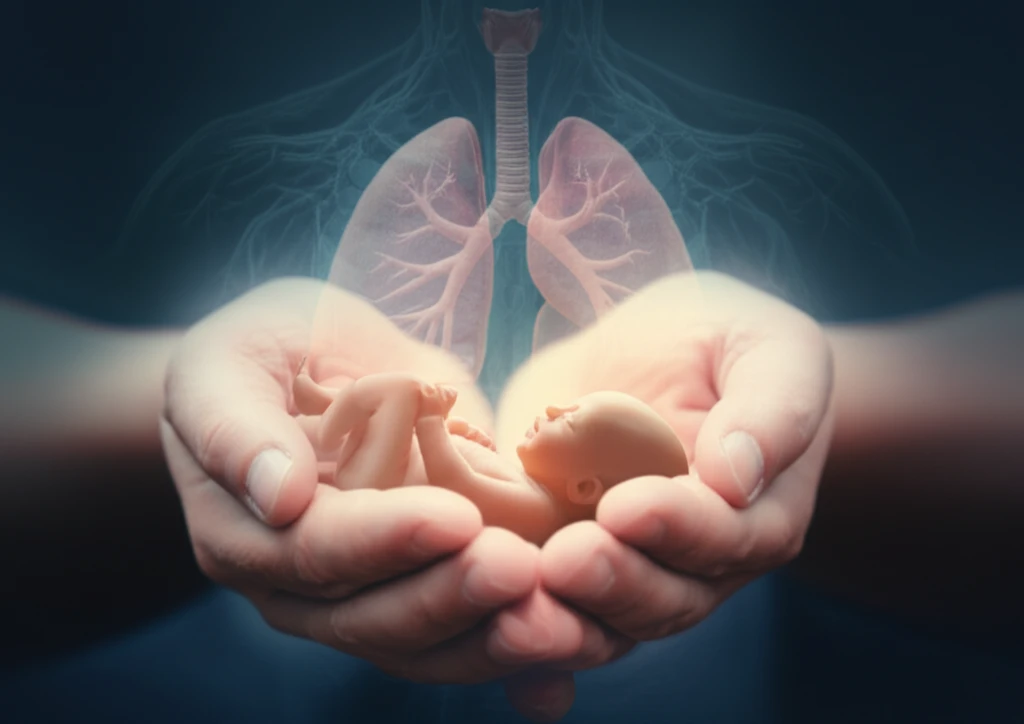
A newborn infant is cradled by protective hands, symbolizing hope and health, representing neonatal respiratory distress syndrome research in Southern China.

Decoding Newborn Breathing: What Southern China's Research Reveals About Respiratory Distress

"New insights from a study in Southern China shed light on the factors influencing neonatal respiratory distress syndrome (NRDS), offering hope for improved outcomes."


Neonatal Respiratory Distress Syndrome (NRDS) is a significant concern globally, affecting newborns' ability to breathe properly. It's one of the most common respiratory issues in newborns and a major public health challenge. At its core, NRDS stems from underdeveloped lungs and a lack of surfactant, a substance crucial for keeping air sacs in the lungs open.

Imagine a newborn struggling to take each breath, their tiny body working overtime. NRDS presents as a cascade of symptoms, including rapid, labored breathing, a bluish tint to the skin (cyanosis), and eventual respiratory failure. Premature babies are particularly vulnerable, and the long-term consequences can include lasting respiratory and neurological problems.

A recent study conducted in Southern China delved into the specific factors influencing NRDS in that region. By understanding these factors, medical professionals can better prevent, diagnose, and treat NRDS, ultimately improving the lives of countless newborns and providing reassurance to families.

Unveiling the Culprits: What Factors Increase NRDS Risk?

A newborn infant is cradled by protective hands, symbolizing hope and health, representing neonatal respiratory distress syndrome research in Southern China.

Researchers in Southern China conducted a case-control study, analyzing data from 320 newborns diagnosed with NRDS and comparing them to 320 newborns without the condition. The goal was to identify key differences between the two groups that could point to potential risk factors.

The study revealed several significant factors that appear to increase the likelihood of a newborn developing NRDS:

  • Advanced Maternal Age: The study found that mothers of advanced age (defined within the study's context) had a statistically significant increased risk of having babies with NRDS.
  • Intrauterine Distress: Babies who experienced distress while still in the womb were more likely to develop NRDS. This highlights the importance of monitoring fetal well-being during pregnancy and labor.
  • Gestational Diabetes: Mothers with gestational diabetes, a type of diabetes that develops during pregnancy, were also at higher risk of having newborns with NRDS. Proper management of gestational diabetes is crucial for both maternal and infant health.
  • Shorter Gestational Age: Conversely, a longer gestational age (i.e., being born closer to full term) was found to be a protective factor against NRDS. This underscores the importance of allowing pregnancies to progress as close to term as possible, when medically safe.
It's important to note that correlation doesn't equal causation. While these factors were associated with an increased risk of NRDS in the study, further research is needed to fully understand the underlying mechanisms. But the findings provide valuable clues for doctors and expectant parents.

Hope for Healthier Newborns: Early Action is Key

The Southern China study offers valuable insights that can help improve outcomes for newborns at risk of NRDS. By understanding the key risk factors, healthcare providers can implement targeted interventions, such as carefully managing gestational diabetes, closely monitoring pregnancies for signs of fetal distress, and striving to support pregnancies to reach full term whenever possible. Ultimately, early detection, accurate diagnosis, and prompt treatment are essential for giving every newborn the best possible start in life. This research reinforces the importance of continued efforts to improve maternal and neonatal care.

About this Article -

This article was crafted using a human-AI hybrid and collaborative approach. AI assisted our team with initial drafting, research insights, identifying key questions, and image generation. Our human editors guided topic selection, defined the angle, structured the content, ensured factual accuracy and relevance, refined the tone, and conducted thorough editing to deliver helpful, high-quality information.See our About page for more information.

This article is based on research published under:

DOI-LINK: 10.1080/14767058.2018.1526918, Alternate LINK

Title: The Influence Factors Of Neonatal Respiratory Distress Syndrome In Southern China: A Case-Control Study

Subject: Obstetrics and Gynecology

Journal: The Journal of Maternal-Fetal & Neonatal Medicine

Publisher: Informa UK Limited

Authors: Wei Ye, Tongqiang Zhang, Yang Shu, Chengzhi Fang, Lili Xie, Kaiwei Peng, Chunmei Liu

Published: 2018-10-29

Everything You Need To Know

1

What is Neonatal Respiratory Distress Syndrome (NRDS), and why is it a concern for newborns?

Neonatal Respiratory Distress Syndrome (NRDS) is a significant respiratory issue affecting newborns' ability to breathe properly. It occurs due to underdeveloped lungs and a deficiency of surfactant, a critical substance that keeps the air sacs in the lungs open. This condition is a major public health challenge globally because it can lead to rapid, labored breathing, a bluish tint to the skin (cyanosis), and potentially, respiratory failure. Premature babies are especially vulnerable, with possible long-term respiratory and neurological problems. The severity of NRDS underscores the need for early detection, diagnosis, and prompt treatment to improve newborn outcomes.

2

What were the key risk factors for NRDS identified in the Southern China study?

The Southern China study highlighted several key risk factors associated with Neonatal Respiratory Distress Syndrome (NRDS). These included advanced maternal age, intrauterine distress experienced by the baby in the womb, and mothers with gestational diabetes. Interestingly, a shorter gestational age was also identified as a risk factor, meaning babies born closer to full term had a lower risk. This underscores the importance of addressing these factors through careful monitoring and management during pregnancy.

3

How does advanced maternal age influence the risk of a newborn developing NRDS, as shown in the study?

The study conducted in Southern China found a statistically significant correlation between advanced maternal age and an increased risk of Neonatal Respiratory Distress Syndrome (NRDS). While the exact mechanisms linking maternal age to NRDS are not fully understood and need more research, the association suggests that expectant mothers of advanced age may have a higher probability of giving birth to babies who develop NRDS. This finding underscores the significance of considering maternal age as a factor in prenatal care and risk assessment.

4

Besides advanced maternal age, what other factors during pregnancy can increase the risk of NRDS?

Besides advanced maternal age, other factors during pregnancy were linked to an increased risk of Neonatal Respiratory Distress Syndrome (NRDS) according to the Southern China study. Intrauterine distress, which refers to distress experienced by the baby while still in the womb, was identified as a risk factor. Furthermore, mothers with gestational diabetes also had a higher risk of having newborns with NRDS. This indicates the importance of close monitoring for fetal well-being during pregnancy and proper management of gestational diabetes to mitigate these risks.

5

What steps can be taken to improve outcomes for newborns at risk of Neonatal Respiratory Distress Syndrome (NRDS), based on the study's findings?

Based on the Southern China study, improving outcomes for newborns at risk of Neonatal Respiratory Distress Syndrome (NRDS) involves early detection, accurate diagnosis, and prompt treatment. Healthcare providers can implement targeted interventions based on the identified risk factors. These include careful management of gestational diabetes in mothers, closely monitoring pregnancies for signs of fetal distress, and striving to support pregnancies to reach full term whenever medically safe. These steps aim to provide every newborn with the best possible start in life by addressing the key factors influencing NRDS.

Newsletter Subscribe

Subscribe to get the latest articles and insights directly in your inbox.