
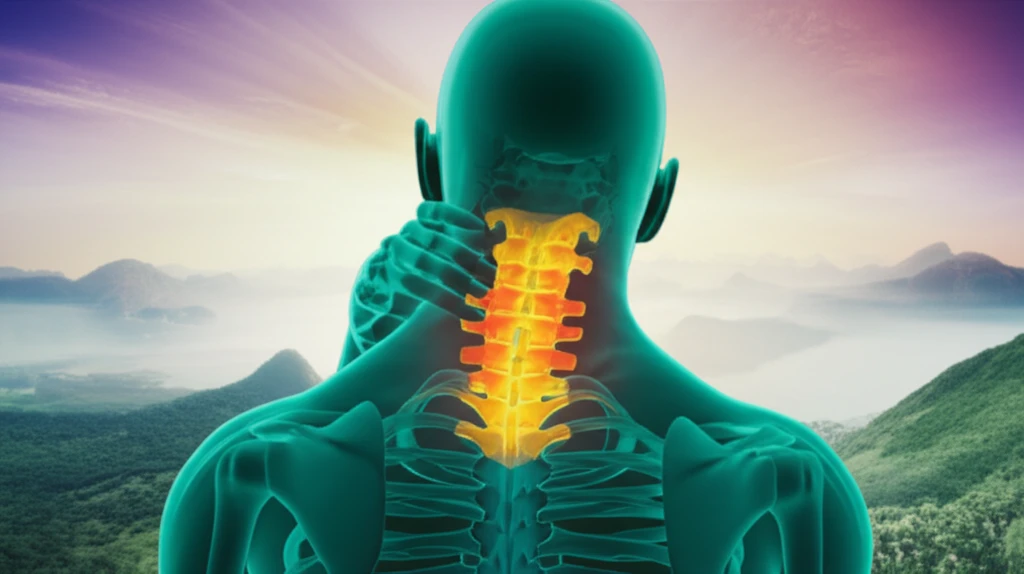
Illustration of neck pain relief in Brazil

Decoding Neck Pain: How a Modified JOA Scale Offers New Hope for Brazilians

"Discover how Brazilian researchers adapted a Japanese orthopedic scale to better understand and treat neck pain, improving lives across the country."


Neck pain is a widespread issue, impacting countless individuals worldwide. Finding effective ways to measure and manage this pain is essential for improving quality of life. However, assessment tools developed in one cultural context may not always translate seamlessly to another. This is where the work of researchers in Brazil becomes particularly significant.

A recent study highlights the adaptation of the Japanese Orthopedic Association (JOA) scale for use in Brazil. This modified scale, known as the JOA-BR, aims to provide a more accurate and culturally relevant way to assess neck pain and related disabilities among the Brazilian population. Understanding the process behind this adaptation and its potential benefits can offer valuable insights for both healthcare professionals and individuals seeking relief from neck pain.

This article delves into the details of the JOA-BR scale, exploring its development, validation, and the impact it could have on neck pain management in Brazil. By understanding the nuances of cross-cultural adaptation in medical assessments, we can better appreciate the importance of tailored healthcare solutions that address the specific needs of diverse populations.

Why Adapt a Japanese Scale for Brazil?

Illustration of neck pain relief in Brazil

The original Japanese Orthopedic Association (JOA) scale was designed to evaluate spinal cord dysfunction, including neck pain, primarily in a Japanese context. However, simply translating the scale into Portuguese wouldn't guarantee its accuracy or relevance for Brazilians. Cultural differences, linguistic nuances, and varying healthcare practices necessitate a more thorough adaptation process.

Researchers recognized that a direct translation might not capture the true experiences and perceptions of Brazilian patients with neck pain. Certain questions or concepts might be misinterpreted or irrelevant due to cultural disparities. Therefore, a rigorous cross-cultural adaptation was essential to ensure the scale's validity and reliability in the Brazilian context.

  • Cultural Relevance: Ensures questions and concepts are understood and relevant to the Brazilian population.
  • Linguistic Accuracy: Addresses nuances in language to avoid misinterpretations.
  • Improved Validity: Enhances the accuracy of the scale in measuring neck pain and related disabilities in Brazilians.
  • Better Patient Care: Leads to more effective assessments and treatment plans tailored to individual needs.
This adaptation process followed established guidelines, including initial translation, synthesis of translations, back translation, evaluation of equivalences, pilot testing, and cultural adaptation assessment. This multi-step approach ensured that the final JOA-BR scale was not only linguistically accurate but also culturally appropriate and clinically meaningful.

The Future of Neck Pain Management in Brazil

The development and validation of the modified JOA-BR scale represent a significant step forward in neck pain management in Brazil. By providing a culturally relevant and reliable assessment tool, healthcare professionals can better understand the needs of their patients and develop more effective treatment plans. This ultimately leads to improved outcomes and a better quality of life for individuals suffering from neck pain.

About this Article -

This article was crafted using a human-AI hybrid and collaborative approach. AI assisted our team with initial drafting, research insights, identifying key questions, and image generation. Our human editors guided topic selection, defined the angle, structured the content, ensured factual accuracy and relevance, refined the tone, and conducted thorough editing to deliver helpful, high-quality information.See our About page for more information.

Everything You Need To Know

1

What is the Japanese Orthopedic Association (JOA) scale, and why was it necessary to modify it for use in Brazil?

The Japanese Orthopedic Association (JOA) scale is a tool created to evaluate spinal cord dysfunction, including neck pain. It was originally designed and validated in a Japanese context. Because of cultural differences, language nuances, and healthcare practices a direct translation into Portuguese might not accurately capture the experiences of Brazilians. Adapting the scale ensures cultural relevance, linguistic accuracy, and improved validity when assessing neck pain in the Brazilian population. This leads to more effective assessments and tailored treatment plans.

2

Why is the modified Japanese Orthopedic Association (JOA-BR) scale considered a significant advancement in healthcare?

The modified Japanese Orthopedic Association (JOA-BR) scale is significant because it provides a culturally relevant and reliable way to assess neck pain and related disabilities specifically among the Brazilian population. This adaptation is important because it addresses the limitations of using a direct translation of the original Japanese Orthopedic Association (JOA) scale, which may not accurately reflect the experiences and perceptions of Brazilian patients. The JOA-BR scale ultimately improves patient care by enabling healthcare professionals to develop more effective treatment plans tailored to the specific needs of their patients.

3

Can you explain the adaptation process used to create the modified Japanese Orthopedic Association (JOA-BR) scale, and why were these steps important?

The adaptation process of the Japanese Orthopedic Association (JOA) scale involved a multi-step approach to ensure its validity and reliability in the Brazilian context. This included initial translation, synthesis of translations, back translation, evaluation of equivalences, pilot testing, and cultural adaptation assessment. These steps are important to ensure that the resulting modified Japanese Orthopedic Association (JOA-BR) scale is not only linguistically accurate but also culturally appropriate and clinically meaningful for the Brazilian population. This rigorous process enhances the scale's ability to accurately measure neck pain and related disabilities in Brazilians, leading to better patient care.

4

How can the modified Japanese Orthopedic Association (JOA-BR) scale improve neck pain management in Brazil?

The modified Japanese Orthopedic Association (JOA-BR) scale can improve neck pain management by providing healthcare professionals with a more accurate and culturally relevant assessment tool. With the JOA-BR scale, doctors can better understand the specific needs of their Brazilian patients and develop more effective and personalized treatment plans. Ultimately, this leads to improved outcomes, a better quality of life, and a more patient-centered approach to healthcare.

5

What is the role of cultural relevance in adapting the Japanese Orthopedic Association (JOA) scale for use in Brazil?

Cultural relevance is key when adapting scales like the Japanese Orthopedic Association (JOA) scale. Cultural differences, linguistic nuances, and varying healthcare practices necessitate a thorough adaptation process. Ensures questions and concepts are understood and relevant to the Brazilian population. Addresses nuances in language to avoid misinterpretations. Enhances the accuracy of the scale in measuring neck pain and related disabilities in Brazilians. Leads to more effective assessments and treatment plans tailored to individual needs.

Newsletter Subscribe

Subscribe to get the latest articles and insights directly in your inbox.