
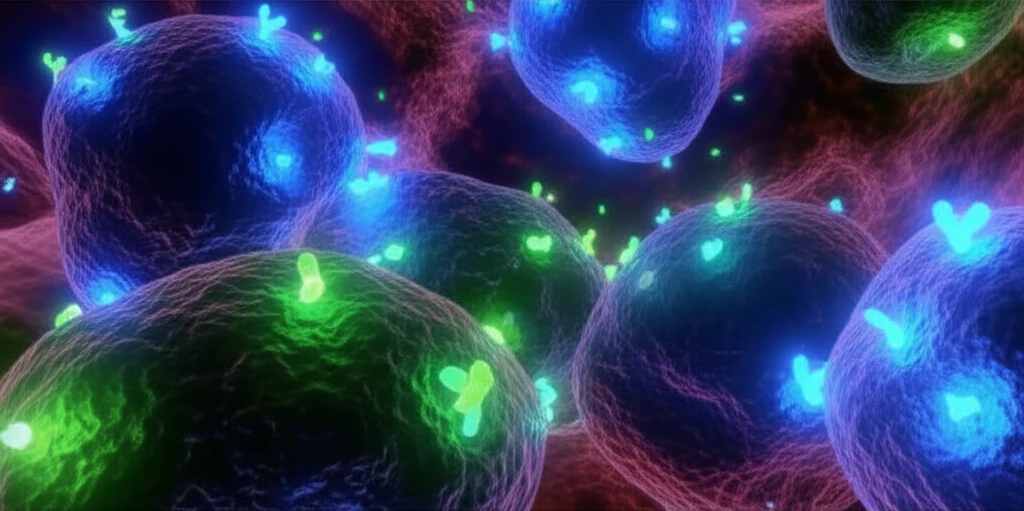
MicroRNA-155 targeting colon cancer cells

Decoding MicroRNA-155: How This Tiny Molecule Could Revolutionize Colon Cancer Treatment

"Scientists uncover the critical role of microRNA-155 (miR-155) in colon cancer, paving the way for innovative therapies that target the disease at its core."


Colon cancer remains a significant health challenge worldwide, prompting researchers to explore innovative treatment avenues. Among these, microRNAs (miRs), small non-coding RNA molecules, have emerged as key players in regulating gene expression and influencing various cellular processes. One such microRNA, miR-155, has been implicated in numerous cancer types, but its precise role in colon cancer has remained elusive – until now.

A recent study published in Experimental and Therapeutic Medicine sheds light on the intricate functions of miR-155 in colon cancer cells. The research team investigated how miR-155 affects cell proliferation, cell cycle progression, apoptosis (programmed cell death), and migration – all critical factors in cancer development and spread. Their findings reveal that miR-155 acts as an 'oncomiR' in colon cancer, promoting the growth and survival of cancer cells.

This article breaks down the key findings of this study, explaining how miR-155 manipulates cellular processes to fuel colon cancer progression. We will also explore the potential of targeting miR-155 as a novel therapeutic strategy for combating this disease.

What Did the Researchers Discover About MiR-155's Role in Colon Cancer?

MicroRNA-155 targeting colon cancer cells

The researchers conducted a series of experiments using colon cancer cell lines to investigate the effects of manipulating miR-155 levels. They used techniques like MTT assays (to measure cell proliferation), colony formation assays (to assess the ability of cells to form colonies), cell cycle analysis (to determine the distribution of cells in different phases of the cell cycle), and wound healing assays (to evaluate cell migration).

Here's a breakdown of the key findings:

  • MiR-155 Promotes Proliferation: Increasing miR-155 levels significantly enhanced the proliferation of colon cancer cells.
  • MiR-155 Enhances Colony Formation: Cells with higher miR-155 levels exhibited a greater capacity to form colonies, indicating enhanced survival and growth potential.
  • MiR-155 Accelerates Cell Cycle Progression: MiR-155 pushed colon cancer cells through the cell cycle more rapidly, leading to uncontrolled growth.
  • MiR-155 Inhibits Apoptosis: Elevated miR-155 levels protected cancer cells from programmed cell death, allowing them to survive longer.
  • MiR-155 Boosts Migration: MiR-155 promoted the migration of colon cancer cells, suggesting a role in metastasis (the spread of cancer to other parts of the body).
These results paint a clear picture: miR-155 acts as a key driver of colon cancer progression, influencing multiple cellular processes that contribute to tumor growth, survival, and spread.

The Future of Colon Cancer Treatment: Targeting MiR-155

This study's identification of miR-155 as an oncomiR in colon cancer opens exciting new avenues for therapeutic intervention. The researchers further identified casitas B-lineage lymphoma (CBL), an E3 ubiquitin ligase, as a key target of miR-155. CBL normally acts as a tumor suppressor, but miR-155 effectively silences it, removing a critical safeguard against cancer development. By targeting miR-155, scientists hope to restore CBL function and disrupt the processes that fuel colon cancer growth. Further research is needed to develop safe and effective miR-155-targeted therapies, but this study represents a significant step forward in the fight against colon cancer.

About this Article -

This article was crafted using a human-AI hybrid and collaborative approach. AI assisted our team with initial drafting, research insights, identifying key questions, and image generation. Our human editors guided topic selection, defined the angle, structured the content, ensured factual accuracy and relevance, refined the tone, and conducted thorough editing to deliver helpful, high-quality information.See our About page for more information.

This article is based on research published under:

DOI-LINK: 10.3892/etm.2017.5085, Alternate LINK

Title: Microrna‑155 Regulates The Proliferation, Cell Cycle, Apoptosis And Migration Of Colon Cancer Cells And Targets Cbl

Subject: Cancer Research

Journal: Experimental and Therapeutic Medicine

Publisher: Spandidos Publications

Authors: Hua Yu, Weiling Xu, Fangchao Gong, Baorong Chi, Junyi Chen, Ling Zhou

Published: 2017-08-31

Everything You Need To Know

1

What exactly is miR-155, and what does it do in the context of colon cancer?

MiR-155 is a microRNA, a small non-coding RNA molecule, that has been found to play a crucial role in colon cancer. It functions as an 'oncomiR', meaning it promotes the growth and survival of cancer cells. This includes enhancing cell proliferation, colony formation, accelerating cell cycle progression, inhibiting apoptosis (programmed cell death), and boosting cell migration. These actions collectively contribute to the development and spread of colon cancer.

2

What specific effects did the researchers observe when studying miR-155 in colon cancer cells?

The researchers found that miR-155 significantly impacts multiple cellular processes in colon cancer cells. Specifically, increasing miR-155 levels led to increased cell proliferation, enhanced colony formation, accelerated cell cycle progression, inhibition of apoptosis, and boosted cell migration. These findings highlight miR-155's role as a key driver of colon cancer progression, influencing factors crucial for tumor growth, survival, and spread.

3

Why is miR-155 considered important in the fight against colon cancer?

The significance of miR-155 in the context of colon cancer lies in its potential as a therapeutic target. Since miR-155 promotes cancer cell growth and survival, targeting it could disrupt the processes that fuel colon cancer. This approach could lead to the development of new therapies aimed at slowing or stopping the progression of the disease by restoring the function of tumor suppressor genes such as CBL.

4

What is the relationship between miR-155 and CBL (Casitas B-lineage lymphoma)?

The study identified Casitas B-lineage lymphoma (CBL) as a key target of miR-155. CBL is an E3 ubiquitin ligase that normally functions as a tumor suppressor. However, miR-155 silences CBL, removing a safeguard against cancer development. The implications of this interaction are significant, as targeting miR-155 could restore CBL function, potentially disrupting the growth and spread of colon cancer cells.

5

What are the potential implications of targeting miR-155 for colon cancer treatment?

The implications of targeting miR-155 in colon cancer treatment are substantial. By inhibiting miR-155, scientists aim to disrupt the mechanisms that promote cancer cell growth, survival, and spread. This could involve restoring the function of tumor suppressor genes like CBL. If successful, this strategy could lead to new therapies that are more effective and less harmful than current treatments, offering new hope for patients with colon cancer. However, more research is necessary to develop safe and effective miR-155-targeted therapies.

Newsletter Subscribe

Subscribe to get the latest articles and insights directly in your inbox.