
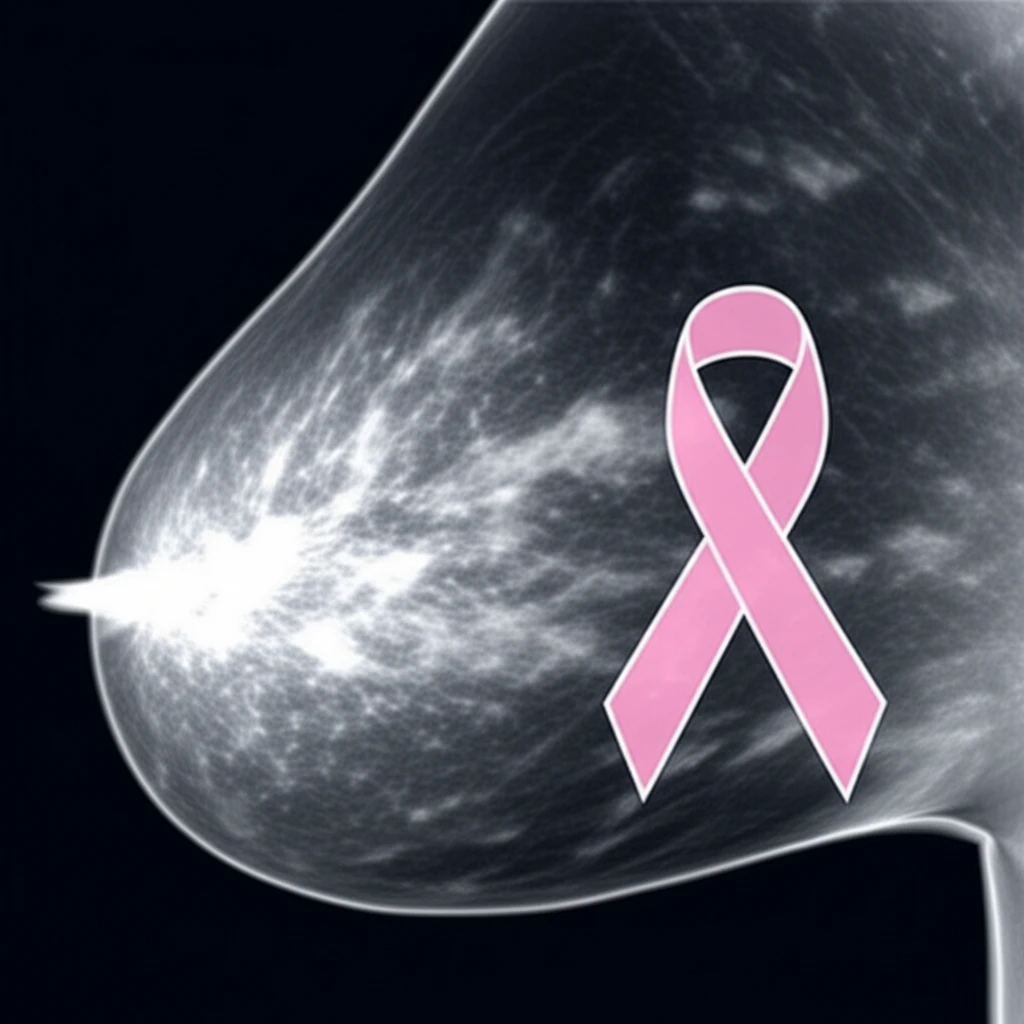
Decoding Mammograms: Understanding Breast Density and Cancer Risk

"A closer look at how mammographic density impacts breast cancer screening and risk assessment."
Breast cancer screening is a critical aspect of women's health, and mammography remains a cornerstone of early detection. However, interpreting mammograms isn't always straightforward. One factor that significantly influences the accuracy and effectiveness of mammograms is breast density. Understanding what breast density means, how it's measured, and its implications for cancer risk is essential for informed decision-making.
Mammographic density refers to the amount of fibrous and glandular tissue compared to fatty tissue in the breast. Breasts with higher density have more fibrous and glandular tissue, making it harder for radiologists to detect tumors on mammograms. This is because both dense tissue and tumors appear white on mammograms, potentially masking the presence of cancerous growths.
Recent research published in 'Radiology' delves into the nuances of mammographic density and its association with breast cancer risk. The study compares different methods of measuring breast density and evaluates their effectiveness in predicting cancer risk. This article will break down the findings, offering a clear and accessible explanation of the science behind breast density and its role in breast cancer screening.
What is Mammographic Density and Why Does It Matter?
Mammographic density is categorized into four levels using the Breast Imaging Reporting and Data System (BI-RADS):
- Category A: Mostly fatty tissue.
- Category B: Scattered areas of fibroglandular density.
- Category C: Heterogeneously dense.
- Category D: Extremely dense.
- BI-RADS A: Breasts are composed of mostly fatty tissue, which appears dark on a mammogram, making it easier to spot abnormalities.
- BI-RADS B: There are some scattered areas of fibroglandular density, but overall, the mammogram is still relatively easy to interpret.
- BI-RADS C: Breasts are heterogeneously dense, meaning there are many areas of dense tissue that can obscure small tumors.
- BI-RADS D: Breasts are extremely dense, making it very difficult to see tumors on a mammogram.
The Future of Breast Density Assessment
Ongoing research is focused on improving breast density assessment and developing more effective screening strategies for women with dense breasts. This includes exploring advanced imaging techniques like tomosynthesis (3D mammography), MRI, and ultrasound, as well as personalized risk prediction models. By staying informed and working closely with your healthcare provider, you can take proactive steps to protect your breast health.