
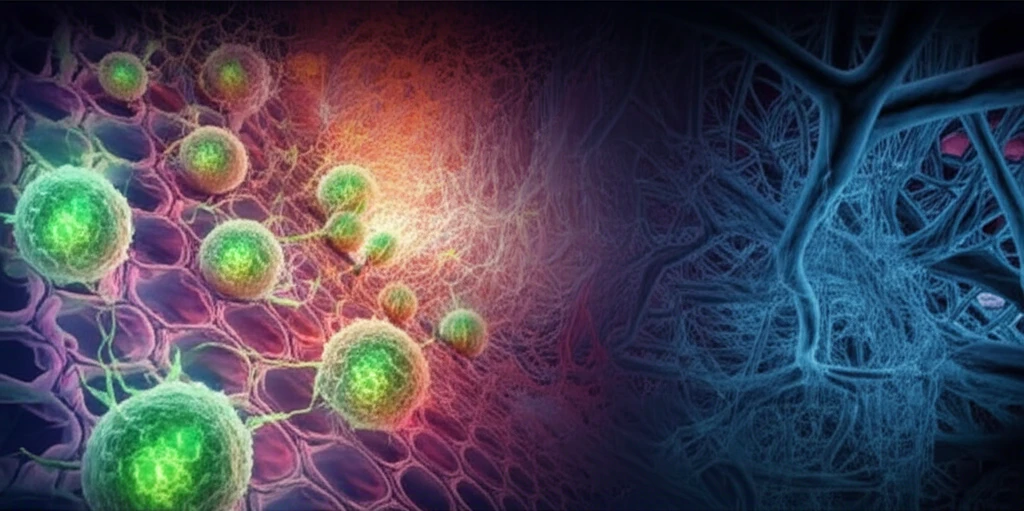
Illustration of healthy lung alveoli with MANC and AMP cells, symbolizing regeneration and fibrosis.

Decoding Lung Health: How Specialized Cells Pave the Way for Regeneration

"Unlocking the secrets of lung cells could revolutionize treatments for respiratory diseases, from chronic fibrosis to everyday injuries."


The human lung, a marvel of biological engineering, is responsible for the vital exchange of oxygen and carbon dioxide. Its intricate structure, composed of various epithelial and mesenchymal lineages, is essential for maintaining respiratory health. Understanding the complex interplay between these cells is key to unlocking new treatments for devastating lung diseases.

A recent study published in Cell sheds light on the diverse roles of mesenchymal cells in the lung. By employing advanced techniques like single-cell RNA sequencing and lineage reporter systems, researchers have created a detailed map of these cells, revealing their unique functions in tissue repair and regeneration. This breakthrough could revolutionize our approach to treating lung injuries and chronic respiratory conditions.

Imagine a future where damaged lung tissue can be precisely repaired, restoring optimal respiratory function. This research brings us closer to that reality by identifying specific cell types that promote either regeneration or harmful fibrotic responses. Let's explore how these findings could lead to innovative therapies for a range of lung ailments.

What are Mesenchymal Cells and Why Do They Matter for Lung Health?

Illustration of healthy lung alveoli with MANC and AMP cells, symbolizing regeneration and fibrosis.

Mesenchymal cells are a type of stem cell that can differentiate into various cell types, including bone, cartilage, muscle, and fat cells. In the lung, they play a critical role in maintaining the structural integrity of the alveoli, the tiny air sacs where gas exchange occurs. They also secrete growth factors and signaling molecules that influence the behavior of neighboring epithelial cells.

The study identifies two key mesenchymal cell types in the lung:

  • Mesenchymal Alveolar Niche Cells (MANCs): These cells are essential for alveolar epithelial cell growth and self-renewal. They respond to Wnt signaling and express Pdgfra, promoting healthy tissue maintenance.
  • Axin2+ Myofibrogenic Progenitor (AMP) Cells: These cells, on the other hand, are more prone to generating detrimental myofibroblasts after injury. Myofibroblasts contribute to fibrosis, a process where excessive scar tissue forms, impairing lung function.
Understanding the contrasting roles of MANCs and AMP cells is crucial for developing targeted therapies. The goal is to boost the regenerative capacity of MANCs while suppressing the fibrotic activity of AMP cells.

The Future of Lung Disease Treatment: A Cellular Approach

This research marks a significant step forward in our understanding of lung biology and disease. By dissecting the complex interplay between different cell types, scientists are paving the way for targeted therapies that promote regeneration and prevent fibrosis. Imagine a future where personalized treatments can address the specific cellular imbalances driving lung disease, leading to improved outcomes and a better quality of life for millions.

About this Article -

This article was crafted using a human-AI hybrid and collaborative approach. AI assisted our team with initial drafting, research insights, identifying key questions, and image generation. Our human editors guided topic selection, defined the angle, structured the content, ensured factual accuracy and relevance, refined the tone, and conducted thorough editing to deliver helpful, high-quality information.See our About page for more information.

This article is based on research published under:

DOI-LINK: 10.1016/j.cell.2017.07.034, Alternate LINK

Title: Distinct Mesenchymal Lineages And Niches Promote Epithelial Self-Renewal And Myofibrogenesis In The Lung

Subject: General Biochemistry, Genetics and Molecular Biology

Journal: Cell

Publisher: Elsevier BV

Authors: Jarod A. Zepp, William J. Zacharias, David B. Frank, Christina A. Cavanaugh, Su Zhou, Michael P. Morley, Edward E. Morrisey

Published: 2017-09-01

Everything You Need To Know

1

What are mesenchymal cells and why are they important in the lungs?

Mesenchymal cells are stem cells capable of differentiating into various cell types like bone, cartilage, muscle, and fat. In the lungs, they're crucial for maintaining the structural integrity of the alveoli, where gas exchange happens. They also secrete growth factors that influence neighboring epithelial cells. This makes them vital for lung health and potential regenerative therapies.

2

What are Mesenchymal Alveolar Niche Cells (MANCs), and what role do they play in lung health?

Mesenchymal Alveolar Niche Cells, or MANCs, are essential for alveolar epithelial cell growth and self-renewal within the lung. MANCs respond to Wnt signaling and express Pdgfra, promoting healthy tissue maintenance. Understanding the functionality of MANCs is critical because they actively contribute to tissue regeneration, offering potential targets for therapies aimed at enhancing lung repair capabilities.

3

What are Axin2+ Myofibrogenic Progenitor (AMP) cells and how do they impact lung function?

Axin2+ Myofibrogenic Progenitor cells, or AMP cells, are mesenchymal cells that tend to generate detrimental myofibroblasts after lung injury. These myofibroblasts contribute to fibrosis, a process involving excessive scar tissue formation that impairs lung function. Unlike MANCs, which support regeneration, AMP cells promote harmful fibrotic responses, making them a target for therapies aimed at preventing or reversing lung scarring. Further research is needed to fully understand the signaling pathways and external factors that influence the differentiation of mesenchymal cells into either MANCs or AMPs, which could enable more precise therapeutic interventions.

4

How does understanding the roles of MANCs and AMP cells contribute to future lung disease treatments?

Understanding the contrasting roles of Mesenchymal Alveolar Niche Cells (MANCs) and Axin2+ Myofibrogenic Progenitor (AMP) cells is crucial for developing targeted therapies for lung diseases. The goal is to boost the regenerative capacity of MANCs while suppressing the fibrotic activity of AMP cells. By manipulating the balance between these cell types, scientists aim to promote lung tissue repair and prevent or reverse fibrosis, leading to improved outcomes for patients with chronic respiratory conditions. Therapies could focus on delivering specific growth factors or signaling molecules to enhance MANC activity or on inhibiting the pathways that lead to AMP cell differentiation and myofibroblast formation.

5

What advanced techniques were used to identify the distinct roles of mesenchymal cells in lung repair, and why are these techniques significant?

Researchers used advanced techniques like single-cell RNA sequencing and lineage reporter systems to create a detailed map of mesenchymal cells, revealing their unique functions in tissue repair and regeneration. Single-cell RNA sequencing allows scientists to analyze the gene expression of individual cells, providing insights into their specific roles and functions. Lineage reporter systems enable researchers to track the fate of cells over time, determining how they contribute to tissue repair or fibrosis. These techniques are significant because they provide a high-resolution view of the cellular landscape of the lung, allowing for the identification of novel therapeutic targets and the development of more precise and effective treatments for lung diseases. These insights are critical for personalized medicine approaches, where treatments are tailored to the specific cellular imbalances driving lung disease in individual patients.

Newsletter Subscribe

Subscribe to get the latest articles and insights directly in your inbox.