
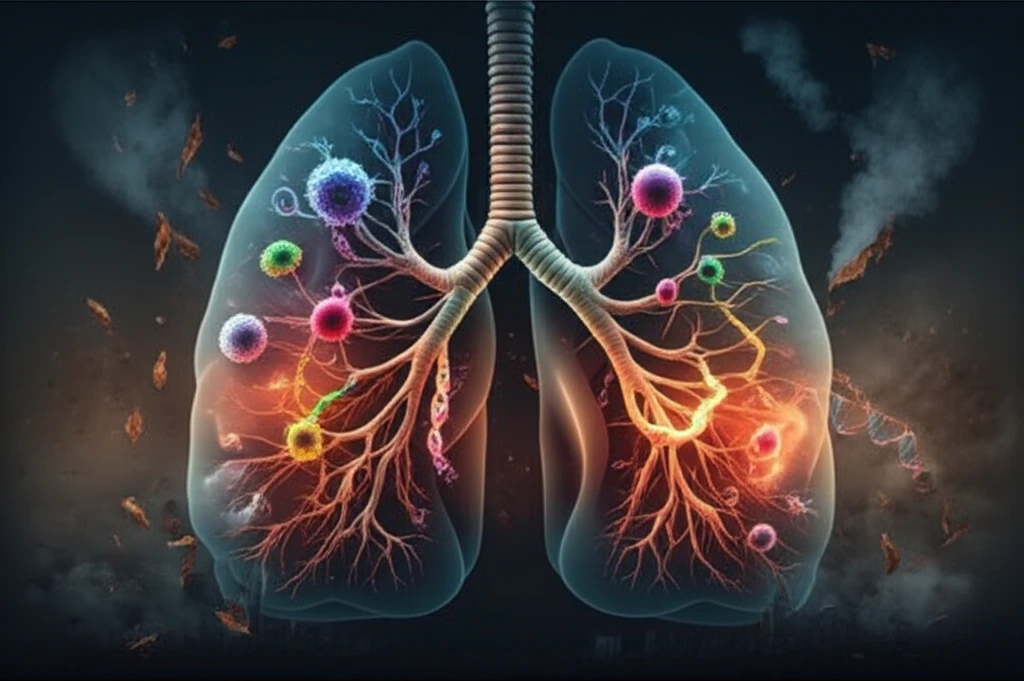
Decoding Lung Cancer: How Multi-Region Sequencing is Changing Everything

"Unlocking the secrets of treatment-resistant metastatic lung cancer by mapping genomic diversity and gene-environment interactions."
For years, our understanding of lung cancer's intricate nature has been limited by analyzing single samples, often from early-stage, surgically removed tumors. But what about the aggressive, treatment-resistant forms of lung cancer that have already spread? How different are the tumors within a single patient, and what makes them so hard to defeat?
New research published in Oncogene is changing the game. Scientists used a technique called multi-region whole-genome sequencing (WGS) to map the genomic landscape of inoperable, metastatic lung cancer. By sampling tumors from multiple locations within the same patient, they uncovered a level of complexity that single-sample analysis simply misses.
This article breaks down the study's key findings, revealing how genomic heterogeneity, gene-environment interactions, and the timing of metastasis all play crucial roles in lung cancer's development and treatment resistance. Learn how these discoveries could pave the way for more effective, personalized therapies in the future.
Mapping the Terrain: Genomic Heterogeneity in Metastatic Lung Cancer
The study focused on 11 patients with inoperable lung cancer, collecting samples from both the primary tumor and intrathoracic metastatic sites using a minimally invasive procedure called endobronchial ultrasound-guided transbronchial needle aspiration (EBUS-TBNA). This allowed researchers to access high-quality tumor samples without relying on surgery.
- Shared Driver Mutations: Mutations in well-known lung cancer driver genes like TP53, KRAS, and RB1 were generally consistent across all tumor sites within a patient. This suggests that these mutations are crucial for the initial development of the primary tumor.
- Heterogeneity in Copy Number Gain: Differences were more apparent in copy number variations, where some genes were amplified (increased in number) in the primary tumor but not in the metastasis, or vice versa. This included genes like MYC, CCND3, and FGFR1, which are known to drive cancer growth.
- Novel Mutations: The study also identified mutations in less common cancer-related genes like TSC1 and WT1, as well as loss-of-function variants in genes involved in DNA repair and immune response, such as ATP7B, TLR4, and ERAP2.
Implications for Personalized Therapies
This research underscores the need for personalized treatment strategies that account for the unique genomic makeup of each patient's cancer. Simply targeting the shared driver mutations may not be enough to overcome treatment resistance in metastatic disease.
The study also highlights the potential role of gene-environment interactions in lung cancer development. The researchers found that germline variants in DNA repair genes may interact with environmental factors, such as tobacco smoke, to influence the pattern of founder mutations. This suggests that a person's genetic background and environmental exposures can both contribute to their risk of developing lung cancer and the specific characteristics of their tumors.
Ultimately, a more comprehensive understanding of lung cancer heterogeneity and gene-environment interactions will be essential for developing more effective therapies and improving outcomes for patients with this deadly disease. Multi-region sequencing and other advanced genomic techniques are paving the way for a future of personalized cancer care, where treatment decisions are tailored to the individual characteristics of each patient's tumor.