
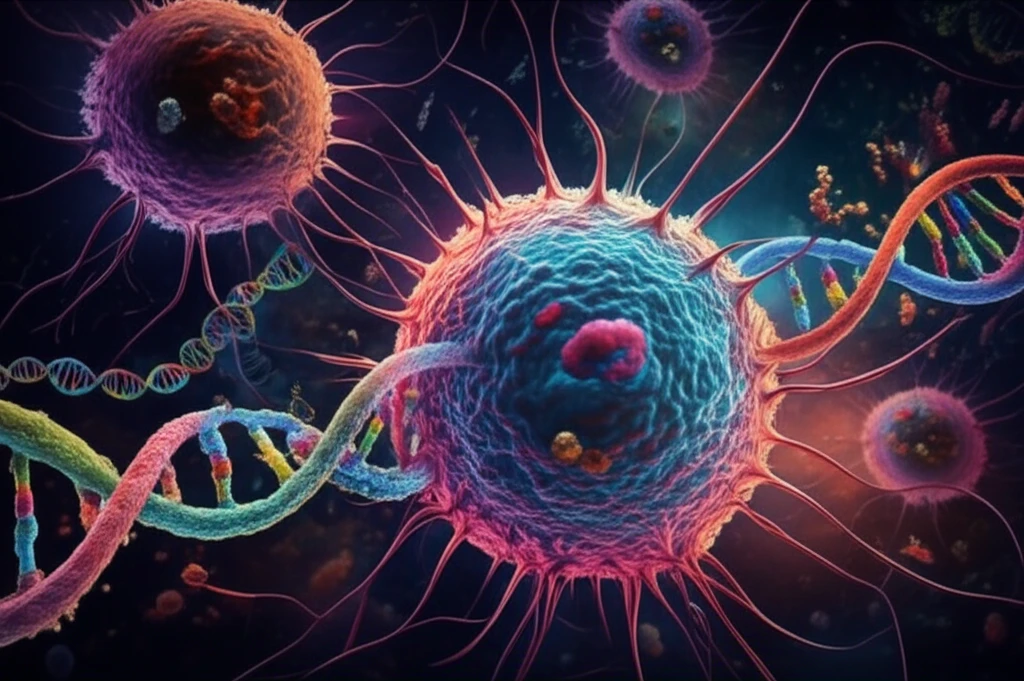
Digital illustration of lung cancer cells with intertwined genetic code, representing personalized medicine.

Decoding Lung Cancer: Groundbreaking Genetic Insights and the Future of Personalized Treatment

"Unlocking the Secrets of Squamous Cell Lung Carcinoma: How Cutting-Edge Research is Paving the Way for Targeted Therapies and Improved Patient Outcomes"


Lung cancer remains a formidable foe, claiming countless lives each year. Within this devastating disease, squamous cell lung carcinoma (SqCLC) presents unique challenges. Unlike some other forms of lung cancer, effective targeted therapies for SqCLC have been elusive. However, recent research has begun to shed light on the genetic underpinnings of this aggressive cancer, offering new avenues for treatment.

This article delves into a comprehensive study that analyzed the genetic profiles of SqCLC patients. The goal was to identify potential therapeutic targets and move closer to precision medicine, where treatments are tailored to an individual's genetic makeup. The study examined the genetic makeup of 157 patients who had undergone surgery for SqCLC, using advanced techniques to analyze mutations, gene copy number alterations, and protein expression.

The findings are not only providing insights into the genetic landscape of SqCLC but also pointing towards specific targets for new drugs and therapies. This research highlights the critical importance of understanding the molecular characteristics of each patient's cancer to develop effective, personalized treatment strategies. It’s a beacon of hope in the fight against SqCLC, promising a future where treatment is more precise, effective, and tailored to the individual.

Unraveling the Genetic Puzzle: Key Findings from the SqCLC Study

Digital illustration of lung cancer cells with intertwined genetic code, representing personalized medicine.

The research involved a deep dive into the genetic makeup of SqCLC, analyzing approximately 2,800 COSMIC mutations across 50 different genes. The study revealed several significant findings. Somatic mutations (changes in the DNA that occur after conception) were identified in 73.9% of cases, with TP53 being the most frequently mutated gene. TP53 mutations were found in over half the cases analyzed.

In addition to mutations, the study examined gene copy number alterations. These are changes in the number of copies of a particular gene within a cell. The study discovered that 75.8% of cases had these alterations, including amplification (an increase in the number of copies) or deletion (a decrease). Key genes showing alterations included SOX2, CDKN2A, PTEN, FGFR1, and EGFR. Positive expression of VEGFR2 and PD-L1, along with loss of PTEN expression, were also observed in a significant number of cases.

  • Somatic Mutations: Identified in 73.9% of cases, with TP53 being the most common.
  • Gene Copy Number Alterations: Detected in 75.8% of cases, affecting genes like SOX2, CDKN2A, and PTEN.
  • Protein Expression: Positive expression of VEGFR2 and PD-L1, and loss of PTEN, were frequently observed.
These findings emphasize the complex genetic landscape of SqCLC and highlight potential targets for therapeutic intervention. For instance, the presence of EGFR amplification, found in 14% of patients, suggests that some patients might benefit from EGFR-targeted therapies, similar to those used in lung adenocarcinoma. The study also found that positive expression of PD-L1 was an independent favorable prognostic factor for disease-free survival (DFS).

The Road Ahead: Transforming SqCLC Treatment through Genetic Insights

This study underscores the importance of understanding the unique genetic profiles of individual SqCLC tumors. By identifying specific genetic alterations, researchers can now explore more targeted therapies. The future of SqCLC treatment likely involves precision medicine approaches, where treatments are tailored to the specific genetic makeup of each patient's tumor. This approach promises to improve outcomes and offer new hope to those battling this challenging cancer.

About this Article -

This article was crafted using a human-AI hybrid and collaborative approach. AI assisted our team with initial drafting, research insights, identifying key questions, and image generation. Our human editors guided topic selection, defined the angle, structured the content, ensured factual accuracy and relevance, refined the tone, and conducted thorough editing to deliver helpful, high-quality information.See our About page for more information.

This article is based on research published under:

DOI-LINK: 10.18632/oncotarget.9096, Alternate LINK

Title: Genetic Alteration Profiling Of Patients With Resected Squamous Cell Lung Carcinomas

Subject: Oncology

Journal: Oncotarget

Publisher: Impact Journals, LLC

Authors: Dan Tao, Xiaohong Han, Ningning Zhang, Dongmei Lin, Di Wu, Xinxin Zhu, Wenya Song, Yuankai Shi

Published: 2016-04-29

Everything You Need To Know

1

What are somatic mutations, and why are they significant in squamous cell lung carcinoma (SqCLC)?

Somatic mutations are alterations in the DNA that occur after conception. Their significance in SqCLC lies in their potential to drive cancer development and progression. A study analyzing the genetic profiles of SqCLC patients found somatic mutations in 73.9% of cases, with TP53 being the most frequently mutated gene. Identifying these mutations can help researchers develop targeted therapies that specifically address these genetic abnormalities, ultimately improving treatment outcomes. However, understanding the functional consequences of these mutations and how they interact with other genetic alterations is crucial for designing effective therapeutic strategies.

2

How do gene copy number alterations impact squamous cell lung carcinoma (SqCLC), and what specific genes are commonly affected?

Gene copy number alterations, which are changes in the number of copies of a particular gene within a cell, significantly impact SqCLC by potentially altering the expression levels of key proteins involved in cancer growth and survival. A study found these alterations in 75.8% of SqCLC cases. Key genes affected include SOX2, CDKN2A, PTEN, FGFR1, and EGFR. Amplification of genes like EGFR can make the cancer more sensitive to EGFR-targeted therapies, while deletion of tumor suppressor genes like PTEN can promote cancer progression. The interplay between these alterations influences the behavior of SqCLC tumors and can inform personalized treatment strategies. The effect of each gene copy number alteration depends on the specific gene and its role in cellular processes.

3

What role does protein expression, specifically VEGFR2, PD-L1, and PTEN, play in squamous cell lung carcinoma (SqCLC) and what are the therapeutic implications?

Protein expression levels of VEGFR2, PD-L1, and PTEN play a significant role in SqCLC. Positive expression of VEGFR2 and PD-L1, along with loss of PTEN expression, were frequently observed in a study of SqCLC patients. VEGFR2 is involved in angiogenesis, so its expression suggests potential benefits from anti-angiogenic therapies. PD-L1 expression can make tumors susceptible to immune checkpoint inhibitors. Loss of PTEN, a tumor suppressor, can promote cancer growth and resistance to certain therapies. Interestingly, the study found that positive expression of PD-L1 was an independent favorable prognostic factor for disease-free survival (DFS). Understanding these expression patterns is crucial for tailoring treatments to individual patients. The interplay between these proteins and the tumor microenvironment requires further investigation.

4

How can genetic profiling of squamous cell lung carcinoma (SqCLC) tumors lead to more personalized and effective treatment strategies?

Genetic profiling of SqCLC tumors allows researchers to identify specific genetic alterations unique to each patient's cancer. By understanding the genetic makeup of the tumor, treatments can be tailored to target these specific abnormalities, leading to more effective and personalized treatment strategies. For example, the presence of EGFR amplification in some patients suggests they might benefit from EGFR-targeted therapies, similar to those used in lung adenocarcinoma. This precision medicine approach promises to improve outcomes and offer new hope to those battling this challenging cancer. It is important to note that the effectiveness of targeted therapies depends on the specific genetic context and potential resistance mechanisms.

5

Beyond TP53 mutations, what other significant genetic alterations have been identified in squamous cell lung carcinoma (SqCLC), and how might these findings translate into novel therapeutic approaches?

While TP53 mutations are prevalent in SqCLC, research has revealed other significant genetic alterations, including gene copy number alterations in genes like SOX2, CDKN2A, PTEN, FGFR1, and EGFR, as well as altered protein expression of VEGFR2 and PD-L1. These findings can translate into novel therapeutic approaches by targeting these specific alterations. For instance, FGFR1 amplification could be targeted with FGFR inhibitors, and tumors with high PD-L1 expression may respond well to immune checkpoint inhibitors. Furthermore, understanding the interplay between these alterations and other molecular pathways can help researchers develop combination therapies that are more effective at overcoming resistance and improving patient outcomes. It's crucial to validate these findings in clinical trials and explore personalized treatment strategies based on the specific genetic profile of each patient's tumor.

Newsletter Subscribe

Subscribe to get the latest articles and insights directly in your inbox.