
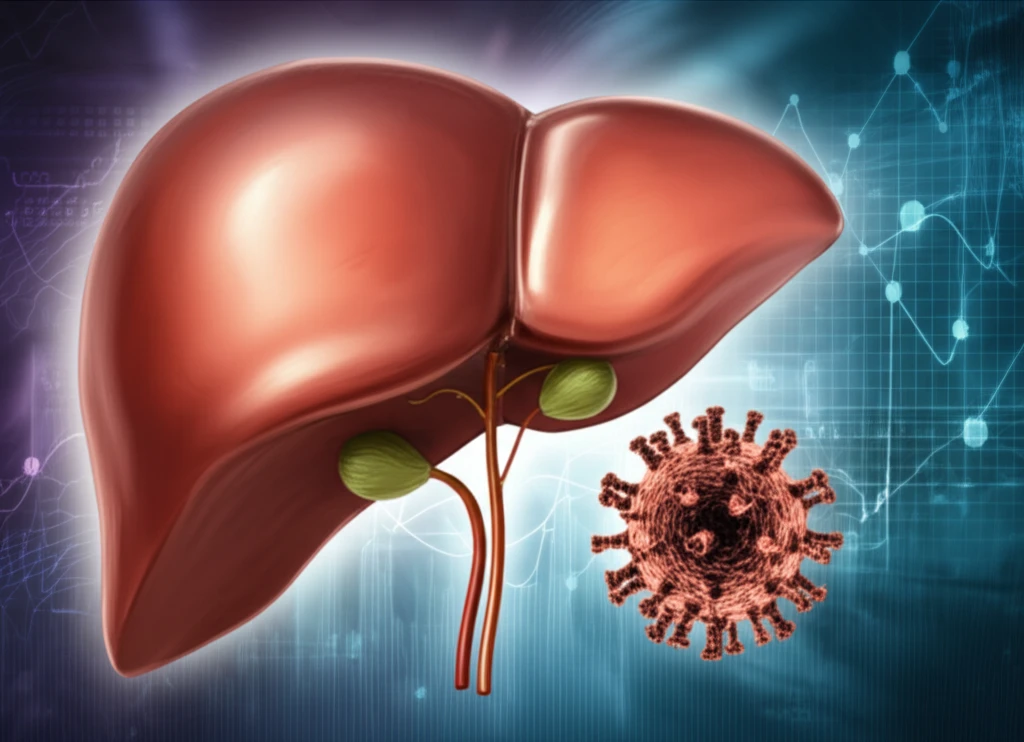
Decoding Liver Health: Why Non-Invasive Tests Matter for Hepatitis B Patients

"New research sheds light on the accuracy of non-invasive models for diagnosing liver fibrosis in chronic Hepatitis B, offering hope for improved patient care."
Living with chronic Hepatitis B can be a challenging journey, often marked by uncertainty about the health of your liver. For years, the primary method of assessing liver health has been through invasive procedures like biopsies. However, recent advancements in medical science have led to the development of non-invasive models, offering a less daunting way to monitor liver conditions. These models use blood tests and other non-invasive methods to predict the stage of liver fibrosis, reducing the need for more invasive procedures.
A recent study, published in the Journal of Viral Hepatitis, has delved into the accuracy and reliability of these non-invasive models specifically for individuals with chronic Hepatitis B. The research, which involved a large cohort of patients, aimed to evaluate and compare the performance of 30 different non-invasive models. The goal was to determine how well these models could predict the presence and severity of liver fibrosis, a key indicator of liver health.
This article explores the key findings of the study, highlighting the strengths and limitations of various non-invasive models. We'll discuss how these models compare to traditional methods, what factors influence their accuracy, and what these findings mean for individuals living with chronic Hepatitis B. Ultimately, we'll examine how these advancements can lead to better-informed treatment decisions and improved patient outcomes.
The Non-Invasive Revolution: Understanding the Models
Non-invasive models represent a significant step forward in liver health assessment. Unlike liver biopsies, which involve inserting a needle into the liver to obtain a tissue sample, these models rely on readily available information. They typically incorporate blood test results, such as liver enzyme levels, platelet counts, and other biomarkers, to estimate the degree of liver fibrosis.
- APRI: This model uses AST (Aspartate Aminotransferase) and platelet count to assess liver fibrosis.
- FIB-4: This model combines AST, ALT (Alanine Aminotransferase), platelet count, and age.
- King's Score: This score takes into account AST, ALT, alkaline phosphatase, and bilirubin levels.
A Brighter Future for Liver Health
The study underscores the ongoing effort to refine and improve the tools available for assessing liver health in individuals with chronic Hepatitis B. While the research highlights the limitations of some non-invasive models, it also points to the potential for others. As research continues, we can expect to see even more accurate and reliable non-invasive methods, ultimately leading to better patient outcomes and a less invasive approach to liver health management. If you or someone you know is living with chronic Hepatitis B, understanding these advancements can empower you to have more informed conversations with your healthcare provider and take proactive steps towards better health.