
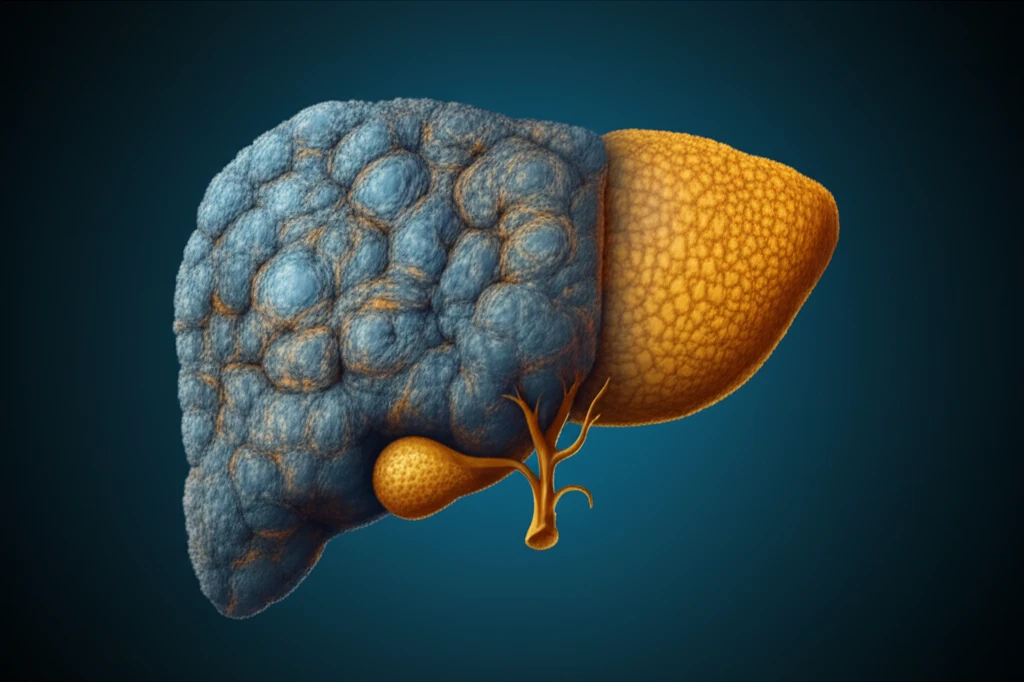
Liver regeneration after fibrosis

Decoding Liver Failure: How Fibrosis Markers Could Predict Outcomes

"New research sheds light on how markers of liver fibrosis, previously overlooked, can offer crucial insights into predicting outcomes in acute liver failure cases."


Acute liver failure (ALF) is a rare but critical condition where the liver suddenly loses its ability to function. This can happen because of severe damage to liver cells, often due to causes other than pre-existing liver disease. Imagine your liver, normally a robust filter for your body, suddenly overwhelmed, leading to life-threatening complications. Identifying how well someone will recover from ALF early on is extremely challenging.

Traditionally, doctors use systems like the King's College Hospital Criteria (KCC) and the Model for End-Stage Liver Disease (MELD) score to predict outcomes in ALF. However, these systems aren't perfect, and sometimes they don't accurately predict who will recover and who won't. As a result, researchers are constantly searching for better ways to assess the severity of ALF and predict patient outcomes.

New research published in 'Hepatology Communications' suggests that markers of liver fibrosis – the same markers used to track chronic liver diseases – may play a significant role in predicting outcomes in a specific type of ALF known as non-acetaminophen-associated ALF (NAA-ALF). This is particularly important because up until now, these markers haven't been fully explored in the context of acute liver failure.

What Are Liver Fibrosis Markers and Why Do They Matter in Acute Liver Failure?

Liver regeneration after fibrosis

Liver fibrosis is essentially the scarring of the liver. It's a process where excessive amounts of extracellular matrix (ECM) – the material surrounding cells – accumulate in the liver, distorting its structure and impairing its function. Think of it like the liver's attempt to repair itself after injury, but in an overzealous way that ultimately causes more harm than good.

The key markers studied in this research were:

  • Hyaluronic acid (HA): A major component of the ECM, its levels often rise when there's liver damage and inflammation.
  • 7S domain of type IV collagen (4COL7S): A fragment released during the formation of new basement membranes in the liver; elevated levels can indicate ongoing ECM remodeling.
  • Wisteria floribunda agglutinin-positive Mac-2-binding protein (WFA+-M2BP): A protein associated with liver fibrosis progression.
In chronic liver diseases, these markers are routinely used to assess the stage of fibrosis and guide treatment decisions. But what about in ALF? Researchers hypothesized that these markers, reflecting ECM remodeling, could be predictive of outcomes at the very first presentation of NAA-ALF. This study suggests that elevated levels of these markers, particularly 4COL7S, are associated with worse clinical outcomes, including the need for liver transplantation or death.

The Future of ALF Prognosis: A Call for Further Research

This research provides a compelling case for incorporating fibrosis markers into the assessment of NAA-ALF. By improving the accuracy of prognosis, doctors can make more informed decisions about treatment strategies, including when to consider liver transplantation. However, the authors emphasize that external validation of these findings is crucial. More studies are needed to confirm the role of fibrosis markers in diverse populations and settings.

About this Article -

This article was crafted using a human-AI hybrid and collaborative approach. AI assisted our team with initial drafting, research insights, identifying key questions, and image generation. Our human editors guided topic selection, defined the angle, structured the content, ensured factual accuracy and relevance, refined the tone, and conducted thorough editing to deliver helpful, high-quality information.See our About page for more information.

Everything You Need To Know

1

What is Acute Liver Failure (ALF), and why is it so challenging to manage?

Acute Liver Failure (ALF) is a sudden and severe condition where the liver loses its ability to function. This can be triggered by various factors, excluding pre-existing liver disease. Managing ALF is difficult because its onset is rapid and unpredictable. Traditional tools like the King's College Hospital Criteria (KCC) and the Model for End-Stage Liver Disease (MELD) score aren't always accurate in predicting patient outcomes, making it difficult for doctors to determine the best course of treatment quickly. Early and precise prognosis is critical in ALF to implement effective interventions, including liver transplantation, which is sometimes a life-saving option.

2

What are Liver Fibrosis markers, and what role do they play in Non-Acetaminophen-Associated Acute Liver Failure (NAA-ALF)?

Liver fibrosis markers indicate the degree of scarring in the liver, a process involving excessive accumulation of extracellular matrix (ECM). This ECM buildup distorts the liver's structure and impairs its function. The research focuses on three key markers: Hyaluronic acid (HA), 7S domain of type IV collagen (4COL7S), and Wisteria floribunda agglutinin-positive Mac-2-binding protein (WFA+-M2BP). The study indicates that these markers, especially 4COL7S, are predictive of outcomes in NAA-ALF. Elevated levels are associated with poorer outcomes, highlighting their potential in early prognosis.

3

How can the use of Liver Fibrosis markers improve the prognosis of Non-Acetaminophen-Associated Acute Liver Failure (NAA-ALF)?

By incorporating liver fibrosis markers into the assessment of NAA-ALF, doctors can gain a more accurate understanding of the severity of the condition and predict patient outcomes more effectively. This can lead to more informed decisions about treatment strategies, including when to consider a liver transplantation. The improved prognosis allows for a proactive approach in managing the condition. Specifically, elevated levels of 4COL7S, HA, and WFA+-M2BP can suggest a worse prognosis, prompting doctors to intervene earlier and more aggressively, thereby potentially saving lives and improving patient outcomes.

4

What are the specific Liver Fibrosis markers discussed, and what do they indicate about liver health?

The research highlights three key markers: Hyaluronic acid (HA), 7S domain of type IV collagen (4COL7S), and Wisteria floribunda agglutinin-positive Mac-2-binding protein (WFA+-M2BP). HA, a major component of the ECM, often rises with liver damage and inflammation. 4COL7S, a fragment released during the formation of new basement membranes, indicates ongoing ECM remodeling. WFA+-M2BP is associated with liver fibrosis progression. High levels of these markers, particularly 4COL7S, suggest significant liver damage, fibrosis, and a poorer prognosis in NAA-ALF patients.

5

What are the next steps for the study of Liver Fibrosis markers in Acute Liver Failure (ALF)?

The research emphasizes the need for external validation of the findings, which means that more studies are needed to confirm the role of fibrosis markers in diverse populations and settings. The authors call for further research to confirm the significance of Hyaluronic acid (HA), 7S domain of type IV collagen (4COL7S), and Wisteria floribunda agglutinin-positive Mac-2-binding protein (WFA+-M2BP) as indicators of liver health and predictors of outcomes, particularly in Non-Acetaminophen-Associated Acute Liver Failure (NAA-ALF). This will help establish these markers as reliable tools for clinical use, leading to improved patient care and treatment strategies.

Newsletter Subscribe

Subscribe to get the latest articles and insights directly in your inbox.