
Decoding Legionnaires' Disease: Protect Your Health With These Practical Steps

"A comprehensive guide to understanding, preventing, and managing Legionella in your water systems for a safer, healthier life."
Legionellosis, a severe form of pneumonia, continues to pose a significant public health challenge, affecting hundreds of thousands annually. This disease isn't merely a statistic; it represents lives disrupted and families impacted by long-term debilitating effects. Tragically, most Legionnaires' cases stem from inadequately maintained water systems, making them fundamentally preventable.
In this article, we will breakdown what Legionellosis is, and cover practical, scientifically-backed strategies to prevent this disease in our communities and homes. We'll shift the focus towards empowering individuals with knowledge and proactive measures.
Understanding the multifaceted nature of Legionellosis—from its causative agents to effective prevention strategies—is the first step in mitigating its impact. You will learn how to ensure the safety of your water systems, mitigate risks, and protect yourself and others from this serious health threat.
A Serious Pneumonia Carried in Water Droplets
Legionnaires' disease is a type of pneumonia caused by Legionella bacteria that grow in warm water, and it is contracted by inhaling water droplets containing the organism (Reference URL 1; Reference URL 2). Symptoms are flu-like, including fever, chills, muscle aches, and coughs, and complications can be serious and even fatal if left untreated (Reference URL 1; Reference URL 2). The illness occurs most often in older adults and in people with weakened immune systems acsh.org. Prevention is generally aimed at improving the design and maintenance of cooling towers and plumbing systems (per MedicineNet).
Prevention Built Around Water System Maintenance
The most effective method of preventing Legionnaires' disease in the home, according to one source, is proper management and maintenance of the water system airpf.com. For building operators, the best bet is to learn about and follow ASHRAE's Standard 188, which provides a framework for managing water systems and reducing Legionella risk airpf.com. Because the bacteria are often found in contaminated water systems, prevention strategies center on keeping those systems clean and well maintained sparshdiagnostica.com. Water features such as hot tubs carry particular risk if not properly managed, which is why routine upkeep of any water source is repeatedly emphasized (per Proper Insurance).
From the 1976 Philadelphia Outbreak to Today
The disease was first identified in July 1976, when an outbreak occurred at the Bellevue-Stratford Hotel in Philadelphia during an American Legion convention, and several attendees fell ill with a mysterious pneumonia-like illness that gave the disease its name iwcinnovations.com. Five decades later, commentators note that there has still been no meaningful reduction in the threat finance.yahoo.com. The illness remains relatively rare in the United States, with fewer than 20,000 cases per year, and those at highest risk include males, smokers, the immunosuppressed, and people with chronic disease (per JSTOR). Its method of transmission, which seems insidious, is part of why the disease continues to make headlines (per JSTOR).
Understanding the Enemy: Legionella Bacteria
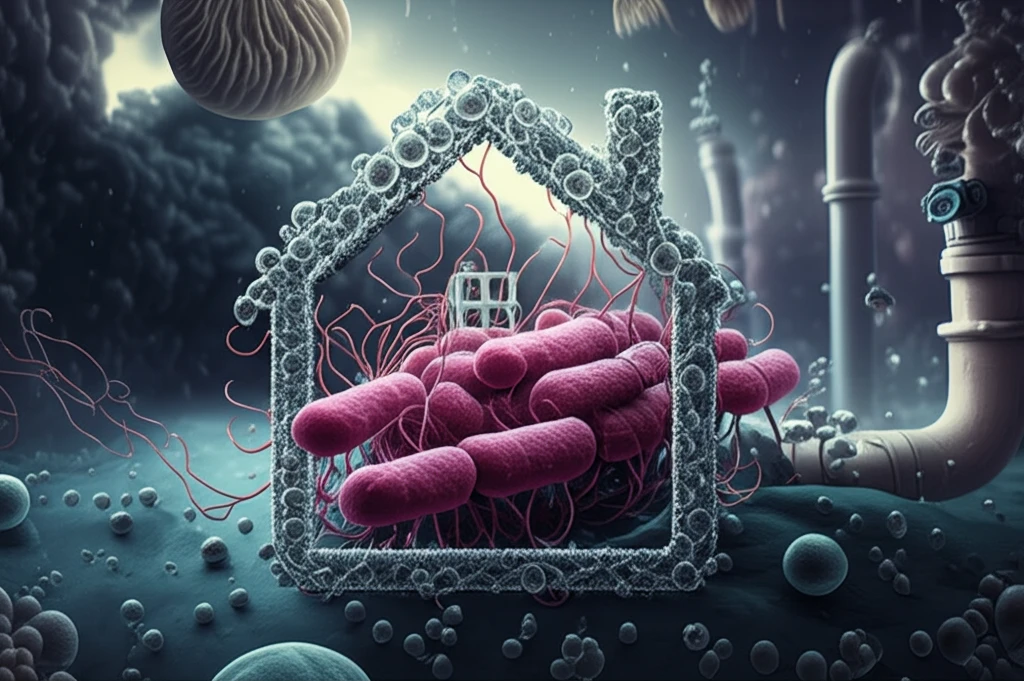
Legionellosis is caused by Legionella bacteria, which thrive in aquatic environments. Transmission occurs through the inhalation of contaminated water droplets, making building water systems a common source of outbreaks. There are many subtypes of the Legionella bacteria. No secondary infections happen from transmission from person to person contact.
- Legionella thrives in temperatures between 20°C to 60°C (68°F to 140°F).
- They colonize in biofilms, which are microbial communities that adhere to surfaces.
- They can survive and spread through aerosolized water droplets.
Prevention Under Scrutiny: Gaps and Uncertainties
Recent commentary argues that more can be done to reduce Legionnaires' disease risk, particularly in Australia, where researchers are examining regulatory gaps and inconsistencies in prevention measures medicalxpress.com. As researcher Whiley notes, understanding where those gaps and inconsistencies exist is an important first step toward ensuring that prevention measures are evidence-based medicalxpress.com. A separate review, meanwhile, reports that prevention rests on 'more doubts than certainties,' with open debate over the effectiveness and timing of environmental treatment programs academia.edu. That review emphasizes that current strategies require reevaluation based on real-world experiences academia.edu.
Outbreaks Persist Despite Prevention Guidance
Despite established prevention guidance, outbreaks continue to occur, as seen in a Legionnaires' disease cluster in Manhattan's Upper East Side that was linked to a contaminated cooling tower and prompted health investigations and public advisories ibtimes.co.uk. The case illustrates that even well-understood water systems can become contaminated despite routine maintenance efforts. The consequences of such failures fall hardest on people with underlying medical conditions such as diabetes, cancer, or kidney failure, and on those with another illness or taking medication that weakens the immune system www-betterhealth-vic-gov-au.nproxy.org. For these groups, exposure carries a substantially higher risk of serious outcomes www-betterhealth-vic-gov-au.nproxy.org.
Clinical Outcomes and the Climate Divide
The disease is consistently described as a severe form of pneumonia contracted by breathing in contaminated mist or vapor (per Fox 5 NY). Symptoms typically begin 2 to 10 days after contact with Legionella bacteria, and while untreated Legionnaires' disease can kill, prompt treatment with antibiotics most often cures it beaconhealthsystem.org. Some people nevertheless continue to have problems after treatment beaconhealthsystem.org. A broader comparison highlights a social dimension: as warmer temperatures facilitate the spread of the disease, the most socially vulnerable populations are expected to pay the steepest price vox.com.
Taking Action: Prevention and Control at Home and Beyond
Knowledge of Legionella and its behavior allows us to take action, which is critical in fighting Legionnaires' disease. We can influence the amount of Legionella and exposure to it. These measures will not only reduce the risk of Legionnaires' disease but also promote overall health by improving the quality and safety of our water systems. With dedicated effort, we can transform our approach to water safety and dramatically decrease the occurrences of this preventable disease.
Expert Consensus: Prevent at the Source
Experts are blunt about the stakes: Legionnaires' disease is a severe, often lethal form of pneumonia caused by the bacterium Legionella pneumophila, which is found in both potable and nonpotable water systems legionella.org. One occupational-health source reports that the disease is fatal in 5 to 15% of cases, and stresses that prevention is better than cure mensura.be. The recommended starting point is an in-depth risk assessment of water installations to prevent the growth of Legionella bacteria mensura.be. At the policy level, the Alliance to Prevent Legionnaires' Disease is actively working to enact reasonable and actionable preventive policies in state legislatures across the country (per PennLive).
An Uncertain Road Ahead
Looking forward, the trajectory of Legionnaires' disease prevention will likely depend on stronger regulation, smarter water-system design, and more consistent maintenance across public and private buildings. It seems reasonable to expect continued attention on cooling towers, plumbing, and other aerosol-generating systems as outbreaks keep re-emerging. Newer surveillance and testing approaches may also improve detection, though their real-world impact remains to be seen. Without sustained investment in prevention, the disease is unlikely to disappear on its own.
A Public Health Challenge Rooted in Water Infrastructure
Legionnaires' disease carries a broader public health impact because the bacteria live in the built water environments that serve entire communities, meaning a contaminated system can affect far more than a single building absolute-water.co.uk. When Legionella takes hold in a water system, the consequences can be devastating for the many people who depend on that infrastructure absolute-water.co.uk. The source emphasizes that preventing Legionella growth through proactive maintenance and rigorous testing is essential to avoiding those potentially devastating outcomes absolute-water.co.uk. The systemic nature of water infrastructure makes continuous, structured prevention necessary rather than a one-time intervention.
A Recent Case and the People Behind the Headlines
Legionnaires' disease recently made headlines in Hong Kong after a case was investigated by the Centre for Health Protection (CHP) of the Department of Health, underscoring how the illness can surface in everyday settings initial.com. Because it is a serious form of pneumonia, each reported case carries real human consequences for the person affected and those around them initial.com. Reports like this one serve as a reminder that behind every outbreak statistic is an individual whose ordinary activities brought them into contact with a contaminated water source.