
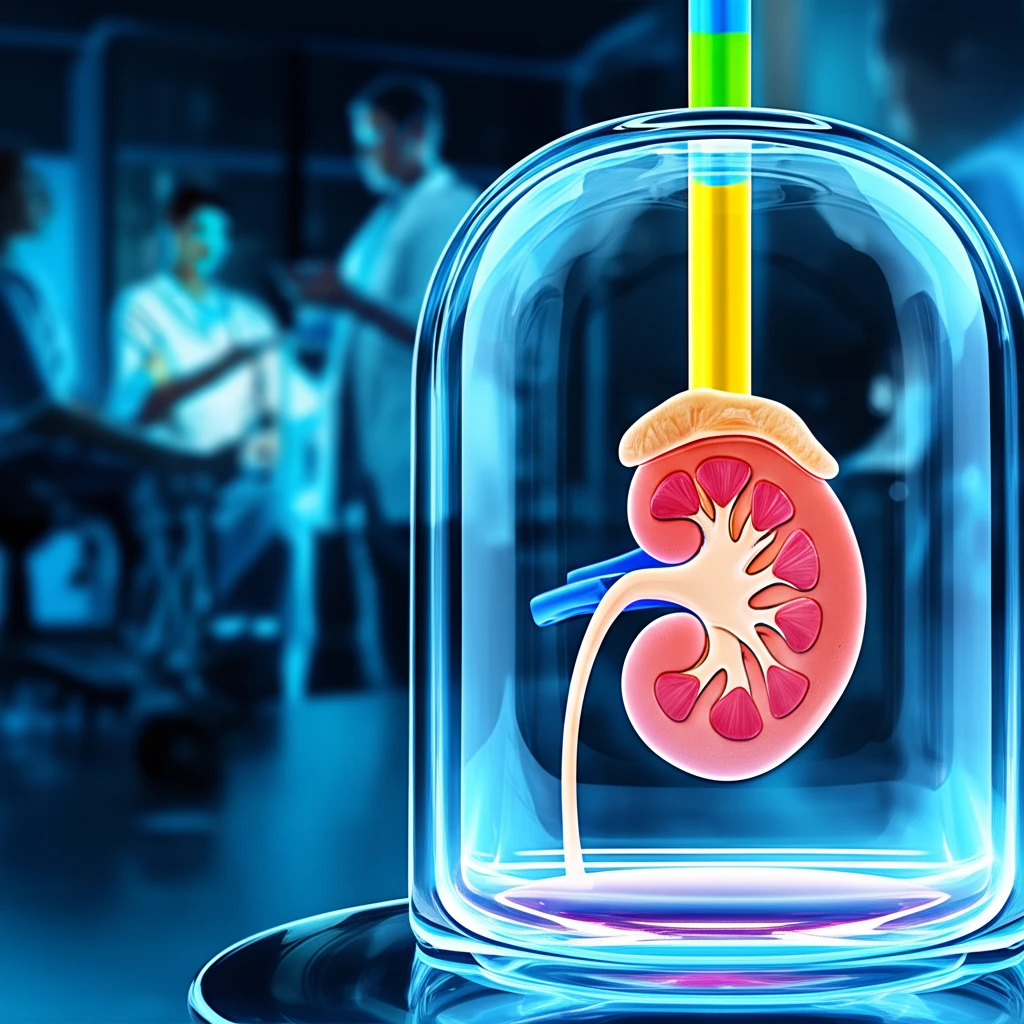
Illustration of kidney transplant research, showing urine biomarkers and a healthy kidney.

Decoding Kidney Transplant Success: Unveiling Urine's Secrets for a Healthier Future

"Groundbreaking Research Reveals Urine Biomarkers That Could Revolutionize Kidney Transplant Care"


Kidney transplantation offers a new lease on life for individuals with end-stage renal disease. However, the journey doesn't end with the surgery. Post-transplant, patients face the ongoing challenge of monitoring their new kidney's health and preventing complications like rejection or infection. This is where innovative research comes in, searching for new ways to ensure the success of this life-saving procedure.

A recent study dives deep into the potential of urine as a window into the health of a transplanted kidney. Researchers are exploring specific biomarkers in urine that could provide early warnings of trouble, allowing for proactive interventions and improved patient outcomes. This pilot study opens up new avenues for personalized care and a more optimistic future for transplant recipients.

This article will explore the groundbreaking findings of the study, the implications of these urine biomarkers, and how they could transform the way kidney transplant patients are monitored. We'll break down the science, discuss the potential benefits, and highlight the importance of this research for both patients and medical professionals.

Unveiling the Urine's Secrets: CCL2 and CXCL10 as Key Biomarkers

Illustration of kidney transplant research, showing urine biomarkers and a healthy kidney.

The study focuses on two key chemokines – CCL2 and CXCL10 – found in urine. Chemokines are signaling proteins that play a crucial role in the body's immune response. Elevated levels of these chemokines in urine can indicate inflammation and damage within the transplanted kidney. Measuring these levels could provide valuable insights into the kidney's health and the potential for complications.

The research involved a group of kidney transplant patients, analyzing their urine samples for CCL2 and CXCL10 levels. The researchers compared these levels across different patient groups, including those with normal kidney function and those experiencing complications such as BKV nephropathy, a viral infection that can affect the kidney.

  • CCL2 (MCP-1): This chemokine is associated with inflammation and is often elevated in cases of kidney injury and rejection.
  • CXCL10 (IP-10): This chemokine is linked to T-cell activation and can indicate immune responses within the kidney.
  • BKV Nephropathy: This is a viral infection that can damage the transplanted kidney.
The study revealed significant differences in the levels of these chemokines, linking them to specific kidney conditions. This data suggests that monitoring CCL2 and CXCL10 levels could be a valuable tool for early detection of complications and for guiding treatment strategies. Such tools allow for a more proactive and personalized approach to patient care.

A Brighter Future for Kidney Transplant Patients

This research marks a significant step towards more effective and personalized care for kidney transplant patients. By utilizing the information found in urine, doctors may soon be able to detect problems earlier, tailor treatments more effectively, and ultimately improve the long-term outcomes for transplant recipients. As research continues, the promise of these urine biomarkers will continue to unfold, paving the way for a healthier and more hopeful future.

About this Article -

This article was crafted using a human-AI hybrid and collaborative approach. AI assisted our team with initial drafting, research insights, identifying key questions, and image generation. Our human editors guided topic selection, defined the angle, structured the content, ensured factual accuracy and relevance, refined the tone, and conducted thorough editing to deliver helpful, high-quality information.See our About page for more information.

Everything You Need To Know

1

Why is monitoring kidney health after a transplant so critical?

Monitoring kidney health post-transplant is crucial because patients face the ongoing risk of complications such as rejection or infection. Consistent monitoring, especially through innovative methods like urine analysis, enables early detection of potential issues, allowing for prompt intervention and personalized care. Without vigilant monitoring, these complications can severely compromise the transplanted kidney's function and the patient's overall health, potentially leading to graft failure and return to dialysis. The goal is to ensure the long-term success and health of the transplanted kidney, improving the patient's quality of life.

2

How can analyzing urine samples help in monitoring a transplanted kidney?

Analyzing urine samples offers a non-invasive way to monitor the health of a transplanted kidney by detecting specific biomarkers. The presence and levels of certain substances, like the chemokines CCL2 and CXCL10, in urine can indicate inflammation, damage, or immune responses within the kidney. Elevated levels of these biomarkers can serve as early warning signals, alerting medical professionals to potential complications like rejection or infection before they cause significant damage. This allows for proactive interventions, such as adjusting immunosuppressant medications, to protect the transplanted kidney and improve patient outcomes.

3

What are CCL2 and CXCL10, and why are they important in kidney transplant monitoring?

CCL2 (also known as MCP-1) and CXCL10 (also known as IP-10) are chemokines, which are signaling proteins that play a vital role in the body's immune response. In the context of kidney transplantation, elevated levels of CCL2 in urine are often associated with inflammation and kidney injury, potentially indicating rejection. CXCL10 is linked to T-cell activation, suggesting an immune response within the kidney that could also lead to rejection. Monitoring these chemokines helps doctors detect early signs of trouble, allowing for timely interventions and a more personalized approach to managing the patient's care, ultimately improving the long-term health of the transplanted kidney. While these are important, other factors like creatinine levels and proteinurea are also important metrics not found in urine.

4

What is BKV nephropathy, and how does it relate to kidney transplant complications?

BKV nephropathy is a viral infection caused by the BK virus that can severely damage a transplanted kidney. It is a significant complication in kidney transplant recipients because the immunosuppressant drugs they take to prevent rejection also weaken their immune system, making them more susceptible to viral infections like BKV. BKV nephropathy can lead to inflammation and scarring within the kidney, potentially causing graft dysfunction and failure. Early detection and management of BKV nephropathy are crucial for preserving the function of the transplanted kidney and ensuring long-term success of the transplant. Monitoring of CCL2 and CXCL10 is useful to detect early BKV as well, however regular PCR viral load testing is most common.

5

How could the discovery of urine biomarkers like CCL2 and CXCL10 change the future of kidney transplant patient care?

The discovery of urine biomarkers such as CCL2 and CXCL10 has the potential to revolutionize kidney transplant patient care by enabling more effective and personalized monitoring. By regularly analyzing urine samples, doctors can detect early signs of complications like rejection, infection, or BKV nephropathy, allowing for timely interventions and tailored treatment strategies. This proactive approach could reduce the need for invasive biopsies, minimize kidney damage, and improve long-term outcomes for transplant recipients. Ultimately, the use of urine biomarkers may lead to healthier, longer lives for individuals with transplanted kidneys, offering a more hopeful future for those undergoing this life-saving procedure. It's important to note that this is an addition to the current standard of care, not a replacement. Regular blood tests, monitoring of creatinine levels, and clinical assessments will continue to be essential components of post-transplant care.

Newsletter Subscribe

Subscribe to get the latest articles and insights directly in your inbox.