
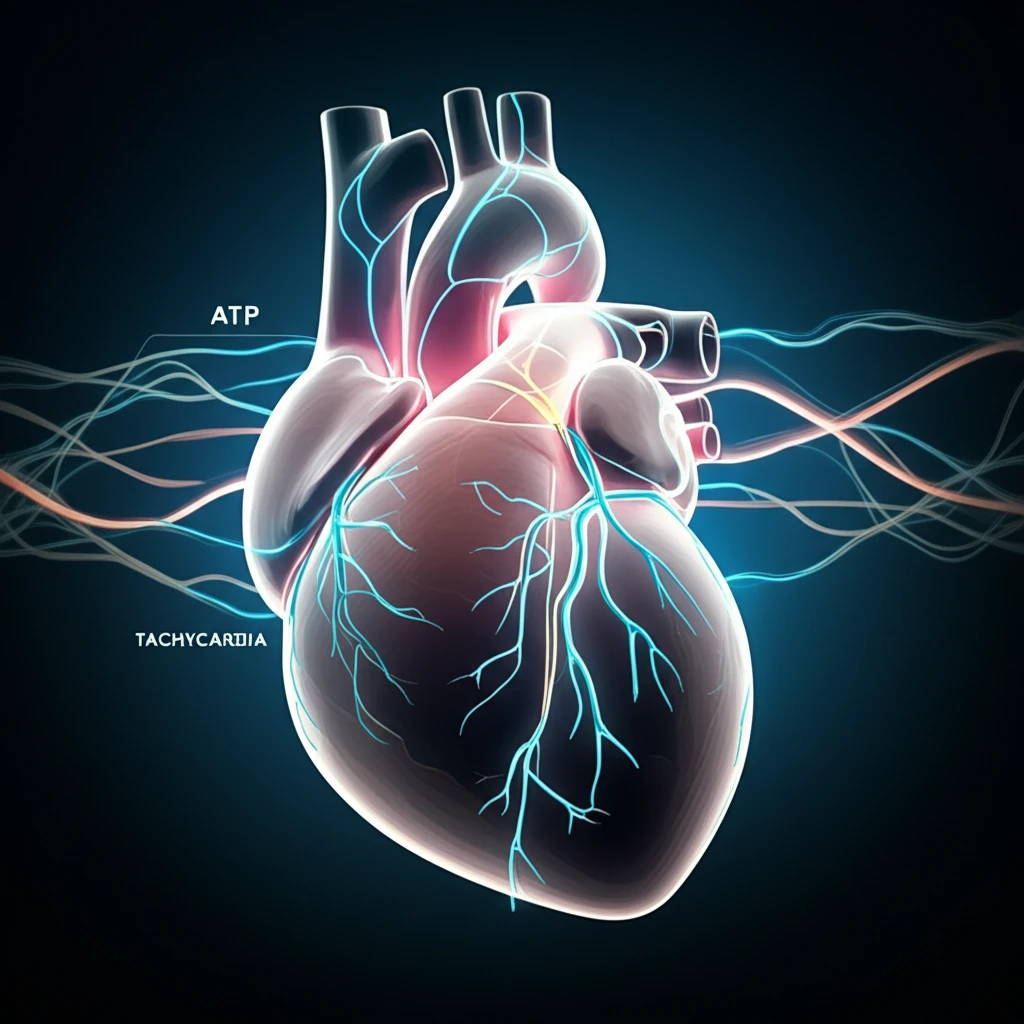
Decoding Irregular Heartbeats: What You Need to Know About ATP-Induced Tachycardias

"Unraveling the Mystery: How a Common Cardiac Procedure May Reveal Clues to Your Heart Health"
Imagine your heart as a finely tuned engine, consistently driving you through every moment. Now, picture a hiccup – a sudden, irregular heartbeat that throws everything off. For individuals with a history of heart problems, these irregularities can be particularly concerning. A recent study published in "Heart Rhythm" sheds light on a specific type of irregular heartbeat called ATP-induced tachycardia, which can occur during a common procedure known as antitachycardia pacing (ATP).
ATP is a technique used to correct rapid heart rhythms, but sometimes, it can paradoxically trigger another type of fast heart rhythm. The research highlights that in patients with prior myocardial infarction (heart attack), this seemingly minor event during a procedure could carry significant implications. It's about understanding the signals your body is sending and how medical professionals interpret them to guide your health journey.
This article aims to unpack the findings of the study, explaining the science behind ATP-induced tachycardias, their significance, and what it means for those undergoing heart procedures. We'll explore how this research contributes to a deeper understanding of heart health, the implications for patient care, and the broader context of cardiovascular disease.
ATP-Induced Tachycardias: What's the Deal?
First, let's demystify the term. ATP, or antitachycardia pacing, is a method used to reset the heart's rhythm when it's beating too fast (tachycardia). Think of it as a gentle nudge to get things back on track. However, in some instances, the ATP itself can trigger a different type of irregular heartbeat – hence, ATP-induced tachycardia. This phenomenon is of particular interest to cardiologists because it could be an indicator of a patient's underlying heart condition.
- Faster Heartbeats: ATP-induced VTs were associated with higher heart rates.
- Underlying Conditions: Increased risk may be related to the severity of the heart condition.
- Long-Term Outlook: History of ATP-induced VT associated with increased risk of future heart issues.
The Road Ahead: What This Means for You
The study's findings add another layer of understanding to heart health and treatment strategies. For patients, it's a reminder that every piece of data—from the results of a procedure to the symptoms you experience—plays a vital role in crafting your personalized care plan. This information empowers patients to take proactive steps, ask informed questions, and work alongside their healthcare team to protect their heart health. It is important to remember that ATP-induced tachycardias are a marker, not a cause. Proper treatment and a healthy lifestyle are essential for managing your heart condition effectively.